
Woody Allen’s ‘Midnight in Paris’ Worth Nostalgic Rewatch
Woody Allen's 2011 film "Midnight in Paris" ironically demonstrates that its anti-nostalgia message was wrong, as the movie now serves as a poignant reminder of how dramatically American culture has shifted.
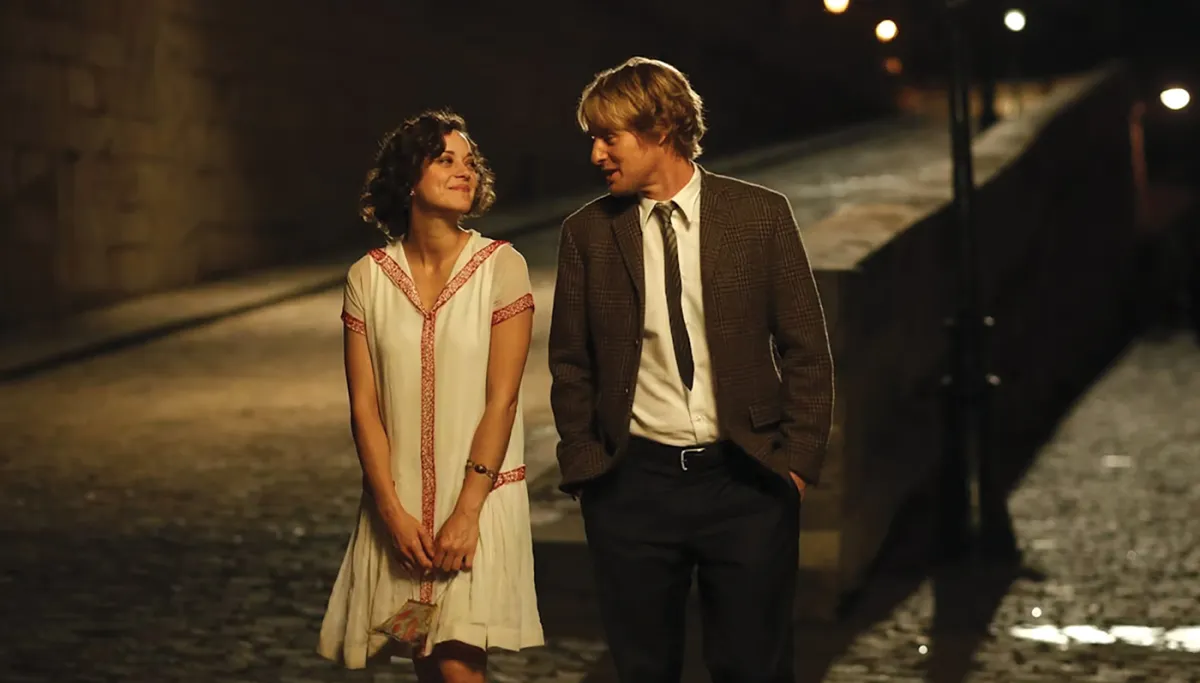

As Nicholas Clairmont argues in Washington Examiner, Midnight in Paris has aged remarkably well precisely because its central thesis—that nostalgia is a delusion—has been proven wrong by the passage of time.


Released to widespread acclaim in summer 2011, the film follows successful Hollywood screenwriter Gil Pender, played by Owen Wilson, during a trip to Paris with his shallow fiancée Inez, portrayed by Rachel McAdams. Gil harbors literary ambitions beyond his commercial screenwriting work and is writing a novel about a man who runs a nostalgia shop. Wilson skillfully balances his signature mannerisms with Allen’s distinctive neurotic style.
The magic begins when Gil discovers that each night at midnight, he is transported back to 1920s Paris, where he mingles with the legendary artists and writers he idolizes. Through these encounters, he supposedly learns that yearning for a golden age is pointless and that he must embrace his own time.
The film showcases 21st-century stars portraying 20th-century icons: Tom Hiddleston as F. Scott Fitzgerald, Adrien Brody as Salvador Dali, Kathy Bates as Gertrude Stein, and Corey Stoll as Ernest Hemingway. Allen crafted dialogue that captures each figure’s essence—Dali rambling about rhinoceroses, Hemingway speaking in spare, masculine prose between drinking and boxing challenges.
The movie’s thesis is deliberately unsubtle: nostalgia leads nowhere. One character dismisses those who dwell on the past as delusional people who wrongly believe their lives would be better in an earlier era. Gil ultimately concludes that if the present feels unsatisfying, it is simply because life itself contains dissatisfaction.
Yet this notion, while partially true, ignores an obvious reality. While certain personality types can become unhealthily obsessed with past eras, it would be absurd to claim all periods are equal. The argument that people only love films and music from their childhood ignores objective quality differences. Even those who grew up with The Phantom Menace in 1999 can recognize the original Star Wars trilogy was superior.
The film contains another paradox: its appeal stems from the very nostalgia it condemns. Audiences clearly enjoyed the fantasy of socializing with T.S. Eliot, Pablo Picasso, and Cole Porter just as much as the protagonist does. While wishing to return to the past may be futile given time’s unidirectional flow, some eras genuinely represent peaks in artistic, political, and civic culture.
By 2023, Allen had become so unwelcome in American culture that his 50th feature film, Coup de Chance, was released almost exclusively in France and filmed in French. Fifteen years after Midnight in Paris premiered nationwide, the film has become a relic of what some might call the Before Times—a period when such work could still become a genuine hit.
The irony is unmistakable: a film warning against nostalgia now inspires that very sentiment in viewers who remember when American culture was different enough to embrace it.
With information from Washington Examiner





