Necessary Cookies

Required for the site to function. Cannot be disabled.

Analytics Cookies

Help us understand how visitors interact with our site (Google Analytics via GTM).

Marketing Cookies

Used to track visitors and deliver personalised advertisements.

We use cookies to enhance your browsing experience and analyse site traffic. By clicking Accept All, you consent to our use of cookies. Privacy Policy
NewsFire Global
Home News Europe World Christianity Culture Wars Opinion Video
Information
About Us Authors Advertising Terms & Conditions Privacy Policy Contact
R2B Media
R2B NEWSFIRE.GR PAPAFOTIS.GR THRACTION HELLENIC CONSERVATIVES RIGHT2THEBONE YT
News Culture Wars

Wolfgang Herles on flag debate: “There’s something insane about it

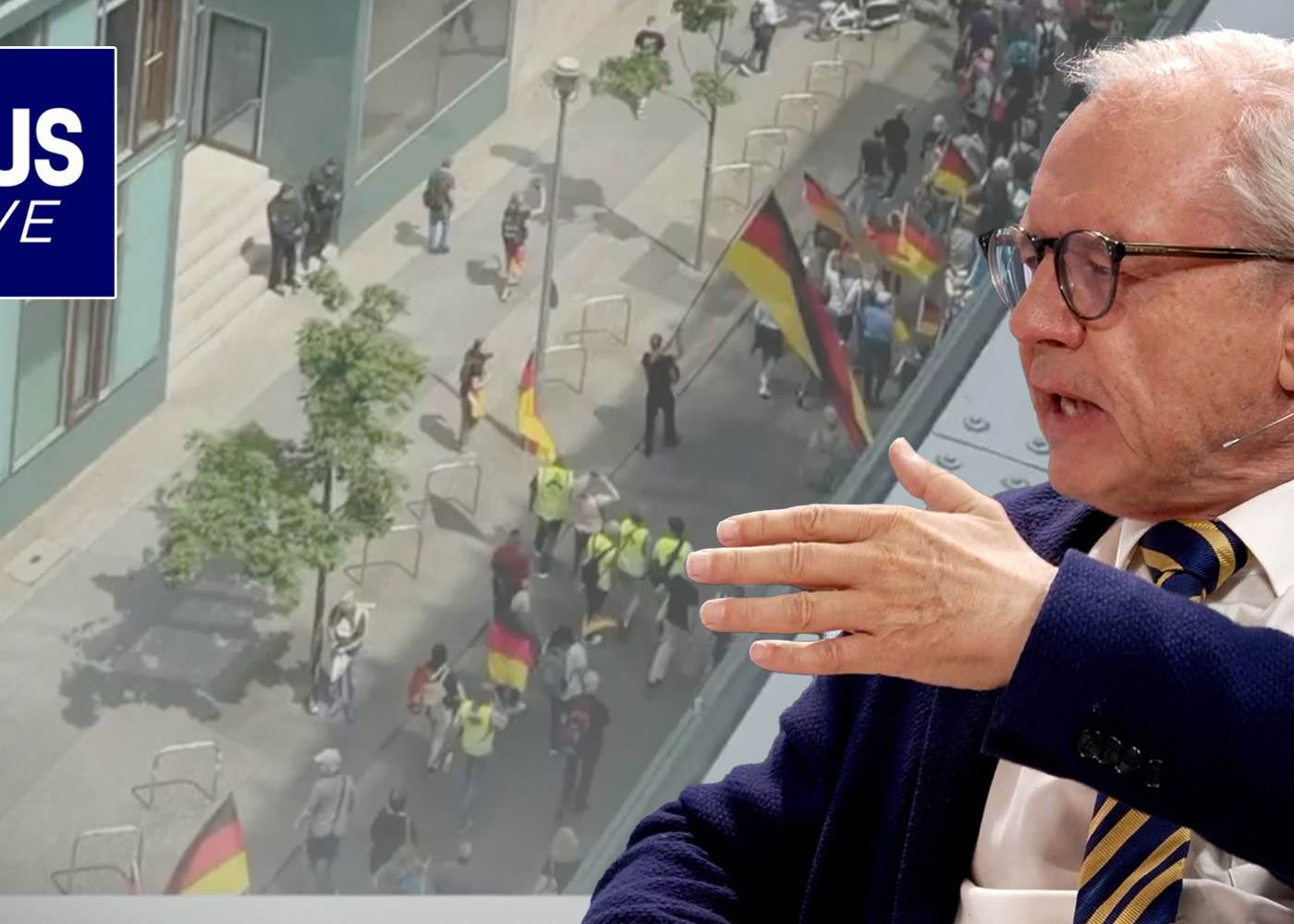
German journalist Wolfgang Herles criticized the Bundestag's ban on AfD members displaying national flags, calling the controversy evidence of Germany's disturbed relationship with patriotic symbols.
Stefanos Banos
Stefanos Banos Staff Writer
JUNE 10, 2026 AT 5:00 PM

Wolfgang Herles, a veteran journalist and author, expressed his bewilderment at the entire debate over displaying Germany’s national colors, according to Nius. Speaking on a morning broadcast, Herles stated he had been forced to discuss nonsense since early hours, pointing out that such a controversy would be unthinkable in America, France, England, or Italy.

The dispute centers on enforcement of Bundestag house rules against AfD parliamentarians who displayed German flags from the building’s balconies. The incident has sparked widespread criticism of what many view as an absurd restriction on showing national symbols in the nation’s own legislative chamber.

Herles did not mince words about the underlying problem. The fact that Germans allow themselves to become so emotionalized over waving their own flag demonstrates something is fundamentally wrong in people’s heads, the journalist argued. He went further, suggesting there is something mentally disturbed about this becoming a topic of debate in Germany at all.

The journalist also noted that the Bundestag’s house rules are ultimately the responsibility of the members themselves. He advised Beatrix von Storch, the AfD deputy faction leader who appeared alongside him, to submit a formal motion to amend the house rules if the uniformed personnel enforcing the flag ban were indeed acting within their authority.

The controversy highlights Germany’s troubled relationship with national symbols, particularly in contrast to other Western democracies where flag display is routine and uncontroversial. While citizens of France, the United States, and other nations freely display their flags without generating political firestorms, Germany continues to grapple with expressions of national identity decades after reunification.

Von Storch has previously stated that citizens will no longer allow the flag to be taken from them, framing the issue as one of reclaiming normal patriotic expression. The AfD has increasingly positioned itself as the defender of traditional German national identity against what it characterizes as the established parties’ rejection of patriotism.

The flag incident comes amid broader debates about national symbols and identity in German politics, with the AfD frequently challenging what it views as excessive restrictions on expressions of German patriotism. The party has made such cultural battles a central part of its political messaging to voters.

With information from Nius

Share:
Stefanos Banos
Stefanos Banos

Stefanos Banos was born in Piraeus and is an editor at NewsFire.GR, specializing in political analysis and international relations. He graduated from the Department of Communication and Media at the University of Bremen in Germany, where he also completed his Master of Arts in Communication and Media Studies. Married to Zoi, he is a proud father of three boys.

Wolfgang Herles, a veteran journalist and author, expressed his bewilderment at the entire debate over displaying Germany’s national colors, according to Nius. Speaking on a morning broadcast, Herles stated he had been forced to discuss nonsense since early hours, pointing out that such a controversy would be unthinkable in America, France, England, or Italy.

The dispute centers on enforcement of Bundestag house rules against AfD parliamentarians who displayed German flags from the building’s balconies. The incident has sparked widespread criticism of what many view as an absurd restriction on showing national symbols in the nation’s own legislative chamber.

Herles did not mince words about the underlying problem. The fact that Germans allow themselves to become so emotionalized over waving their own flag demonstrates something is fundamentally wrong in people’s heads, the journalist argued. He went further, suggesting there is something mentally disturbed about this becoming a topic of debate in Germany at all.

The journalist also noted that the Bundestag’s house rules are ultimately the responsibility of the members themselves. He advised Beatrix von Storch, the AfD deputy faction leader who appeared alongside him, to submit a formal motion to amend the house rules if the uniformed personnel enforcing the flag ban were indeed acting within their authority.

The controversy highlights Germany’s troubled relationship with national symbols, particularly in contrast to other Western democracies where flag display is routine and uncontroversial. While citizens of France, the United States, and other nations freely display their flags without generating political firestorms, Germany continues to grapple with expressions of national identity decades after reunification.

Von Storch has previously stated that citizens will no longer allow the flag to be taken from them, framing the issue as one of reclaiming normal patriotic expression. The AfD has increasingly positioned itself as the defender of traditional German national identity against what it characterizes as the established parties’ rejection of patriotism.

The flag incident comes amid broader debates about national symbols and identity in German politics, with the AfD frequently challenging what it views as excessive restrictions on expressions of German patriotism. The party has made such cultural battles a central part of its political messaging to voters.

With information from Nius

