Will They Take Away the Courtroom Icons Too? Enough!
The European Court faces a key test on Orthodox icons in Greek courts, balancing cultural heritage against secularism, echoing Italy’s precedent that upheld religious symbols amid human rights debates.
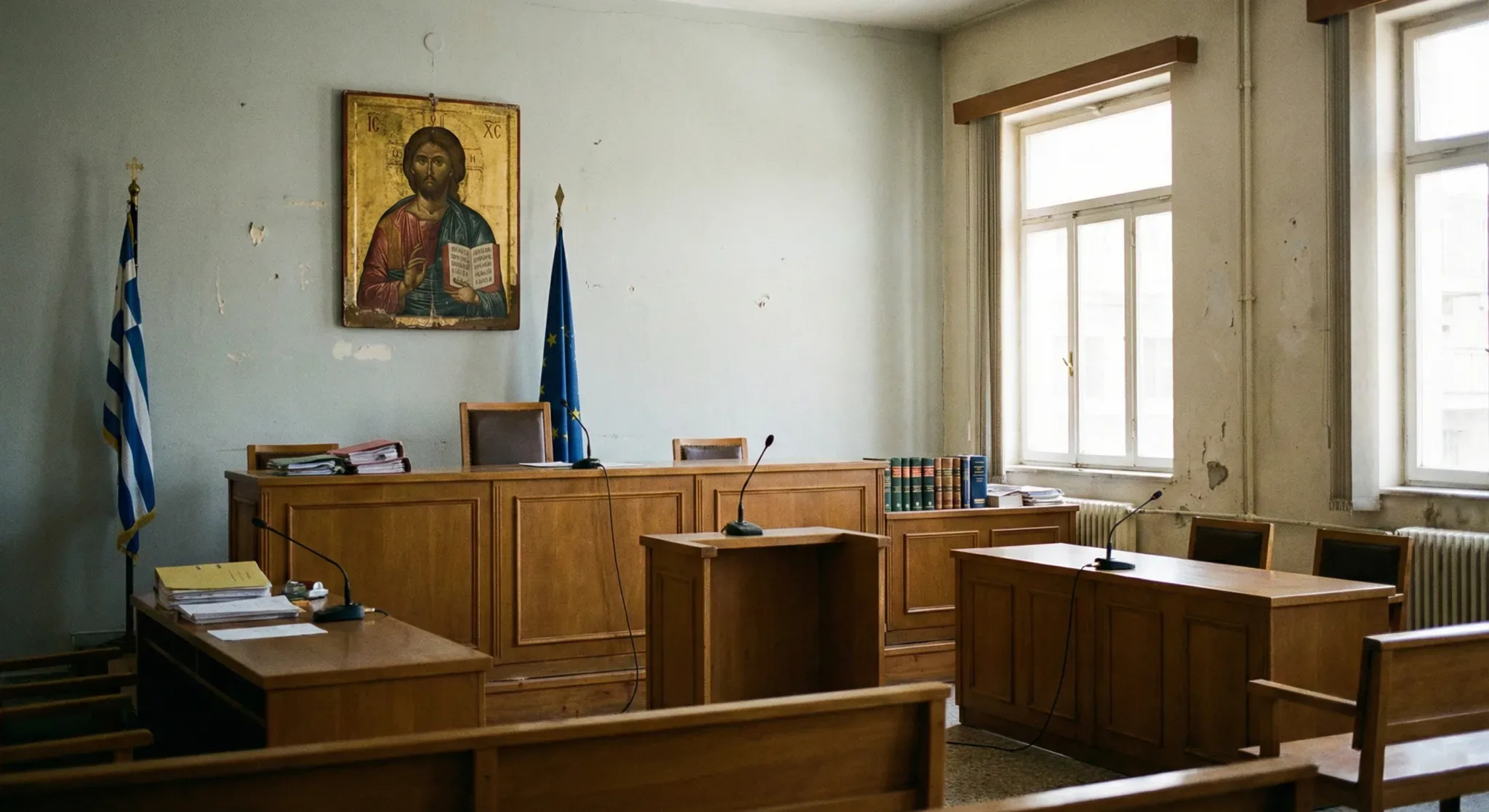

The European Court of Human Rights is called to decide on the presence of Orthodox icons in courtrooms in Greece, following a complaint by atheists who see a violation of rights.
This case brings back into focus the debate over religious symbols in public spaces. Greece now faces a challenge similar to the one Italy confronted years ago.
The petitioners from the Union of Atheists of Greece claim that the icons influence the impartiality of judges and restrict their freedom of thought.
Yet, the Court has allowed states some leeway to maintain such elements. The government is preparing to submit a memorandum on February 19, 2026, before the decision is issued.
The Italian Experience as an Example
In Italy, the Lautsi case began with a demand to remove crucifixes from schools in 2009. After massive opposition from 21 European countries, the European Court overturned the initial decision in 2011.
It allowed the continued display of religious symbols, recognizing the right of states to promote the dominant religion.
This precedent offers hope for Greece. Merely displaying icons is not considered proselytism, unlike other practices such as religious instruction. States have the margin to honor their cultural heritage.
Arguments in Favor of Greece
Organizations like ADF International support the Greek side with memoranda. Adina Portaru, a senior adviser there, stresses that religious symbols do not contravene international human rights law.
Public spaces can host icons of historical significance without threatening pluralism.
At the same time, Nicolas Bauer from the European Center for Law and Justice, in an article in Le Figaro on February 3, points out that the Court should not interfere with national identity.
Secular countries are often condemned more for violations of religious freedom, showing that the connection between religion and state does not necessarily lead to oppression.
The Context of the Greek Petition
The Union of Atheists of Greece filed initial applications in 2018 and 2019, requesting the removal of icons from courtrooms. National courts rejected them, leading to an appeal to the European Court in 2020.
The applicants argue there is a risk to objectivity and a violation of rights to a fair trial, thought, and religion.
However, the case fits within the framework of the Lautsi ruling. Greece, with its Orthodox tradition, can defend the symbols as part of its cultural identity. The outcome is expected to influence similar disputes in other countries.