
WHO Chief Admits Months-Late Ebola Response, Demands End to Travel Bans
The WHO is urging countries to lift travel bans on Ebola-affected regions, saying restrictions hinder outbreak response efforts in the Democratic Republic of Congo.
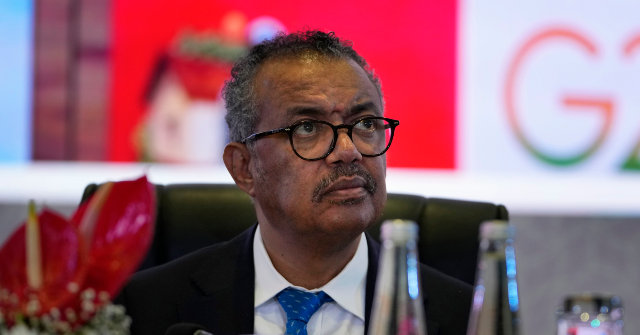

Speaking at a press conference on Wednesday, Tedros argued that blanket travel bans were disrupting supply chains and hampering the international response to the virus, according to Breitbart News. He urged countries to rely instead on exit screening at airports, ports, and border crossings to prevent the spread of infected individuals and their contacts.
During the same briefing, the WHO chief acknowledged that the outbreak may have begun as far back as January without detection or response from health authorities. The outbreak had a big head start, and we’re still behind, he admitted.
Tedros recently visited Ituri province, the epicenter of the outbreak in the DRC, where he spent time with local health workers and attempted to address widespread community mistrust. Many locals believe Ebola is fabricated and that international health workers are deliberately killing Africans, leading to violent attacks on treatment centers by armed mobs who believe they are rescuing patients from certain death.
These mobs have also stolen corpses of Ebola victims to conduct traditional burials, which involve direct contact with bodies and create conditions for rapid viral transmission.
The WHO maintains its risk assessment remains very high at the national level, high at the regional level, and low globally. Tedros reported approximately 350 confirmed cases and more than 60 deaths across the DRC and neighboring Uganda. Notably, the organization reduced its suspected case count from nearly 1,000 to just 116 between the weekend and Tuesday after working through the backlog to either confirm or rule out cases.
Key challenges identified include insufficient testing capabilities for the Bundibugyo strain of Ebola currently spreading, community distrust, and shortages of vaccines and treatments. The existing vaccine targets the Zaire strain from previous outbreaks, not the Bundibugyo variant now active in the region.
Despite these challenges, Tedros singled out travel restrictions as a particular obstacle to containment efforts.
The United States was among the first nations to impose entry limitations, requiring anyone traveling from the DRC, Uganda, or South Sudan to undergo 21-day monitoring in a third country before entering American territory. The 21-day period corresponds to the typical incubation period for the Ebola virus.
Uganda itself shut down ferry and flight access along its border with the DRC and partially closed the border for four weeks starting in late May. Canada and the Bahamas subsequently announced outright bans on residents from the DRC, Uganda, and South Sudan, while Thailand, Kenya, the Cayman Islands, and India implemented enhanced screening procedures at points of entry.
The travel restrictions have created complications for the upcoming FIFA World Cup, for which the DRC qualified for the first time in more than fifty years. The Congolese Association Football Federation has maintained that its team poses no Ebola threat since players have been based outside the country, and supporting staff have completed the 21-day quarantine in Europe to gain U.S. entry. The DRC squad is scheduled to be headquartered in Texas during the tournament.
However, the health concerns did force the cancellation of at least one World Cup-related event. A friendly match between the DRC and Chile scheduled for La Línea de la Concepción in Spain was canceled by Mayor Juan Franco, who stated he could not fully rule out the possibility of any risk to public health.
With information from Breitbart News





