
Africa CDC: Congo Ebola Outbreak Could Be Worst Ever
The Democratic Republic of the Congo faces a potentially catastrophic Ebola outbreak with 782 confirmed cases and 181 deaths as patients remain untraced amid public resistance to medical intervention.
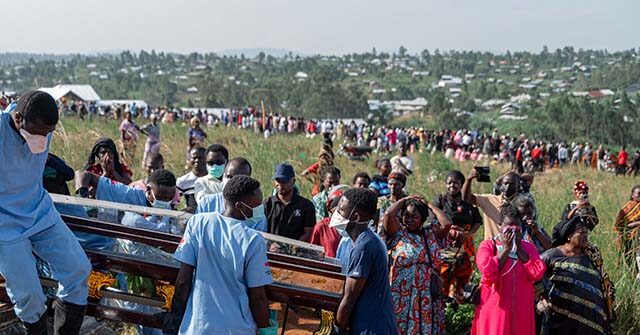

Jean Kaseya, director of the Africa Centers for Disease Control, issued an urgent warning this week that the current outbreak could eclipse both the devastating 2014 West Africa epidemic that claimed over 11,000 lives and the 2018 eastern Congo outbreak that killed nearly 2,300 people, according to Breitbart News.
The DRC health ministry has confirmed 782 cases of the Ebola Bundibugyo strain and 181 deaths to date. While these figures appear modest compared to previous outbreaks, health officials warn the true toll may be far higher due to severe tracking difficulties caused by political instability and widespread public resistance to medical authorities.
The outbreak was formally declared one month ago, but evidence suggests it began weeks or months earlier in the region’s remote eastern provinces.
Armed Gang Removes Patients from Treatment Center
In a disturbing development on Tuesday, unidentified assailants armed with bladed weapons forcibly removed a woman and her six-year-old daughter from an Ebola treatment facility. The incident represents the latest in a series of violent confrontations as locals use force to retrieve infected patients from isolation, driven by deep mistrust of medical personnel and beliefs that Ebola stems from witchcraft.
Dr. Lubambo Maboko Gaston, Ebola response manager for North Kivu province, issued an urgent public appeal for the pair to return to medical care immediately. The child had tested positive for Ebola and represents one of 67 confirmed cases in North Kivu, while roughly 90 percent of infections have been concentrated in neighboring Ituri province where the outbreak apparently originated.
Traditional Healers Fueling Transmission
Many eastern Congo residents are bypassing hospitals entirely in favor of traditional healers who rely on herbs and prayers, creating what health professionals describe as devastating consequences for outbreak containment.
These traditional healing practices not only prove ineffective against the virus but frequently involve group rituals that transform healing ceremonies and funerals into super-spreader events, accelerating transmission throughout communities.
Onesphore Bangenza, an emergency response professional with aid organization Mercy Corps, explained that many residents view Ebola as mysterious or spiritual rather than a medical condition requiring clinical treatment. This distrust of the health system leads people to seek traditional healers first, often arriving at hospitals only when critically ill.
Vincent Isimbwa, a Seventh-Day Adventist elder from the Ugandan village that gave the Bundibugyo strain its name during the 2007 outbreak, noted that the disease’s severity leads some to believe supernatural forces are at work.
Medical Uncertainty Fuels Spiritual Explanations
Congolese faith healers reported that villagers turn to spiritual treatments partly because Ebola is not uniformly contagious or fatal, and medical interventions are not completely effective. This variability convinces many locals that medical professionals are concealing the disease’s spiritual dimensions.
One traditional healer in Bundibugyo who survived the 2007 outbreak explained that in African traditional societies, when hospital treatments fail to produce improvement, people conclude that witchcraft is responsible and seek out witch doctors for alternative remedies.
Experimental Treatment Under Consideration
A coalition of advocacy organizations has petitioned the U.S. Biomedical Advanced Research and Development Authority to collaborate with the Africa CDC and World Health Organization in making an experimental treatment available to current outbreak victims.
The therapy, designated MBP134 and developed by San Diego-based Mapp Biopharmaceutical, was initially designed for the Sudan Ebola strain. Laboratory research indicates it may also prove effective against the Bundibugyo strain, which currently lacks an approved vaccine.
Mapp researchers believe MBP134 could potentially work against all known Ebola virus strains. The company has already supplied limited doses for use with high-risk individuals, while the World Health Organization has endorsed two promising vaccine development projects for further evaluation.
With information from Breitbart News





