
White House Denies ‘Leaked’ Iran Deal Text Reflects Agreement
The White House denied leaked documents accurately reflect a U.S.-Iran memorandum ahead of Friday's signing ceremony in Switzerland, with Trump rejecting reports of a $300 billion fund.

White House Communications Director Steven Cheung firmly rejected claims that documents published by CNN, Bloomberg, and the Saudi outlet al-Arabiya on Tuesday reflected the actual language of the memorandum, according to Breitbart News.
The supposed text of the MOU that was obtained by CNN does not reflect the language of the actual MOU, Cheung stated on social media Wednesday.
The circulating texts included provisions on multiple fronts, from the reopening of the Strait of Hormuz to commercial shipping to an alleged $300 billion investment fund for Iran and provisions addressing Israel’s military operations in Lebanon. While some elements align with publicly stated White House positions, officials have made clear that significant inaccuracies remain in the leaked documents.
A senior White House official confirmed Monday that American and Iranian representatives had signed an agreement formally ending Operation Epic Fury, the military engagement that eliminated Iran’s so-called “supreme leader” Ali Khamenei and numerous senior Iranian officials. President Donald Trump has indicated he will publish the complete text of the memorandum following the Swiss signing ceremony.
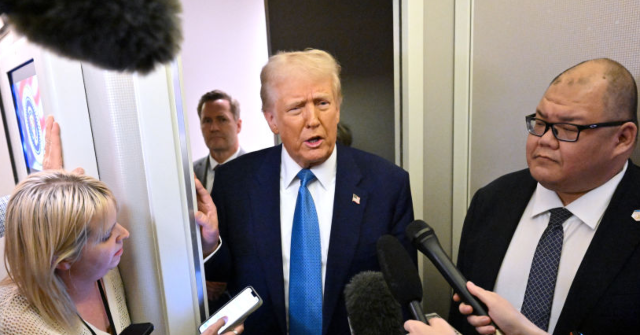
Speaking to reporters at the G7 summit in France, which concluded Wednesday, President Trump directly addressed the question of a $300 billion Iranian investment fund, calling reports of such a provision false.
The president clarified that while private entities remain free to invest in Iran if they choose, the United States government will not contribute any funds. We’re not investing. We’re not putting up ten cents, Trump stated, as reported by the Times of Israel.
Trump emphasized that the memorandum represents an intermediate step rather than a final agreement, designed primarily to address the severe global economic disruptions caused by the conflict, particularly the interruption of civilian shipping through the Strait of Hormuz. Without such an agreement, the president warned, the world risked sliding into depression.
The president made clear that American military options remain fully available should Iran fail to comply with the terms. If I don’t like it, if they don’t behave, we’ll go right back to dropping bombs right smack in the middle of their head, Trump stated, noting that Iran has misbehaved for 47 years.
A central pillar of the agreement, according to the president, is the guarantee that Iran will never possess nuclear weapons. Trump described the deal as very strong, adding that most people appear satisfied with the outcome despite limited public knowledge of its specific provisions.
The leaked texts published Tuesday contained specific language on contentious issues. The al-Arabiya version called for an immediate and permanent end to hostilities on all fronts, including Lebanon, and demanded restoration of full Strait of Hormuz traffic capacity within 30 days maximum.
The purported text also included language committing the United States, alongside regional partners, to develop a comprehensive rehabilitation and economic development plan for Iran with financing of at least $300 billion. According to the leaked document, implementation mechanisms would be formulated within 60 days as part of a final agreement.
Additional provisions in the circulating text addressed American sanctions policy, calling for movement toward ending all types of sanctions on an agreed schedule and immediately issuing waivers for Iranian crude oil exports, petrochemical products, and related banking, insurance, and transportation services.
While the White House has publicly confirmed certain elements such as the immediate reopening of the Strait of Hormuz, other provisions remain unverified. The Iranian government has repeatedly insisted it would reject any agreement that failed to address Lebanon, though the Trump administration has not confirmed whether Lebanese issues appear in the actual memorandum.
Vice President JD Vance addressed questions about potential Gulf state investment in Iran during an NBC News interview, clarifying that no American taxpayer money would fund Iranian development but that Arab Gulf states might choose to invest if Iran behaves as a normal country.
Vance characterized potential investment as fundamentally a matter between Gulf states and Iran, contingent on Iranian behavior and the country becoming investable. The vice president stressed that Gulf Arab states would independently decide whether to invest in Iranian infrastructure and resources.
The agreement follows the successful conclusion of Operation Epic Fury, which dramatically reshaped the regional security landscape by eliminating Iran’s top leadership. The memorandum aims to establish a framework for containing immediate economic fallout while setting conditions for future nuclear negotiations.
President Trump’s insistence on publishing the full text following Friday’s ceremony in Switzerland represents a departure from the selective leaking that has characterized media coverage this week. The administration appears determined to ensure public understanding of the actual terms rather than speculative versions circulating through media channels.
With information from Breitbart News





