Necessary Cookies

Required for the site to function. Cannot be disabled.

Analytics Cookies

Help us understand how visitors interact with our site (Google Analytics via GTM).

Marketing Cookies

Used to track visitors and deliver personalised advertisements.

We use cookies to enhance your browsing experience and analyse site traffic. By clicking Accept All, you consent to our use of cookies. Privacy Policy
NewsFire Global
Home News Europe World Christianity Culture Wars Opinion Video
Information
About Us Authors Advertising Terms & Conditions Privacy Policy Contact
R2B Media
R2B NEWSFIRE.GR PAPAFOTIS.GR THRACTION HELLENIC CONSERVATIVES RIGHT2THEBONE YT
News Europe

When the University Is Seized by the Courtroom

A French anthropologist who publicly accused a doctoral student of Islamist infiltration was cleared of defamation after the case collapsed due to procedural flaws rather than a substantive ruling.

Dimitris Papafotis
Dimitris Papafotis Editor in Chief
JUNE 18, 2026 AT 8:25 AM

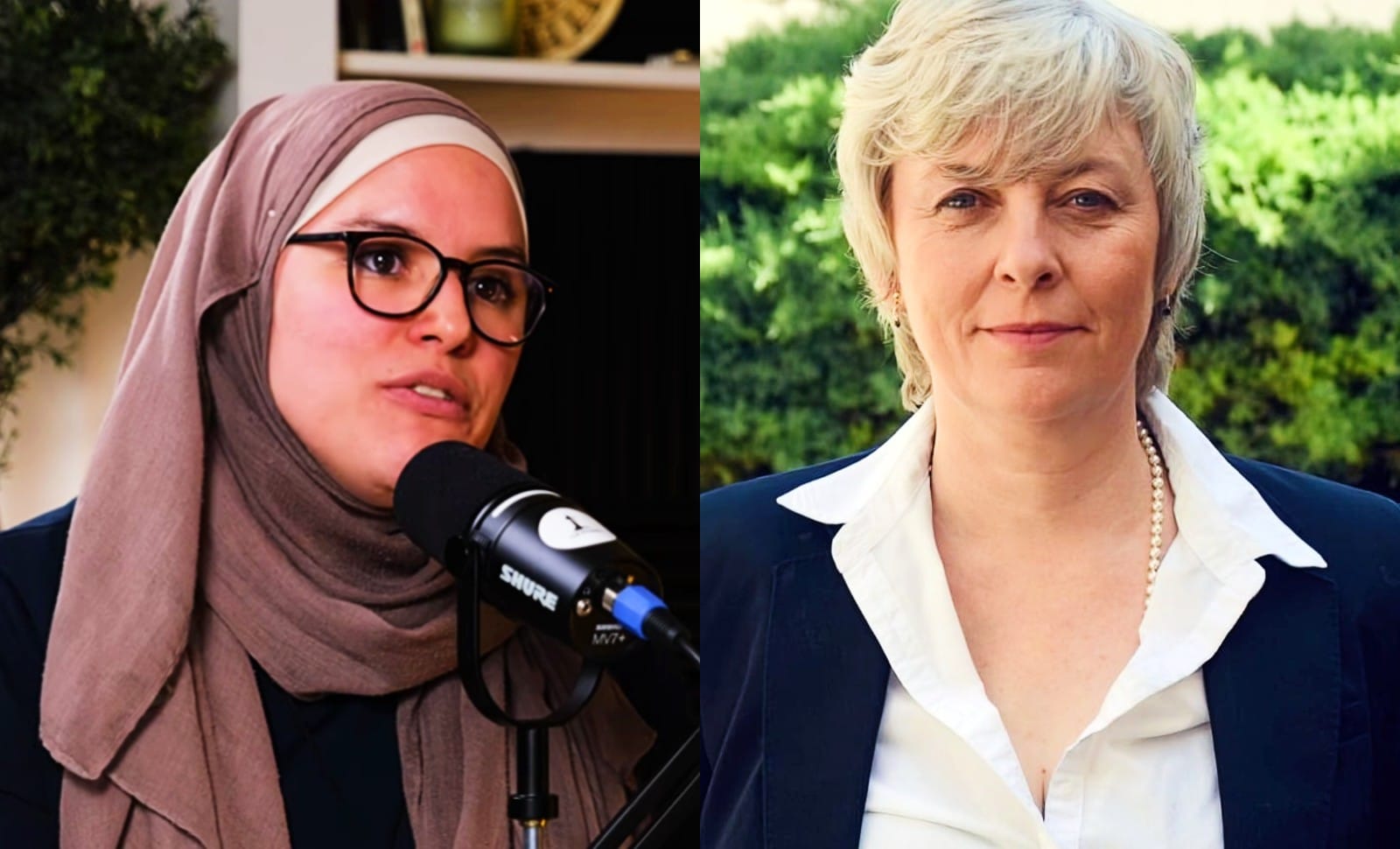
Florence Bergeaud-Blackler, a research fellow at the French National Centre for Scientific Research (CNRS), faced trial after publicly naming Iman El Feki, a sociology doctoral candidate at the University of Strasbourg, in a social media post linking her to what Bergeaud-Blackler described as a Muslim Brotherhood ideology that has allegedly penetrated French academia, according to Causeur.

The case reached court on June 11, 2026, with witnesses prepared and documentation exchanged. However, the proceedings were abruptly cancelled due to a procedural flaw. The prosecutor had expanded the scope of charges, the defense protested violations of due process, and even the prosecutor himself acknowledged weaknesses in the case file.

The Original Accusation

The dispute began on March 4, 2025, when Bergeaud-Blackler published a message on the social network X directly naming El Feki and associating her with what she termed a Muslim Brotherhood ideological framework. The anthropologist did not specify precisely what connected the doctoral student to such a movement.

El Feki’s doctoral thesis focuses on preventing radicalization in the prison system. Her access to correctional facilities was approved by multiple administrative levels, and her research funding comes through a program attached to the office of the Prime Minister. Following Bergeaud-Blackler’s public statements, El Feki filed a defamation complaint.

A Procedural Collapse, Not a Substantive Ruling

Fifteen months after the initial complaint, the case fell apart on technical grounds. Bergeaud-Blackler declared victory against what she called an ideologically motivated prosecution. El Feki announced plans for new legal action and reported receiving death threats. Yet no court examined the underlying questions of fact or academic credibility.

The fundamental debate that should have occurred within the university never took place there, Causeur reports. Instead, it migrated from academic journals and lecture halls to social media platforms, where individuals are targeted rather than theses debated. From there it moved to the courtroom, where the goal became securing a conviction rather than establishing truth.

Courts Cannot Judge Academic Disputes

This migration raises a critical question about institutional competence. Courts can determine whether a statement is defamatory under law. They cannot and should not determine whether an academic thesis is intellectually sound or false. That is neither their function nor their capability. Bringing this disagreement before a judge therefore meant entrusting it to the only institution structurally incapable of resolving the substantive question.

The intellectual issues remained entirely unresolved, which is not a failure of this case but rather its defining characteristic. This ambiguity systematically favors those who understand that contemporary battles are not won where conventional wisdom suggests.

Two Paths to Victory in Intellectual Controversy

There are two distinct methods for prevailing in an intellectual dispute. The traditional approach relies on demonstration: presenting arguments, subjecting them to peer review, publishing research, and persuading others through the strength of evidence. Victory comes through rigorous proof.

The modern alternative operates through visibility. Proving correctness becomes unnecessary. What matters is commanding attention forcefully within the digital public sphere, occupying media space, and embodying a cause. The first method seeks scientific truth through demonstration. The second pursues audience through presence.

When litigation concludes without a substantive verdict, the logic of visibility claims the prize. Nothing has been proven, but everything has been seen.

Who Benefits From Procedural Stalemate

Bergeaud-Blackler achieved a formal legal victory but remains a polarizing figure whom much of the French academic establishment keeps at arm’s length. Her procedural success does not expand her intellectual credibility within scholarly circles.

The real outcome of such unresolved controversies is the establishment of a pattern: public accusation, legal counter-accusation, procedural deadlock, and renewed visibility for all parties. Meanwhile, the substantive questions about academic rigor, institutional infiltration, and the boundaries between political engagement and scholarly objectivity remain not only unanswered but unexamined by any authoritative body.

The case illustrates a broader transformation in how ideological disputes unfold in Western democracies. Academic controversies that once would have been settled through scholarly debate and institutional review now play out in courts incapable of addressing their intellectual substance, leaving both factual questions and reputational damage permanently suspended in limbo.

With information from Causeur

Share:
Dimitris Papafotis
Dimitris Papafotis

Dimitris Papafotis is the editor-in-chief of NewsFire.GR. He was born and raised in Athens. He studied at the Journalism Workshop (1991-1993). He currently lives in Pyrgos, Ilia, where he has been active in radio and various newspapers, while also maintaining his personal blog, Papafotis.gr.

Florence Bergeaud-Blackler, a research fellow at the French National Centre for Scientific Research (CNRS), faced trial after publicly naming Iman El Feki, a sociology doctoral candidate at the University of Strasbourg, in a social media post linking her to what Bergeaud-Blackler described as a Muslim Brotherhood ideology that has allegedly penetrated French academia, according to Causeur.

The case reached court on June 11, 2026, with witnesses prepared and documentation exchanged. However, the proceedings were abruptly cancelled due to a procedural flaw. The prosecutor had expanded the scope of charges, the defense protested violations of due process, and even the prosecutor himself acknowledged weaknesses in the case file.

The Original Accusation

The dispute began on March 4, 2025, when Bergeaud-Blackler published a message on the social network X directly naming El Feki and associating her with what she termed a Muslim Brotherhood ideological framework. The anthropologist did not specify precisely what connected the doctoral student to such a movement.

El Feki’s doctoral thesis focuses on preventing radicalization in the prison system. Her access to correctional facilities was approved by multiple administrative levels, and her research funding comes through a program attached to the office of the Prime Minister. Following Bergeaud-Blackler’s public statements, El Feki filed a defamation complaint.

A Procedural Collapse, Not a Substantive Ruling

Fifteen months after the initial complaint, the case fell apart on technical grounds. Bergeaud-Blackler declared victory against what she called an ideologically motivated prosecution. El Feki announced plans for new legal action and reported receiving death threats. Yet no court examined the underlying questions of fact or academic credibility.

The fundamental debate that should have occurred within the university never took place there, Causeur reports. Instead, it migrated from academic journals and lecture halls to social media platforms, where individuals are targeted rather than theses debated. From there it moved to the courtroom, where the goal became securing a conviction rather than establishing truth.

Courts Cannot Judge Academic Disputes

This migration raises a critical question about institutional competence. Courts can determine whether a statement is defamatory under law. They cannot and should not determine whether an academic thesis is intellectually sound or false. That is neither their function nor their capability. Bringing this disagreement before a judge therefore meant entrusting it to the only institution structurally incapable of resolving the substantive question.

The intellectual issues remained entirely unresolved, which is not a failure of this case but rather its defining characteristic. This ambiguity systematically favors those who understand that contemporary battles are not won where conventional wisdom suggests.

Two Paths to Victory in Intellectual Controversy

There are two distinct methods for prevailing in an intellectual dispute. The traditional approach relies on demonstration: presenting arguments, subjecting them to peer review, publishing research, and persuading others through the strength of evidence. Victory comes through rigorous proof.

The modern alternative operates through visibility. Proving correctness becomes unnecessary. What matters is commanding attention forcefully within the digital public sphere, occupying media space, and embodying a cause. The first method seeks scientific truth through demonstration. The second pursues audience through presence.

When litigation concludes without a substantive verdict, the logic of visibility claims the prize. Nothing has been proven, but everything has been seen.

Who Benefits From Procedural Stalemate

Bergeaud-Blackler achieved a formal legal victory but remains a polarizing figure whom much of the French academic establishment keeps at arm’s length. Her procedural success does not expand her intellectual credibility within scholarly circles.

The real outcome of such unresolved controversies is the establishment of a pattern: public accusation, legal counter-accusation, procedural deadlock, and renewed visibility for all parties. Meanwhile, the substantive questions about academic rigor, institutional infiltration, and the boundaries between political engagement and scholarly objectivity remain not only unanswered but unexamined by any authoritative body.

The case illustrates a broader transformation in how ideological disputes unfold in Western democracies. Academic controversies that once would have been settled through scholarly debate and institutional review now play out in courts incapable of addressing their intellectual substance, leaving both factual questions and reputational damage permanently suspended in limbo.

With information from Causeur

