Necessary Cookies

Required for the site to function. Cannot be disabled.

Analytics Cookies

Help us understand how visitors interact with our site (Google Analytics via GTM).

Marketing Cookies

Used to track visitors and deliver personalised advertisements.

We use cookies to enhance your browsing experience and analyse site traffic. By clicking Accept All, you consent to our use of cookies. Privacy Policy
NewsFire Global
Home News Europe World Christianity Culture Wars Opinion Video
Information
About Us Authors Advertising Terms & Conditions Privacy Policy Contact
R2B Media
R2B NEWSFIRE.GR PAPAFOTIS.GR THRACTION HELLENIC CONSERVATIVES RIGHT2THEBONE YT
News Culture Wars

When Displaying the German Flag Becomes Political

A German parliamentary investigation into AfD lawmakers waving the national flag from Bundestag offices reflects broader Western tensions over national symbols and populist movements challenging liberal establishment control.
Stefanos Banos
Stefanos Banos Staff Writer
JUNE 20, 2026 AT 4:24 PM Updated: Jun 20, 2026 2:55 PM

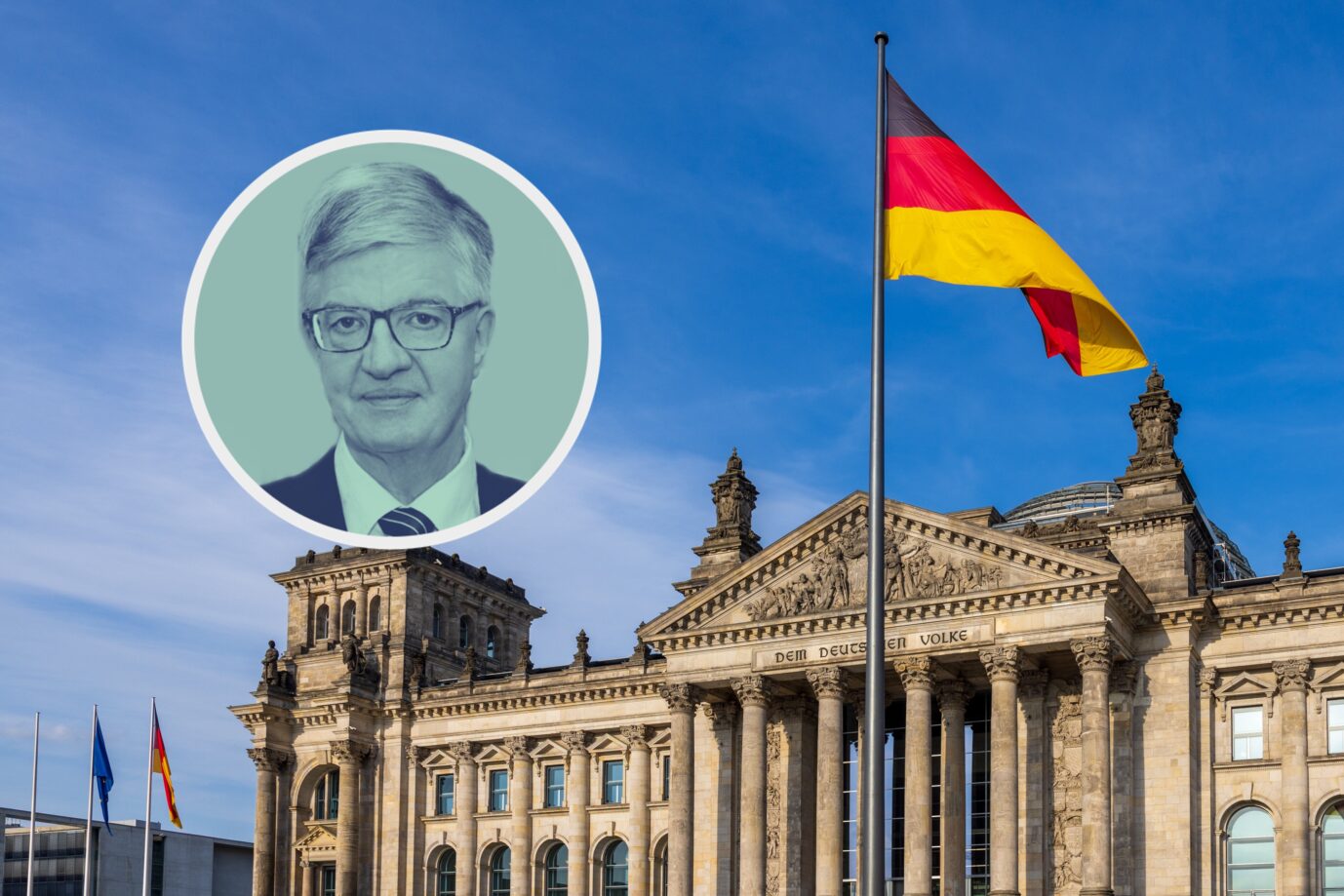
According to Junge Freiheit, the incident involving AfD members displaying the German flag from Bundestag offices has sparked investigations by parliamentary police for alleged violations of house rules. The controversy, however, represents far more than a procedural question. It reflects what the outlet identifies as a new hypersensitivity surrounding symbolic politics that extends well beyond Germany’s borders.

Beatrix von Storch, an AfD lawmaker, highlighted the absurdity of the situation on social media, noting that authorities are investigating the party for waving the German flag from their parliamentary offices.

The Global Symbols War

The phenomenon is not uniquely German. Similar tensions have erupted across the West as establishment politicians scramble to reclaim national symbols from populist challengers. In Britain, the Prime Minister responded with hostility to the sea of Union Jacks displayed at the Unite the Kingdom demonstration in London, declaring that the national flag must not be surrendered to enemies of democracy.

In France, a bizarre debate has emerged in mainstream media questioning whether the Marseillaise should be required of national football team players with origins in former colonies, with critics arguing that such expectations serve a right-wing extremist agenda. Emmanuel Macron has countered by promoting his vision of Vivre ensemble, or living together, in a multicultural France.

What distinguishes the current conflict from traditional symbolic opposition is that right-wing movements are not rejecting state symbols in favor of alternative emblems. Instead, they are claiming official national flags and anthems as their own, positioning themselves as the authentic representatives of the nation. This rhetorical judo enrages establishment parties, who attempt to respond by asserting their own patriotism against supposedly rootless cosmopolitans.

The Failure of Consensus Politics

The strategy faces a critical obstacle, as Junge Freiheit reports. Political bases on the left have been conditioned for decades to embrace anti-patriotic positions and now struggle to reverse course when their leaders pivot toward national symbolism. No appeals to collective identity from figures like Frank-Walter Steinmeier, Keir Starmer, or Macron can obscure this fundamental contradiction.

The situation reflects what American anthropologist Clifford Geertz described at the end of the last century as a world in pieces. Writing after the collapse of end-of-history optimism, Geertz observed that the fall of communism did not produce the final triumph of Western values, market economics, and mass consumerism. Instead, new ideological competitors emerged, provoking conflicts that resembled traditional struggles over territory, resources, and borders rather than the ideological bloc confrontation of the Cold War.

Geertz warned against the illusion that such problems could be papered over with propaganda or dismissed by invoking social construction. He rejected postmodern assumptions of total relativism but acknowledged his inability to answer the fundamental questions he posed: What is a country when it is not a nation? What is a culture when it is not a consensus?

Globalization and Fragmentation

Two decades after Geertz wrote, Western societies remain no closer to resolution. The dynamics he identified have intensified through globalization, civilizational clashes, the return of classical imperialism, novel forms of mass manipulation, nationalist persistence, separatist movements, and the ethnic and religious fragmentation of Western societies. Liberalism as a total ideology, in the words of philosopher Raymond Geuss, has either promoted or permitted this process.

The result is profound disorientation among opinion-makers tasked with maintaining what Noam Chomsky termed the consent-manufacturing machine. They respond by cultivating nostalgia for an imagined idyll before populist splitters destroyed consensus, challenged the monopoly of quality media, crossed boundaries of acceptable discourse, violated useful taboos, and allowed fascism to reemerge in populist, digital, or toxic masculine forms.

Symbols of a Fractured Order

None of these responses addresses the gravity of the situation, which manifests first in the symbolic realm. Poland protests when its neighbor adopts the colors of interwar Ukrainian nationalism. German schoolchildren gather under hammer-and-sickle banners to protest military service. New York’s newly elected mayor takes his oath on the Quran. Tuareg fighters raise the flag of an independent Azawad state in northern Mali.

In France, a La France insoumise candidate removes the presidential portrait from city hall after his electoral victory, while Rassemblement National-controlled municipalities take down European Union flags. American university students chant from the river to the sea under Palestinian colors, while Jerusalem’s flag march demands greater Israel.

The flag controversy in Germany’s Bundestag thus represents a microcosm of a civilization-wide crisis. Establishment parties can no longer take for granted their claim to represent national identity or control the symbols that define political legitimacy. Their attempts to reassert authority through symbolic policing only highlight the hollowness of their position and accelerate the very fragmentation they seek to prevent.

With information from Junge Freiheit

Share:
Stefanos Banos
Stefanos Banos

Stefanos Banos was born in Piraeus and is an editor at NewsFire.GR, specializing in political analysis and international relations. He graduated from the Department of Communication and Media at the University of Bremen in Germany, where he also completed his Master of Arts in Communication and Media Studies. Married to Zoi, he is a proud father of three boys.

According to Junge Freiheit, the incident involving AfD members displaying the German flag from Bundestag offices has sparked investigations by parliamentary police for alleged violations of house rules. The controversy, however, represents far more than a procedural question. It reflects what the outlet identifies as a new hypersensitivity surrounding symbolic politics that extends well beyond Germany’s borders.

Für die wenigen 😉, die das noch nicht gesehen haben, hier nochmals das
🇩🇪 – Fahnen-Gate-Video:

Die Bundestagspolizei ermittelt gegen uns, weil wir die Deutschlandfahne aus dem Bundestagsbüro heraus geschwenkt haben. Ein möglicher Verstoß gegen die Hausordnung (!).

Und die… pic.twitter.com/IXBJfmCLe0

— Beatrix von Storch (@Beatrix_vStorch) June 9, 2026

Beatrix von Storch, an AfD lawmaker, highlighted the absurdity of the situation on social media, noting that authorities are investigating the party for waving the German flag from their parliamentary offices.

The Global Symbols War

The phenomenon is not uniquely German. Similar tensions have erupted across the West as establishment politicians scramble to reclaim national symbols from populist challengers. In Britain, the Prime Minister responded with hostility to the sea of Union Jacks displayed at the Unite the Kingdom demonstration in London, declaring that the national flag must not be surrendered to enemies of democracy.

In France, a bizarre debate has emerged in mainstream media questioning whether the Marseillaise should be required of national football team players with origins in former colonies, with critics arguing that such expectations serve a right-wing extremist agenda. Emmanuel Macron has countered by promoting his vision of Vivre ensemble, or living together, in a multicultural France.

What distinguishes the current conflict from traditional symbolic opposition is that right-wing movements are not rejecting state symbols in favor of alternative emblems. Instead, they are claiming official national flags and anthems as their own, positioning themselves as the authentic representatives of the nation. This rhetorical judo enrages establishment parties, who attempt to respond by asserting their own patriotism against supposedly rootless cosmopolitans.

The Failure of Consensus Politics

The strategy faces a critical obstacle, as Junge Freiheit reports. Political bases on the left have been conditioned for decades to embrace anti-patriotic positions and now struggle to reverse course when their leaders pivot toward national symbolism. No appeals to collective identity from figures like Frank-Walter Steinmeier, Keir Starmer, or Macron can obscure this fundamental contradiction.

The situation reflects what American anthropologist Clifford Geertz described at the end of the last century as a world in pieces. Writing after the collapse of end-of-history optimism, Geertz observed that the fall of communism did not produce the final triumph of Western values, market economics, and mass consumerism. Instead, new ideological competitors emerged, provoking conflicts that resembled traditional struggles over territory, resources, and borders rather than the ideological bloc confrontation of the Cold War.

Geertz warned against the illusion that such problems could be papered over with propaganda or dismissed by invoking social construction. He rejected postmodern assumptions of total relativism but acknowledged his inability to answer the fundamental questions he posed: What is a country when it is not a nation? What is a culture when it is not a consensus?

Globalization and Fragmentation

Two decades after Geertz wrote, Western societies remain no closer to resolution. The dynamics he identified have intensified through globalization, civilizational clashes, the return of classical imperialism, novel forms of mass manipulation, nationalist persistence, separatist movements, and the ethnic and religious fragmentation of Western societies. Liberalism as a total ideology, in the words of philosopher Raymond Geuss, has either promoted or permitted this process.

The result is profound disorientation among opinion-makers tasked with maintaining what Noam Chomsky termed the consent-manufacturing machine. They respond by cultivating nostalgia for an imagined idyll before populist splitters destroyed consensus, challenged the monopoly of quality media, crossed boundaries of acceptable discourse, violated useful taboos, and allowed fascism to reemerge in populist, digital, or toxic masculine forms.

Symbols of a Fractured Order

None of these responses addresses the gravity of the situation, which manifests first in the symbolic realm. Poland protests when its neighbor adopts the colors of interwar Ukrainian nationalism. German schoolchildren gather under hammer-and-sickle banners to protest military service. New York’s newly elected mayor takes his oath on the Quran. Tuareg fighters raise the flag of an independent Azawad state in northern Mali.

In France, a La France insoumise candidate removes the presidential portrait from city hall after his electoral victory, while Rassemblement National-controlled municipalities take down European Union flags. American university students chant from the river to the sea under Palestinian colors, while Jerusalem’s flag march demands greater Israel.

The flag controversy in Germany’s Bundestag thus represents a microcosm of a civilization-wide crisis. Establishment parties can no longer take for granted their claim to represent national identity or control the symbols that define political legitimacy. Their attempts to reassert authority through symbolic policing only highlight the hollowness of their position and accelerate the very fragmentation they seek to prevent.

With information from Junge Freiheit