Necessary Cookies

Required for the site to function. Cannot be disabled.

Analytics Cookies

Help us understand how visitors interact with our site (Google Analytics via GTM).

Marketing Cookies

Used to track visitors and deliver personalised advertisements.

We use cookies to enhance your browsing experience and analyse site traffic. By clicking Accept All, you consent to our use of cookies. Privacy Policy
NewsFire Global
Home News Europe World Christianity Culture Wars Opinion Video
Information
About Us Authors Advertising Terms & Conditions Privacy Policy Contact
R2B Media
R2B NEWSFIRE.GR PAPAFOTIS.GR THRACTION HELLENIC CONSERVATIVES RIGHT2THEBONE YT
News World

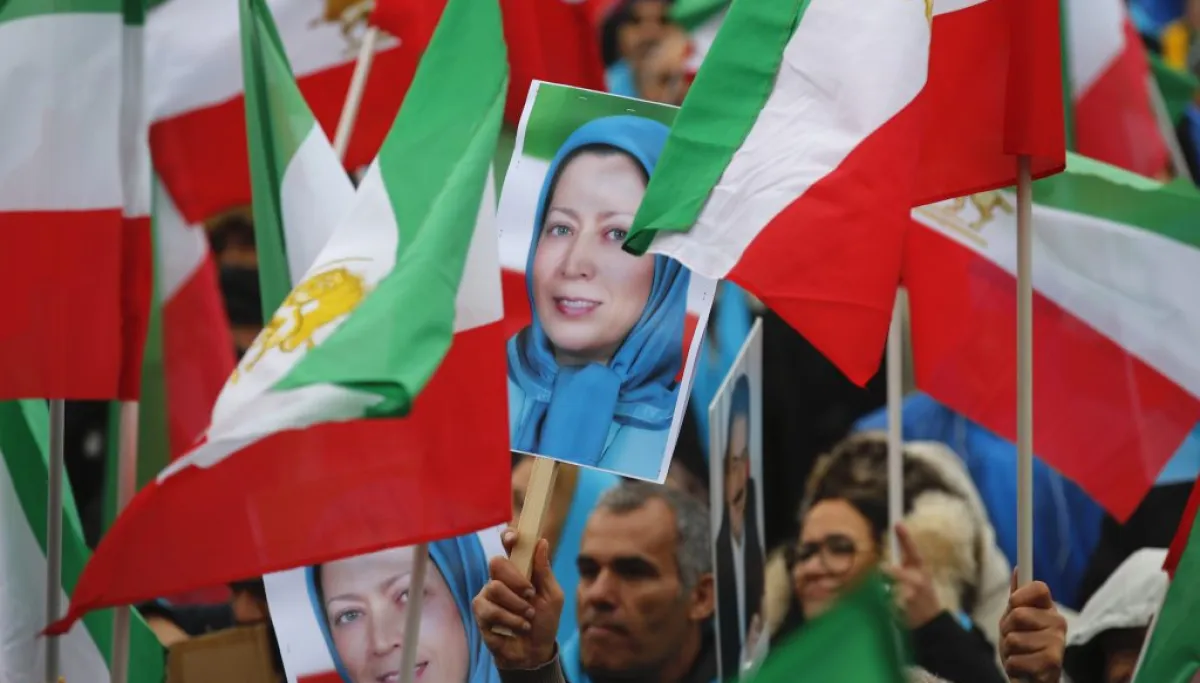
West Backs Iranian Opposition Group Shunned by Iranians

The MEK lacks democratic credentials to transform Iran into a liberal democracy, as its leftist-Islamist ideology conflicts with the modern, secular society that has emerged among Iran's educated population.
AUGUST 24, 2026 AT 2:52 PM

Iranian society has evolved into a highly educated, modern population that already possesses the social foundation necessary to become a Western ally. The country requires only a fundamental political transformation to realize this potential, not the imposition of an ideologically rigid opposition group disconnected from the Iranian people’s aspirations.

The Iranian population demonstrates remarkable advancement in education, with university enrollment split roughly equally between men and women. Modern values permeate daily life in major urban centers including Tehran, Mashhad, Isfahan, and Shiraz, where thriving cafe cultures, independent theaters, art galleries, and underground music scenes reflect contemporary global youth culture. Iranian women maintain strong presence across the workforce, arts, and cultural sectors. Individual freedom and equal rights represent deeply cherished principles throughout society, creating a stark disconnect between the population and the authoritarian political structure governing them.

Communist Roots and Anti-American Violence

The MEK was founded on September 6, 1965, as a leftist-Islamist organization pursuing communist ideals. In 1975, the group assassinated Colonel Paul R. Shaffer and Lieutenant Colonel Jack H. Turner, two United States Air Force officers serving with the American military mission in Iran.

Following the 1979 revolution, the MEK clashed with the Islamic Republic and faced severe crackdowns from the new regime. However, their opposition to the current theocracy does not qualify them as a viable democratic alternative. Communist ideology and political Islam remain deeply embedded within the organization’s structure and worldview, preventing the Iranian people from viewing them as a genuinely pro-freedom political movement.

Alliance with Saddam Hussein During War

After being marginalized from power by the Islamic Republic, the MEK aligned itself with Iraqi dictator Saddam Hussein during the war Iraq launched against Iranian territorial integrity. This collaboration represents one of the most damaging aspects of the group’s reputation among ordinary Iranians.

The organization conducted numerous terrorist operations inside Iran that targeted not merely the regime but Iranian citizens themselves. These actions generated widespread hatred toward the MEK among the Iranian public. Their dogmatic mindset has prevented them from playing any meaningful role in recent Iranian protest movements, and no significant popular movement has emerged in their support.

No Popular Support for Imposed Leadership

While Iranian society stands ready to transition toward genuine liberal democracy and establish extensive positive economic, cultural, and diplomatic relationships with the West through structural political change, this transformation cannot be achieved by an organization lacking both a favorable track record and popular support. The MEK seeks the plunder of Iran rather than its development and would prove far worse than the current political regime.

The historical parallel to Ruhollah Khomeini proves instructive. Khomeini made seemingly freedom-oriented promises before seizing power, yet closer examination revealed his true intent to establish a system that ultimately produced Iran’s decline. The MEK follows a similar pattern of deceptive rhetoric masking authoritarian ambitions incompatible with the modern, democratic aspirations of the Iranian people.

Mousavi is an Iranian graduate student in Economics and Data Analysis at the University of Bergamo, Italy, with academic focus on political economy and monetary economics. He serves as a member of the Entangled Political Economy Research Network at the Mercatus Center and the Hume Society, with research selected for the Mont Pelerin Society conference 2024.

With information from Washington Examiner
Share:
Eleni Papadaki-Van Der Merwe

She was born in 1986 in Johannesburg, South Africa. She is the granddaughter of an immigrant from Crete who settled in the Greek community of Johannesburg (one of the largest in Africa). She holds a bachelor’s degree in International Relations and Political Science from the University of the Witwatersrand (Wits) in Johannesburg and a master’s degree in Journalism from Rhodes University in Grahamstown. She began her career at English-language media outlets in Johannesburg, covering politics and economics, with a focus on issues related to migration and the diaspora. She moved to Athens in 2015 to “return to her roots,” initially to pursue graduate studies, and has remained there permanently. She is married to an Afrikaner; they have two children and live in the southern suburbs of Athens.

Iranian society has evolved into a highly educated, modern population that already possesses the social foundation necessary to become a Western ally. The country requires only a fundamental political transformation to realize this potential, not the imposition of an ideologically rigid opposition group disconnected from the Iranian people’s aspirations.

The Iranian population demonstrates remarkable advancement in education, with university enrollment split roughly equally between men and women. Modern values permeate daily life in major urban centers including Tehran, Mashhad, Isfahan, and Shiraz, where thriving cafe cultures, independent theaters, art galleries, and underground music scenes reflect contemporary global youth culture. Iranian women maintain strong presence across the workforce, arts, and cultural sectors. Individual freedom and equal rights represent deeply cherished principles throughout society, creating a stark disconnect between the population and the authoritarian political structure governing them.

Communist Roots and Anti-American Violence

The MEK was founded on September 6, 1965, as a leftist-Islamist organization pursuing communist ideals. In 1975, the group assassinated Colonel Paul R. Shaffer and Lieutenant Colonel Jack H. Turner, two United States Air Force officers serving with the American military mission in Iran.

Following the 1979 revolution, the MEK clashed with the Islamic Republic and faced severe crackdowns from the new regime. However, their opposition to the current theocracy does not qualify them as a viable democratic alternative. Communist ideology and political Islam remain deeply embedded within the organization’s structure and worldview, preventing the Iranian people from viewing them as a genuinely pro-freedom political movement.

Alliance with Saddam Hussein During War

After being marginalized from power by the Islamic Republic, the MEK aligned itself with Iraqi dictator Saddam Hussein during the war Iraq launched against Iranian territorial integrity. This collaboration represents one of the most damaging aspects of the group’s reputation among ordinary Iranians.

The organization conducted numerous terrorist operations inside Iran that targeted not merely the regime but Iranian citizens themselves. These actions generated widespread hatred toward the MEK among the Iranian public. Their dogmatic mindset has prevented them from playing any meaningful role in recent Iranian protest movements, and no significant popular movement has emerged in their support.

No Popular Support for Imposed Leadership

While Iranian society stands ready to transition toward genuine liberal democracy and establish extensive positive economic, cultural, and diplomatic relationships with the West through structural political change, this transformation cannot be achieved by an organization lacking both a favorable track record and popular support. The MEK seeks the plunder of Iran rather than its development and would prove far worse than the current political regime.

The historical parallel to Ruhollah Khomeini proves instructive. Khomeini made seemingly freedom-oriented promises before seizing power, yet closer examination revealed his true intent to establish a system that ultimately produced Iran’s decline. The MEK follows a similar pattern of deceptive rhetoric masking authoritarian ambitions incompatible with the modern, democratic aspirations of the Iranian people.

Mousavi is an Iranian graduate student in Economics and Data Analysis at the University of Bergamo, Italy, with academic focus on political economy and monetary economics. He serves as a member of the Entangled Political Economy Research Network at the Mercatus Center and the Hume Society, with research selected for the Mont Pelerin Society conference 2024.

With information from Washington Examiner