Necessary Cookies

Required for the site to function. Cannot be disabled.

Analytics Cookies

Help us understand how visitors interact with our site (Google Analytics via GTM).

Marketing Cookies

Used to track visitors and deliver personalised advertisements.

We use cookies to enhance your browsing experience and analyse site traffic. By clicking Accept All, you consent to our use of cookies. Privacy Policy
NewsFire Global
Home News Europe World Christianity Culture Wars Opinion Video
Information
About Us Authors Advertising Terms & Conditions Privacy Policy Contact
R2B Media
R2B NEWSFIRE.GR PAPAFOTIS.GR THRACTION HELLENIC CONSERVATIVES RIGHT2THEBONE YT
News World

Washington Stalls Macron Ambassador Pick After UN Rights Clash

The United States has blocked France's nominee for ambassador to Washington after France publicly criticized America for voting against extending a UN human rights official's mandate.
AUGUST 6, 2026 AT 8:55 PM

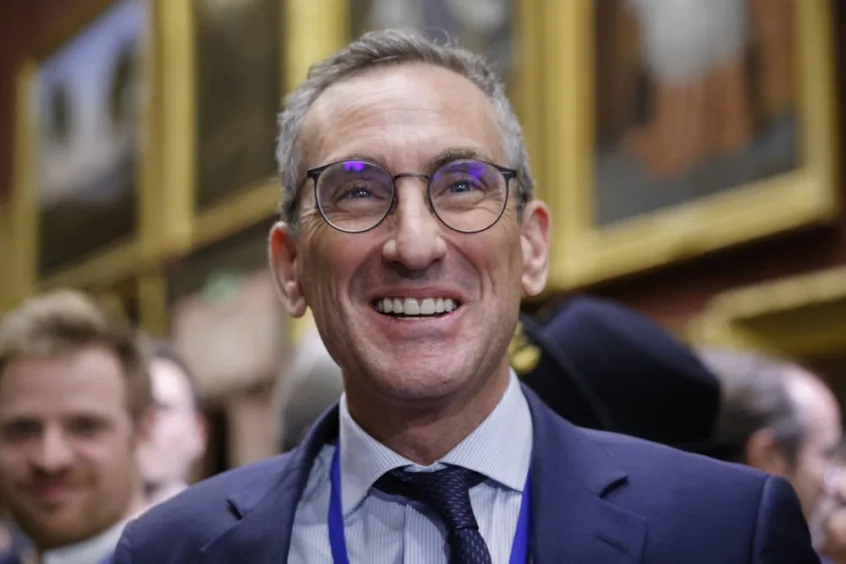
Aurélien Lechevallier, a close ally of French President Emmanuel Macron and current chief of staff to Foreign Minister Jean-Noël Barrot, was scheduled to assume the ambassadorship in September but has yet to receive the required American consent, according to Brussels Signal.

The holdup stems from standard diplomatic protocol requiring agrément—formal approval from the receiving country before an envoy can take up their post. While the process is typically confidential and disagreements are resolved behind closed doors, Washington has left the matter unresolved in what observers view as a deliberate signal of displeasure.

The trigger for American discontent came on July 25, when France’s mission to the UN in Geneva publicly criticized the United States for voting alongside Russia, North Korea, and seven other nations against extending the mandate of Volker Türk, the UN High Commissioner for Human Rights.

The French mission’s post on X declared that the US used to be a beacon of human rights. Not anymore, adding that the world no longer listened to Washington on such matters.

The UN General Assembly had approved Türk’s four-year extension on July 24 by a vote of 144 to 10, with 13 abstentions. The vote rejected both a Russian proposal for a shorter term and an American request to delay the ballot. Türk’s second mandate is set to begin October 12.

Relations deteriorated further when the American delegation walked out of a Security Council session on the Ukraine conflict as the French representative began to speak, as Brussels Signal reports.

A State Department official characterized the American response as appropriate given what Washington described as “irresponsible and disrespectful rhetoric” from the French side.

Türk, an Austrian lawyer who has served in the role since 2022, has drawn American ire for criticizing Israel’s operations in Gaza and calling for investigations into deaths occurring in U.S. immigration detention facilities.

Broader Diplomatic Tensions

Barrot had previously angered the Trump administration by characterizing a State Department grant program for European civil society organizations as foreign interference. Washington presents the initiative as supporting what it calls Europe’s “civilisational self-confidence” and national sovereignty.

The Franco-American relationship has been under strain for months. U.S. Ambassador to Paris Charles Kushner has been summoned twice by the French government, most recently over comments related to the death of a right-wing activist.

Lechevallier, a former ambassador to South Africa, would replace Laurent Bili, who has held the Washington posting since 2023.

Despite the current standoff, sources suggest the dispute will likely be resolved and that Washington is not expected to formally reject the nomination outright.

Macron’s Institutional Positioning

Critics within France have accused Macron of using a recent wave of senior appointments to place loyalists throughout key institutions as his second presidential term approaches its 2027 conclusion. French constitutional law bars him from seeking a third consecutive term.

With information from Brussels Signal

Share:
Eleni Papadaki-Van Der Merwe

She was born in 1986 in Johannesburg, South Africa. She is the granddaughter of an immigrant from Crete who settled in the Greek community of Johannesburg (one of the largest in Africa). She holds a bachelor’s degree in International Relations and Political Science from the University of the Witwatersrand (Wits) in Johannesburg and a master’s degree in Journalism from Rhodes University in Grahamstown. She began her career at English-language media outlets in Johannesburg, covering politics and economics, with a focus on issues related to migration and the diaspora. She moved to Athens in 2015 to “return to her roots,” initially to pursue graduate studies, and has remained there permanently. She is married to an Afrikaner; they have two children and live in the southern suburbs of Athens.

Aurélien Lechevallier, a close ally of French President Emmanuel Macron and current chief of staff to Foreign Minister Jean-Noël Barrot, was scheduled to assume the ambassadorship in September but has yet to receive the required American consent, according to Brussels Signal.

The holdup stems from standard diplomatic protocol requiring agrément—formal approval from the receiving country before an envoy can take up their post. While the process is typically confidential and disagreements are resolved behind closed doors, Washington has left the matter unresolved in what observers view as a deliberate signal of displeasure.

The trigger for American discontent came on July 25, when France’s mission to the UN in Geneva publicly criticized the United States for voting alongside Russia, North Korea, and seven other nations against extending the mandate of Volker Türk, the UN High Commissioner for Human Rights.

The French mission’s post on X declared that the US used to be a beacon of human rights. Not anymore, adding that the world no longer listened to Washington on such matters.

The UN General Assembly had approved Türk’s four-year extension on July 24 by a vote of 144 to 10, with 13 abstentions. The vote rejected both a Russian proposal for a shorter term and an American request to delay the ballot. Türk’s second mandate is set to begin October 12.

Relations deteriorated further when the American delegation walked out of a Security Council session on the Ukraine conflict as the French representative began to speak, as Brussels Signal reports.

A State Department official characterized the American response as appropriate given what Washington described as “irresponsible and disrespectful rhetoric” from the French side.

Türk, an Austrian lawyer who has served in the role since 2022, has drawn American ire for criticizing Israel’s operations in Gaza and calling for investigations into deaths occurring in U.S. immigration detention facilities.

Broader Diplomatic Tensions

Barrot had previously angered the Trump administration by characterizing a State Department grant program for European civil society organizations as foreign interference. Washington presents the initiative as supporting what it calls Europe’s “civilisational self-confidence” and national sovereignty.

The Franco-American relationship has been under strain for months. U.S. Ambassador to Paris Charles Kushner has been summoned twice by the French government, most recently over comments related to the death of a right-wing activist.

Lechevallier, a former ambassador to South Africa, would replace Laurent Bili, who has held the Washington posting since 2023.

Despite the current standoff, sources suggest the dispute will likely be resolved and that Washington is not expected to formally reject the nomination outright.

Macron’s Institutional Positioning

Critics within France have accused Macron of using a recent wave of senior appointments to place loyalists throughout key institutions as his second presidential term approaches its 2027 conclusion. French constitutional law bars him from seeking a third consecutive term.

With information from Brussels Signal

