Necessary Cookies

Required for the site to function. Cannot be disabled.

Analytics Cookies

Help us understand how visitors interact with our site (Google Analytics via GTM).

Marketing Cookies

Used to track visitors and deliver personalised advertisements.

We use cookies to enhance your browsing experience and analyse site traffic. By clicking Accept All, you consent to our use of cookies. Privacy Policy
NewsFire Global
Home News Europe World Christianity Culture Wars Opinion Video
Information
About Us Authors Advertising Terms & Conditions Privacy Policy Contact
R2B Media
R2B NEWSFIRE.GR PAPAFOTIS.GR THRACTION HELLENIC CONSERVATIVES RIGHT2THEBONE YT
News World

Washington Paves Way for Saudi Nuclear Program

The U.S. signed a nuclear cooperation agreement with Saudi Arabia potentially allowing uranium enrichment, marking a significant shift from longstanding American non-proliferation policy toward Arab nations.

JULY 28, 2026 AT 7:49 AM

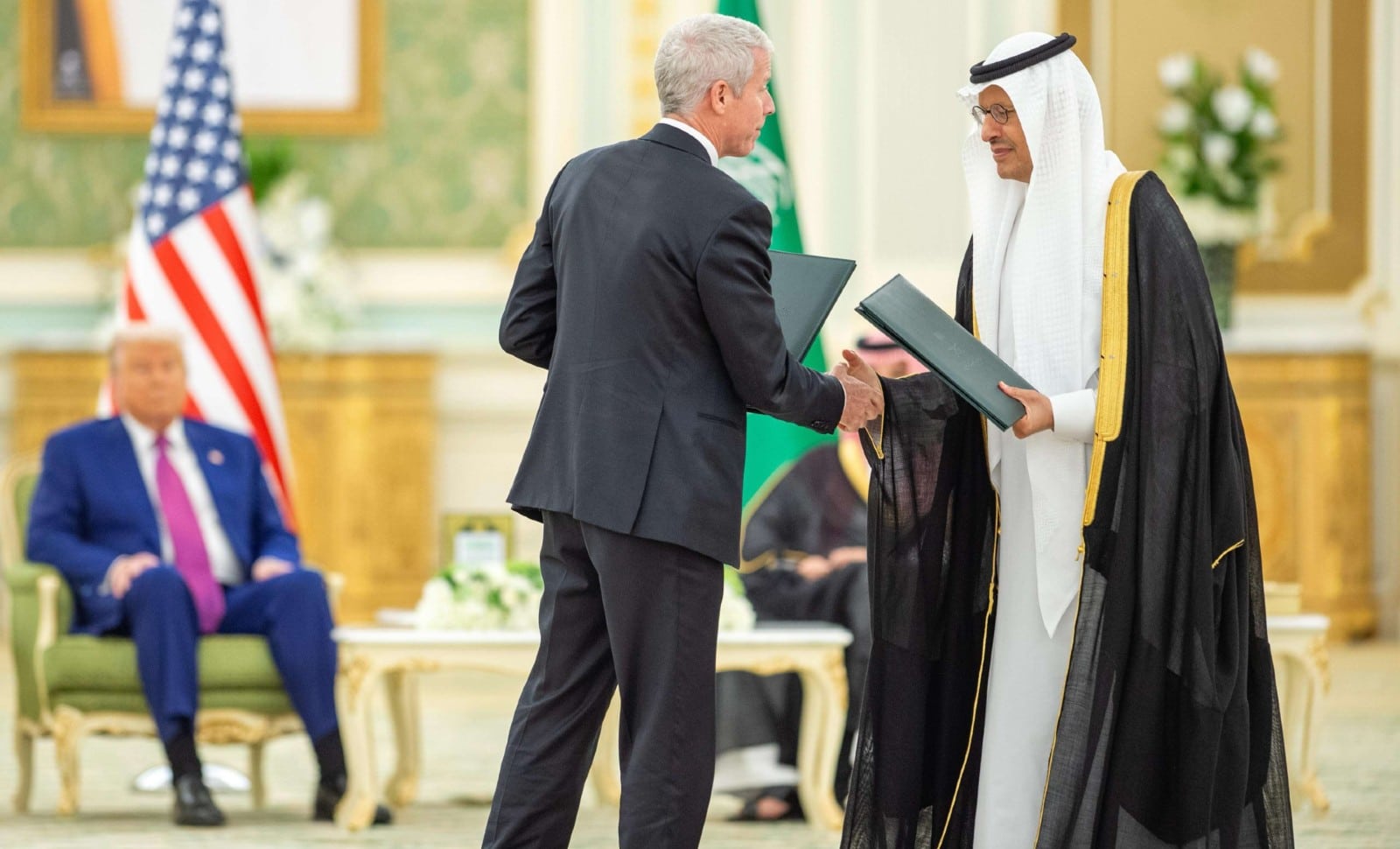
According to Causeur, the deal signed on July 22 concludes eighteen years of negotiations and opens Saudi Arabia’s nuclear market to American companies under a thirty-year partnership framework worth billions of dollars. Energy Secretary Chris Wright and his Saudi counterpart, Prince Abdelaziz bin Salman—half-brother of Crown Prince Mohammed bin Salman—formalized the agreement, which will enable Riyadh to construct its first nuclear power plants with U.S. corporate assistance.

The agreement falls under Section 123 of the Atomic Energy Act of 1954, legislation that governs American nuclear technology transfers abroad and stems from President Eisenhower’s “Atoms for Peace” initiative. A separate bilateral accord addresses safeguards and control mechanisms, though the Department of Energy has released virtually no specifics about either document.

Strategic Ambiguity and Hidden Terms

The official announcement remained deliberately vague, citing the “highest standards” of safety and non-proliferation while promising privileged access for American firms to Saudi Arabia’s future nuclear market. Critically, neither the main agreement nor the control framework has been published. The Energy Department indicated only that both instruments would be transmitted to Congress.

As Causeur reports, the arrangement includes two confidential letters exchanged between the governments that reportedly clarify the most sensitive issue: uranium enrichment. These letters, if they possess legal force or determine interpretation of the agreement, should theoretically be transmitted to Congress alongside the main text, possibly in classified form, though they need not be made public.

Maintaining these provisions in separate instruments could protect sensitive information but also preserve political ambiguity or facilitate later modification of their terms. Until these documents reach lawmakers or become public, their binding nature, scope, and relationship to the primary accord remain impossible to assess. Their potential absence from materials sent to Congress would prove particularly problematic if they contain the actual guarantees regarding enrichment and inspections.

Congressional Review Process Favors White House

Congress will have 90 days of continuous session—not calendar days—to examine the agreement. Importantly, the review procedure favors the executive branch. Unless the House of Representatives and Senate pass a joint resolution of disapproval, the accord will automatically take effect. Even if a parliamentary majority opposed the deal, President Trump could veto such a resolution, requiring a two-thirds majority in both chambers to override—a difficult threshold to reach.

Congress is not being asked to affirmatively approve the agreement; rather, opponents must assemble an exceptionally large majority to prevent its implementation. The White House may well need this procedural advantage given the substantial concessions Riyadh appears to have secured.

Opening the Door to Enrichment

Saudi Arabia’s primary victory lies not in immediate authorization to enrich uranium but in Washington’s refusal to permanently close off that possibility. According to press reports of the agreement’s terms, the two governments will conduct a two-year joint study to determine whether building an enrichment facility in Saudi Arabia is technically necessary and commercially viable. Should the conclusion prove positive, American companies could construct and operate such a facility on Saudi territory.

The arrangement represents a fundamental departure from decades of American non-proliferation doctrine and marks the first time Washington has accepted the prospect of an Arab state without existing nuclear infrastructure eventually enriching uranium domestically. The deal could provide a lifeline to America’s struggling domestic nuclear industry while deepening geopolitical ties between the two nations for decades to come.

Yet the strategic implications extend far beyond industrial cooperation, potentially reshaping the nuclear landscape across the Middle East and setting a precedent that other regional powers will surely note.

With information from Causeur

Share:
Eleni Papadaki-Van Der Merwe

She was born in 1986 in Johannesburg, South Africa. She is the granddaughter of an immigrant from Crete who settled in the Greek community of Johannesburg (one of the largest in Africa). She holds a bachelor’s degree in International Relations and Political Science from the University of the Witwatersrand (Wits) in Johannesburg and a master’s degree in Journalism from Rhodes University in Grahamstown. She began her career at English-language media outlets in Johannesburg, covering politics and economics, with a focus on issues related to migration and the diaspora. She moved to Athens in 2015 to “return to her roots,” initially to pursue graduate studies, and has remained there permanently. She is married to an Afrikaner; they have two children and live in the southern suburbs of Athens.

According to Causeur, the deal signed on July 22 concludes eighteen years of negotiations and opens Saudi Arabia’s nuclear market to American companies under a thirty-year partnership framework worth billions of dollars. Energy Secretary Chris Wright and his Saudi counterpart, Prince Abdelaziz bin Salman—half-brother of Crown Prince Mohammed bin Salman—formalized the agreement, which will enable Riyadh to construct its first nuclear power plants with U.S. corporate assistance.

The agreement falls under Section 123 of the Atomic Energy Act of 1954, legislation that governs American nuclear technology transfers abroad and stems from President Eisenhower’s “Atoms for Peace” initiative. A separate bilateral accord addresses safeguards and control mechanisms, though the Department of Energy has released virtually no specifics about either document.

Strategic Ambiguity and Hidden Terms

The official announcement remained deliberately vague, citing the “highest standards” of safety and non-proliferation while promising privileged access for American firms to Saudi Arabia’s future nuclear market. Critically, neither the main agreement nor the control framework has been published. The Energy Department indicated only that both instruments would be transmitted to Congress.

As Causeur reports, the arrangement includes two confidential letters exchanged between the governments that reportedly clarify the most sensitive issue: uranium enrichment. These letters, if they possess legal force or determine interpretation of the agreement, should theoretically be transmitted to Congress alongside the main text, possibly in classified form, though they need not be made public.

Maintaining these provisions in separate instruments could protect sensitive information but also preserve political ambiguity or facilitate later modification of their terms. Until these documents reach lawmakers or become public, their binding nature, scope, and relationship to the primary accord remain impossible to assess. Their potential absence from materials sent to Congress would prove particularly problematic if they contain the actual guarantees regarding enrichment and inspections.

Congressional Review Process Favors White House

Congress will have 90 days of continuous session—not calendar days—to examine the agreement. Importantly, the review procedure favors the executive branch. Unless the House of Representatives and Senate pass a joint resolution of disapproval, the accord will automatically take effect. Even if a parliamentary majority opposed the deal, President Trump could veto such a resolution, requiring a two-thirds majority in both chambers to override—a difficult threshold to reach.

Congress is not being asked to affirmatively approve the agreement; rather, opponents must assemble an exceptionally large majority to prevent its implementation. The White House may well need this procedural advantage given the substantial concessions Riyadh appears to have secured.

Opening the Door to Enrichment

Saudi Arabia’s primary victory lies not in immediate authorization to enrich uranium but in Washington’s refusal to permanently close off that possibility. According to press reports of the agreement’s terms, the two governments will conduct a two-year joint study to determine whether building an enrichment facility in Saudi Arabia is technically necessary and commercially viable. Should the conclusion prove positive, American companies could construct and operate such a facility on Saudi territory.

The arrangement represents a fundamental departure from decades of American non-proliferation doctrine and marks the first time Washington has accepted the prospect of an Arab state without existing nuclear infrastructure eventually enriching uranium domestically. The deal could provide a lifeline to America’s struggling domestic nuclear industry while deepening geopolitical ties between the two nations for decades to come.

Yet the strategic implications extend far beyond industrial cooperation, potentially reshaping the nuclear landscape across the Middle East and setting a precedent that other regional powers will surely note.

With information from Causeur

