Necessary Cookies

Required for the site to function. Cannot be disabled.

Analytics Cookies

Help us understand how visitors interact with our site (Google Analytics via GTM).

Marketing Cookies

Used to track visitors and deliver personalised advertisements.

We use cookies to enhance your browsing experience and analyse site traffic. By clicking Accept All, you consent to our use of cookies. Privacy Policy
NewsFire Global
Home News Europe World Christianity Culture Wars Opinion Video
Information
About Us Authors Advertising Terms & Conditions Privacy Policy Contact
R2B Media
R2B NEWSFIRE.GR PAPAFOTIS.GR THRACTION HELLENIC CONSERVATIVES RIGHT2THEBONE YT
News World

Warren Harding’s Bold Speech Stands as Historic Presidential Act

President Warren G. Harding delivered a historic 1921 speech in Birmingham demanding racial equality before 100,000 people during Jim Crow, challenging Southern segregation despite advisers urging him to court white voters.
Stefanos Banos
Stefanos Banos Staff Writer
JULY 31, 2026 AT 11:01 PM

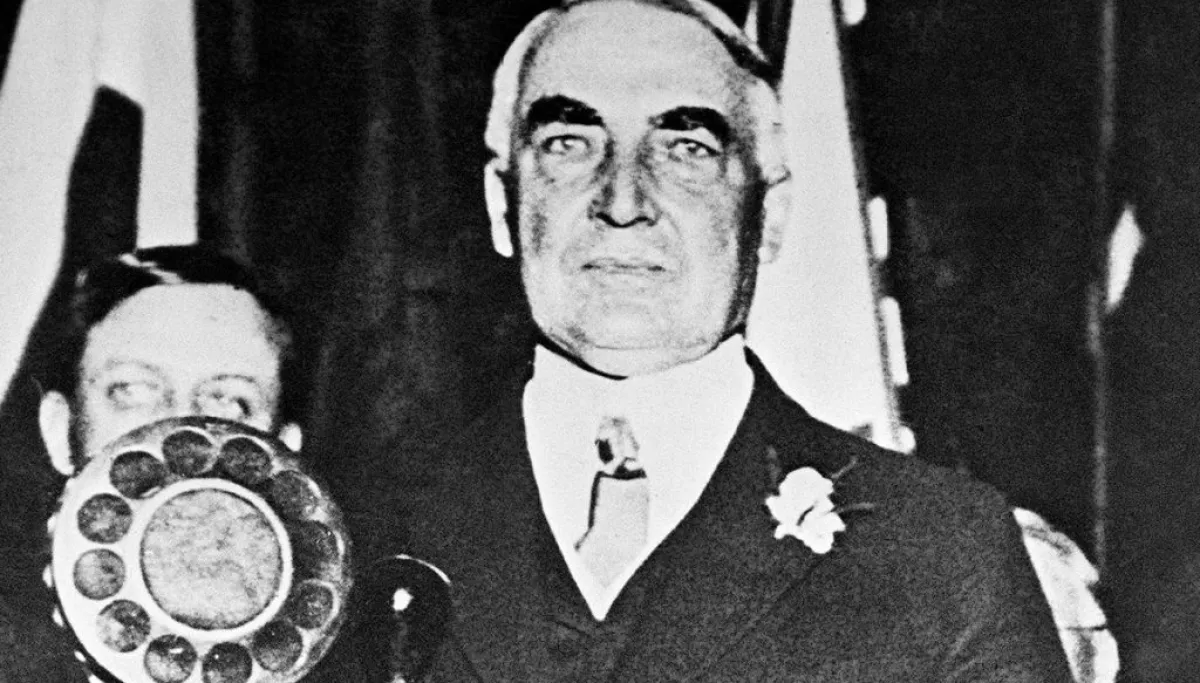
President Warren G. Harding delivered what may be the most courageous presidential address in American history when he stood before 100,000 people in Birmingham, Alabama, in October 1921 to demand political and economic equality for black Americans during the height of Jim Crow segregation.

According to David Harsanyi writing in Washington Examiner, the speech shocked the predominantly white Southern audience when Harding declared that democracy was a lie without equality of opportunity. The president told the segregated crowd that he would speak frankly, whether you like it or not, and insisted that black men should vote when fit while unfit white men should be prohibited from voting.
Contemporary reports from the New York Times conservatively estimated 100,000 attendees at the event. The newspaper noted that segregated black audience members at the back erupted in loud cheers showing their approval, while the white majority applauded only once or twice with scattered response.

The speech venue itself carried symbolic weight. Harding spoke at the newly christened Woodrow Wilson Park, named after his predecessor who had segregated the federal government in 1913 and set back civil rights for decades. Wilson, despite being an unapologetic bigot and authoritarian, continues to rank among America’s best presidents according to historians and academic experts.

Harsanyi argues that if another occasion exists where a president directly challenged the worldview of tens of thousands of voters face-to-face, it remains unknown. Harding’s own advisers had sent him to shore up white Southern voters, making his choice to champion equality all the more remarkable.

The poker-playing former newsman won his 1920 election in a landslide by promising to return the nation to normalcy. Upon taking office, Harding spent his first term reversing Wilson’s damage by reappointing black Americans to civil service positions and tackling the economic disaster he inherited.

Economic Recovery Through Classical Methods

After inheriting one of the worst recessions in United States history, Harding led the nation into the Roaring Twenties within a single year using methods that experts have scorned since Franklin Roosevelt’s presidency. His approach involved reprivatizing large portions of the economy, deregulating industry, slashing government spending, and paying down debt while lowering taxes.

Historian Paul Johnson identified the 1920s recovery in his book Modern Times as the last time a major industrial power treated a recession through classic laissez-faire methods. The success was dramatic and swift, contradicting decades of economic orthodoxy that followed.

Harding detested class warfare and victimhood politics, telling his Birmingham audience that Americans should embrace opportunity in which recognition and reward would be distributed according to individual merit, regardless of race or color. He spent considerable time in the speech attacking the populist demagoguery of his era.

Fighting Against Division

The president warned against the development of group and class organizations in America, noting the danger of dividing the electorate into labor votes, business votes, Irish votes, Scandinavian votes, and Italian votes. Coming from many origins of race, tradition, language, color, institutions, and heredity, Americans needed to avoid demagogues who would array class against class and group against group.

Harding spent most of his life in Marion, Ohio, then a major industrial center. While he supported protectionist trade policies, he rejected portraying any American as a victim of Wall Street, the establishment, elites, or the wealthy. His public and private writings contain no such victimhood narratives.

Modern depictions of Harding are almost universally negative, painting him as failed, corrupt, lecherous, and ineffective. Yet in his own time, he was wildly popular precisely because he governed without playing on the electorate’s fears, envy, and grievances. He frequently told Americans things they did not want to hear, as Birmingham demonstrated.

Recent right-wing attempts to frame Harding as a populist in the modern mold are historically inaccurate, Harsanyi contends. The president’s Birmingham speech stands as a testament to principled leadership that prioritized truth and equality over political calculation and crowd-pleasing rhetoric.

With information from Washington Examiner

Share:
Stefanos Banos
Stefanos Banos

Stefanos Banos was born in Piraeus and is an editor at NewsFire.GR, specializing in political analysis and international relations. He graduated from the Department of Communication and Media at the University of Bremen in Germany, where he also completed his Master of Arts in Communication and Media Studies. Married to Zoi, he is a proud father of three boys.

President Warren G. Harding delivered what may be the most courageous presidential address in American history when he stood before 100,000 people in Birmingham, Alabama, in October 1921 to demand political and economic equality for black Americans during the height of Jim Crow segregation.

According to David Harsanyi writing in Washington Examiner, the speech shocked the predominantly white Southern audience when Harding declared that democracy was a lie without equality of opportunity. The president told the segregated crowd that he would speak frankly, whether you like it or not, and insisted that black men should vote when fit while unfit white men should be prohibited from voting.

Contemporary reports from the New York Times conservatively estimated 100,000 attendees at the event. The newspaper noted that segregated black audience members at the back erupted in loud cheers showing their approval, while the white majority applauded only once or twice with scattered response.

The speech venue itself carried symbolic weight. Harding spoke at the newly christened Woodrow Wilson Park, named after his predecessor who had segregated the federal government in 1913 and set back civil rights for decades. Wilson, despite being an unapologetic bigot and authoritarian, continues to rank among America’s best presidents according to historians and academic experts.

Harsanyi argues that if another occasion exists where a president directly challenged the worldview of tens of thousands of voters face-to-face, it remains unknown. Harding’s own advisers had sent him to shore up white Southern voters, making his choice to champion equality all the more remarkable.

The poker-playing former newsman won his 1920 election in a landslide by promising to return the nation to normalcy. Upon taking office, Harding spent his first term reversing Wilson’s damage by reappointing black Americans to civil service positions and tackling the economic disaster he inherited.

Economic Recovery Through Classical Methods

After inheriting one of the worst recessions in United States history, Harding led the nation into the Roaring Twenties within a single year using methods that experts have scorned since Franklin Roosevelt’s presidency. His approach involved reprivatizing large portions of the economy, deregulating industry, slashing government spending, and paying down debt while lowering taxes.

Historian Paul Johnson identified the 1920s recovery in his book Modern Times as the last time a major industrial power treated a recession through classic laissez-faire methods. The success was dramatic and swift, contradicting decades of economic orthodoxy that followed.

Harding detested class warfare and victimhood politics, telling his Birmingham audience that Americans should embrace opportunity in which recognition and reward would be distributed according to individual merit, regardless of race or color. He spent considerable time in the speech attacking the populist demagoguery of his era.

Fighting Against Division

The president warned against the development of group and class organizations in America, noting the danger of dividing the electorate into labor votes, business votes, Irish votes, Scandinavian votes, and Italian votes. Coming from many origins of race, tradition, language, color, institutions, and heredity, Americans needed to avoid demagogues who would array class against class and group against group.

Harding spent most of his life in Marion, Ohio, then a major industrial center. While he supported protectionist trade policies, he rejected portraying any American as a victim of Wall Street, the establishment, elites, or the wealthy. His public and private writings contain no such victimhood narratives.

Modern depictions of Harding are almost universally negative, painting him as failed, corrupt, lecherous, and ineffective. Yet in his own time, he was wildly popular precisely because he governed without playing on the electorate’s fears, envy, and grievances. He frequently told Americans things they did not want to hear, as Birmingham demonstrated.

Recent right-wing attempts to frame Harding as a populist in the modern mold are historically inaccurate, Harsanyi contends. The president’s Birmingham speech stands as a testament to principled leadership that prioritized truth and equality over political calculation and crowd-pleasing rhetoric.

With information from Washington Examiner

