Venice Biennale Sparks Cultural Clash with Italian Right
Italy's conservative movement is fractured over Russia's return to the 2026 Venice Biennale, with Culture Minister Alessandro Giuli boycotting the event while Biennale president Pietrangelo Buttafuoco defends preserving cultural dialogue.
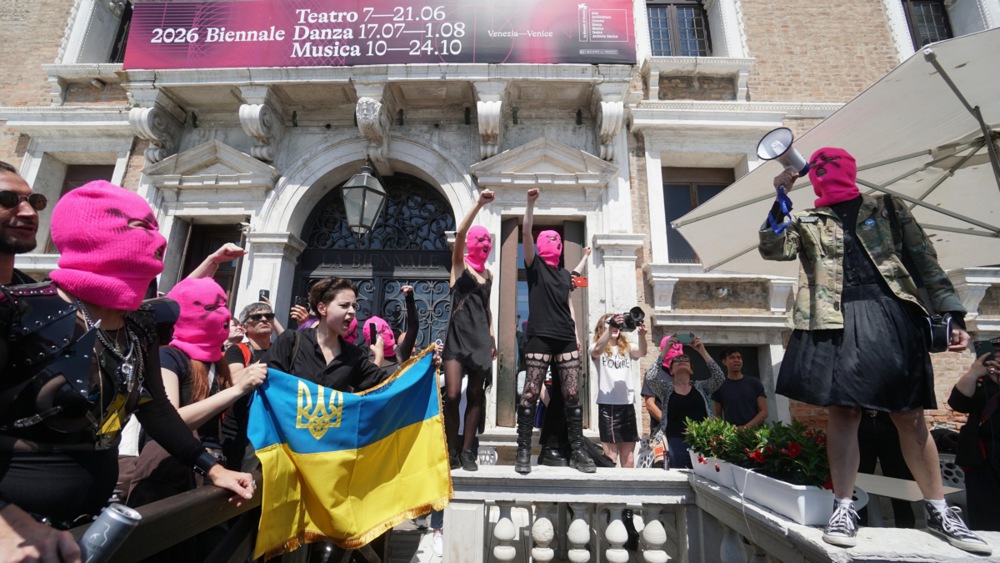

A public dispute over Russia’s return to the Venice Biennale has exposed a widening rift within Italy’s conservative movement, pitting government-aligned intellectuals against right-wing critics who accuse Prime Minister Giorgia Meloni’s administration of abandoning core principles and lacking cultural vision.
The conflict erupted when Italian Culture Minister Alessandro Giuli declared on May 8 that Putin has won in Venice, condemning the decision to allow Russia’s pavilion at the 2026 Venice Biennale, according to Brussels Signal. Giuli, a prominent journalist and intellectual appointed to his post in September 2024, boycotted the opening ceremony on May 9 — a highly unusual move that underscored the depth of disagreement within conservative ranks.
At the center of the controversy stands Pietrangelo Buttafuoco, president of the Biennale Foundation and a well-known right-wing intellectual, who refused to exclude Russia despite pressure from the European Commission and government circles. Buttafuoco defended the decision as necessary to preserve cultural dialogue and protect the autonomy of artistic institutions from political interference.
EU threats and member state pressure
The European Commission has warned that EU funding for the Venice Biennale — approximately €2 million under the Creative Europe programme — may be suspended if Russia is not excluded, as Brussels Signal reports. Fourteen of the 27 EU member states backed the call for a funding suspension during a meeting of culture ministers in Brussels.
The Italian government aligned itself with the Commission’s position and reportedly sent inspectors to conduct an administrative review of how the Biennale handled Russia’s participation. The Biennale’s entire international jury resigned in protest nine days before the opening.
Despite institutional and financial pressure, the Russian Pavilion was confirmed. Russia had been absent since 2022 following its invasion of Ukraine, last participating in 2019 and lending its space to Bolivia in 2024.
Conservative split over cultural strategy and EU alignment
The Biennale dispute has crystallized a broader ideological divide within Italy’s right-wing intellectual community. On one side stand figures aligned with Meloni’s Fratelli d’Italia (FdI) party and the government’s institutional priorities. On the other stand conservative commentators and thinkers who, despite sharing traditional values, openly criticize the government for what they view as excessive alignment with EU institutional agendas and mainstream power structures.
In recent months, several prominent conservative intellectuals have voiced concerns about what they describe as the government’s lack of a coherent long-term cultural strategy, Brussels Signal reports. Critics argue that by failing to develop a strong cultural vision, the Meloni administration has effectively ceded cultural hegemony to the Left.
The Venice Biennale, one of the world’s most important contemporary art exhibitions held every two years, has become a flashpoint for this tension — a battle not only over geopolitics but over the future direction and intellectual independence of Italy’s conservative movement.
With information from Brussels Signal