Necessary Cookies

Required for the site to function. Cannot be disabled.

Analytics Cookies

Help us understand how visitors interact with our site (Google Analytics via GTM).

Marketing Cookies

Used to track visitors and deliver personalised advertisements.

We use cookies to enhance your browsing experience and analyse site traffic. By clicking Accept All, you consent to our use of cookies. Privacy Policy
NewsFire Global
Home News Europe World Christianity Culture Wars Opinion
Information
About Us Authors Advertising Terms & Conditions Privacy Policy Contact
R2B Media
R2B NEWSFIRE.GR PAPAFOTIS.GR THRACTION HELLENIC CONSERVATIVES RIGHT2THEBONE YT
News World

USCIS Lawyers Shift to DOJ to Expedite Denaturalization Cases

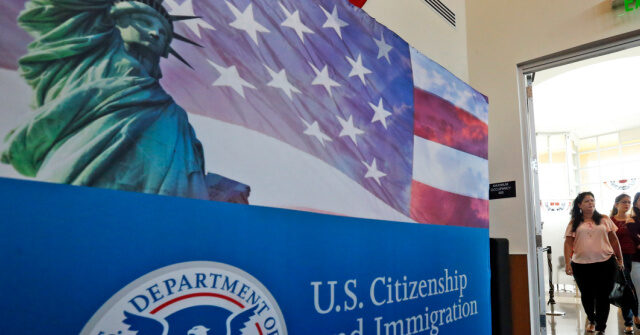
The Trump administration is significantly escalating denaturalization prosecutions by reassigning federal immigration attorneys to Justice Department offices to target naturalized citizens suspected of obtaining citizenship through fraud or disqualifying circumstances.
Stefanos Banos
Stefanos Banos Staff Writer
MAY 24, 2026 AT 1:40 AM

As Breitbart News reports, lawyers working at U.S. Citizenship and Immigration Services (USCIS) are being transferred to U.S. attorney’s offices to focus on denaturalization cases. Four former agency officials described the reassignments to media outlets, with some characterizing the process as attorneys being “volun-told” to relocate. One source noted that prior denaturalization experience is not a requirement for participation, provided attorneys maintain active law licenses.

Zach Kahler, a USCIS spokesman, stated that the agency is “proud to support this critical effort by providing the Department of Justice with a team of our most skilled immigration law attorneys.”

A High Legal Standard

Denaturalization cases have historically remained rare, as legal experts note the evidentiary threshold is substantial. In civil cases alleging willful misrepresentation during naturalization, prosecutors must establish guilt through clear, convincing, and unequivocal evidence. One source emphasized that this demanding standard explains why such cases have never gained significant traction in the immigration system.

Rapid Case Expansion

The Trump administration has filed 35 denaturalization cases since the beginning of the President’s second term, with 12 filed in a single month according to DOJ records. The department has shortlisted approximately 385 individuals for potential denaturalization proceedings. During Trump’s first term, USCIS identified roughly 2,500 suspected cases but referred only a fraction to prosecutors.

A June 2025 Justice Department memorandum designated denaturalization as a top administrative priority, framing such prosecutions as essential to “the overall integrity of the naturalization program.”

Leadership Commitment

Joe Edlow, the USCIS director, has long advocated for expanding denaturalization enforcement. Speaking at an event hosted by the Center for Immigration Studies last September, he called for a decentralized approach to such cases across federal offices rather than concentrating them in a specialized unit.

In May, Justice Department officials unveiled charges against 12 naturalized citizens accused of serious offenses including terrorism, murder, firearms trafficking, marriage fraud, identity fraud, and possession of child exploitation material. The individuals identified came from Iraq, Colombia, Uzbekistan, Morocco, Somalia, The Gambia, Bolivia, Kenya, India, China, and Nigeria. Deputy Attorney General Todd Blanche indicated that the administration intends to pursue individuals who obtained citizenship through fraudulent or illegal channels, stating that the department is not limiting itself to particular categories.

Broader Security Framework

Kash Patel, Director of the FBI, has supported strengthening denaturalization provisions. During an appearance on Fox News in March, he highlighted a case involving an attacker from the Old Dominion incident who had previously been convicted of terrorism-related offenses but was never denaturalized, remaining in the country despite his criminal background.

The administration also announced on May 22 that migrants seeking green cards through Adjustment of Status pathways must generally return to their home countries and complete applications at U.S. embassies, except in extraordinary circumstances. The policy does not affect refugees, asylum applicants, or individuals already residing overseas. USCIS stated the measure represents a return “to the original intent of the law.”

With information from Breitbart News

Share:
Stefanos Banos
Stefanos Banos

Stefanos Banos was born in Piraeus and is an editor at NewsFire.GR, specializing in political analysis and international relations. He graduated from the Department of Communication and Media at the University of Bremen in Germany, where he also completed his Master of Arts in Communication and Media Studies. Married to Zoi, he is a proud father of three boys.

As Breitbart News reports, lawyers working at U.S. Citizenship and Immigration Services (USCIS) are being transferred to U.S. attorney’s offices to focus on denaturalization cases. Four former agency officials described the reassignments to media outlets, with some characterizing the process as attorneys being “volun-told” to relocate. One source noted that prior denaturalization experience is not a requirement for participation, provided attorneys maintain active law licenses.

Zach Kahler, a USCIS spokesman, stated that the agency is “proud to support this critical effort by providing the Department of Justice with a team of our most skilled immigration law attorneys.”

A High Legal Standard

Denaturalization cases have historically remained rare, as legal experts note the evidentiary threshold is substantial. In civil cases alleging willful misrepresentation during naturalization, prosecutors must establish guilt through clear, convincing, and unequivocal evidence. One source emphasized that this demanding standard explains why such cases have never gained significant traction in the immigration system.

Rapid Case Expansion

The Trump administration has filed 35 denaturalization cases since the beginning of the President’s second term, with 12 filed in a single month according to DOJ records. The department has shortlisted approximately 385 individuals for potential denaturalization proceedings. During Trump’s first term, USCIS identified roughly 2,500 suspected cases but referred only a fraction to prosecutors.

A June 2025 Justice Department memorandum designated denaturalization as a top administrative priority, framing such prosecutions as essential to “the overall integrity of the naturalization program.”

Leadership Commitment

Joe Edlow, the USCIS director, has long advocated for expanding denaturalization enforcement. Speaking at an event hosted by the Center for Immigration Studies last September, he called for a decentralized approach to such cases across federal offices rather than concentrating them in a specialized unit.

In May, Justice Department officials unveiled charges against 12 naturalized citizens accused of serious offenses including terrorism, murder, firearms trafficking, marriage fraud, identity fraud, and possession of child exploitation material. The individuals identified came from Iraq, Colombia, Uzbekistan, Morocco, Somalia, The Gambia, Bolivia, Kenya, India, China, and Nigeria. Deputy Attorney General Todd Blanche indicated that the administration intends to pursue individuals who obtained citizenship through fraudulent or illegal channels, stating that the department is not limiting itself to particular categories.

Broader Security Framework

Kash Patel, Director of the FBI, has supported strengthening denaturalization provisions. During an appearance on Fox News in March, he highlighted a case involving an attacker from the Old Dominion incident who had previously been convicted of terrorism-related offenses but was never denaturalized, remaining in the country despite his criminal background.

The administration also announced on May 22 that migrants seeking green cards through Adjustment of Status pathways must generally return to their home countries and complete applications at U.S. embassies, except in extraordinary circumstances. The policy does not affect refugees, asylum applicants, or individuals already residing overseas. USCIS stated the measure represents a return “to the original intent of the law.”

With information from Breitbart News

