Necessary Cookies

Required for the site to function. Cannot be disabled.

Analytics Cookies

Help us understand how visitors interact with our site (Google Analytics via GTM).

Marketing Cookies

Used to track visitors and deliver personalised advertisements.

We use cookies to enhance your browsing experience and analyse site traffic. By clicking Accept All, you consent to our use of cookies. Privacy Policy
NewsFire Global
Home News Europe World Christianity Culture Wars Opinion Video
Information
About Us Authors Advertising Terms & Conditions Privacy Policy Contact
R2B Media
R2B NEWSFIRE.GR PAPAFOTIS.GR THRACTION HELLENIC CONSERVATIVES RIGHT2THEBONE YT
News Christianity

US Catholic Bishops and Evangelicals Clash Over Immigration Views

American Catholic bishops consecrated the U.S. to the Sacred Heart of Jesus, emphasizing care for the vulnerable in contrast to the evangelical nationalism rising in conservative politics.
Stefanos Banos
Stefanos Banos Staff Writer
JUNE 12, 2026 AT 1:31 AM

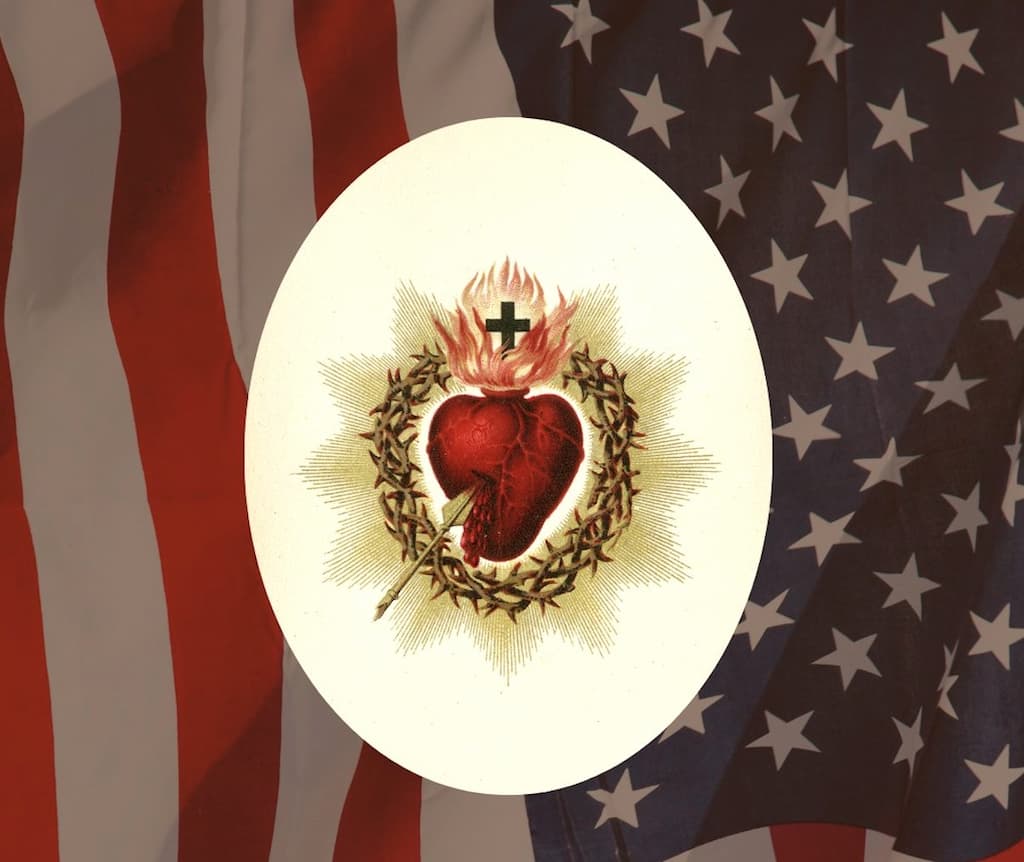
The consecration took place on June 11 during a Mass in Orlando, Florida, as part of the plenary assembly of the United States Conference of Catholic Bishops, according to Valeurs Actuelles. The event comes just weeks before the 250th anniversary of the Declaration of Independence and includes 250 hours of Eucharistic adoration and 250 works of mercy.

The initiative received overwhelming support from American bishops, passing with 215 votes in favor and only 8 against. It draws on a devotional tradition popularized in the 17th century by Saint John Eudes and Saint Margaret Mary Alacoque, and recently reinvigorated by Pope Francis’s 2024 encyclical Dilexit Nos.

Archbishop Alexander Sample of Portland explained the purpose of the consecration in a video message, emphasizing that God calls believers to make a radical choice in favor of the most vulnerable. He noted that faith and trust in God formed the foundation upon which the Founding Fathers built the nation.

The official prayer of consecration acknowledges an “original sin of slavery and racism,” asks forgiveness for past sins, and calls for a nation faithful to its founding principles of liberty and human dignity. Archbishop Sample reminded Catholics that Christ’s suffering heart on the cross should make believers more attentive to the sufferings and needs of others.

A Different Vision of Christian America

This vision stands in marked contrast to the Christian nationalism currently gaining ground in American politics. Across the South and Midwest, conservative evangelicalism has made deep inroads into the political sphere. The God and Country movement promotes an identity-based Christianity that portrays itself as under siege from progressivism.

Louisiana now mandates the display of the Ten Commandments in classrooms. In Alabama, a court ruling classifying frozen embryos as “babies” temporarily shuttered fertility clinics. Around these positions, an unapologetic Christian nationalism has coalesced.

Some evangelical leaders view former President Donald Trump as a providential instrument. The evangelical movement mobilizes a highly organized electorate around abortion, immigration, and traditional values, uniting pastors, anti-immigration activists, and opponents of LGBT rights. Trump himself has adopted this rhetoric, claiming to be “saved by God,” establishing a “Faith Office” to purge federal agencies of perceived anti-Christian bias, and posting AI-generated images of himself depicted as Jesus.

Irreconcilable Priorities

When the assembled bishops in Orlando invoke “inalienable rights to life,” the language initially appears aligned with conservative evangelicalism. However, their call to “show friendship toward immigrants” quickly reveals the gulf between the two movements.

The Catholic bishops’ emphasis on mercy toward immigrants, acknowledgment of racial sin, and focus on the vulnerable represents a fundamentally different interpretation of Christian political witness than the nationalist Christianity championed by MAGA evangelicals. While both claim fidelity to Christian principles, their visions for America’s future could hardly be more divergent.

The consecration ceremony represents the Catholic hierarchy’s attempt to stake out distinct moral ground at a moment when Christian identity in America has become intensely politicized and fractured along denominational and ideological lines.

With information from Valeurs Actuelles

Share:
Stefanos Banos
Stefanos Banos

Stefanos Banos was born in Piraeus and is an editor at NewsFire.GR, specializing in political analysis and international relations. He graduated from the Department of Communication and Media at the University of Bremen in Germany, where he also completed his Master of Arts in Communication and Media Studies. Married to Zoi, he is a proud father of three boys.

The consecration took place on June 11 during a Mass in Orlando, Florida, as part of the plenary assembly of the United States Conference of Catholic Bishops, according to Valeurs Actuelles. The event comes just weeks before the 250th anniversary of the Declaration of Independence and includes 250 hours of Eucharistic adoration and 250 works of mercy.

The initiative received overwhelming support from American bishops, passing with 215 votes in favor and only 8 against. It draws on a devotional tradition popularized in the 17th century by Saint John Eudes and Saint Margaret Mary Alacoque, and recently reinvigorated by Pope Francis’s 2024 encyclical Dilexit Nos.

Archbishop Alexander Sample of Portland explained the purpose of the consecration in a video message, emphasizing that God calls believers to make a radical choice in favor of the most vulnerable. He noted that faith and trust in God formed the foundation upon which the Founding Fathers built the nation.

The official prayer of consecration acknowledges an “original sin of slavery and racism,” asks forgiveness for past sins, and calls for a nation faithful to its founding principles of liberty and human dignity. Archbishop Sample reminded Catholics that Christ’s suffering heart on the cross should make believers more attentive to the sufferings and needs of others.

A Different Vision of Christian America

This vision stands in marked contrast to the Christian nationalism currently gaining ground in American politics. Across the South and Midwest, conservative evangelicalism has made deep inroads into the political sphere. The God and Country movement promotes an identity-based Christianity that portrays itself as under siege from progressivism.

Louisiana now mandates the display of the Ten Commandments in classrooms. In Alabama, a court ruling classifying frozen embryos as “babies” temporarily shuttered fertility clinics. Around these positions, an unapologetic Christian nationalism has coalesced.

Some evangelical leaders view former President Donald Trump as a providential instrument. The evangelical movement mobilizes a highly organized electorate around abortion, immigration, and traditional values, uniting pastors, anti-immigration activists, and opponents of LGBT rights. Trump himself has adopted this rhetoric, claiming to be “saved by God,” establishing a “Faith Office” to purge federal agencies of perceived anti-Christian bias, and posting AI-generated images of himself depicted as Jesus.

Irreconcilable Priorities

When the assembled bishops in Orlando invoke “inalienable rights to life,” the language initially appears aligned with conservative evangelicalism. However, their call to “show friendship toward immigrants” quickly reveals the gulf between the two movements.

The Catholic bishops’ emphasis on mercy toward immigrants, acknowledgment of racial sin, and focus on the vulnerable represents a fundamentally different interpretation of Christian political witness than the nationalist Christianity championed by MAGA evangelicals. While both claim fidelity to Christian principles, their visions for America’s future could hardly be more divergent.

The consecration ceremony represents the Catholic hierarchy’s attempt to stake out distinct moral ground at a moment when Christian identity in America has become intensely politicized and fractured along denominational and ideological lines.

With information from Valeurs Actuelles

