Necessary Cookies

Required for the site to function. Cannot be disabled.

Analytics Cookies

Help us understand how visitors interact with our site (Google Analytics via GTM).

Marketing Cookies

Used to track visitors and deliver personalised advertisements.

We use cookies to enhance your browsing experience and analyse site traffic. By clicking Accept All, you consent to our use of cookies. Privacy Policy
NewsFire Global
Home News Europe World Christianity Culture Wars Opinion Video
Information
About Us Authors Advertising Terms & Conditions Privacy Policy Contact
R2B Media
R2B NEWSFIRE.GR PAPAFOTIS.GR THRACTION HELLENIC CONSERVATIVES RIGHT2THEBONE YT
News World

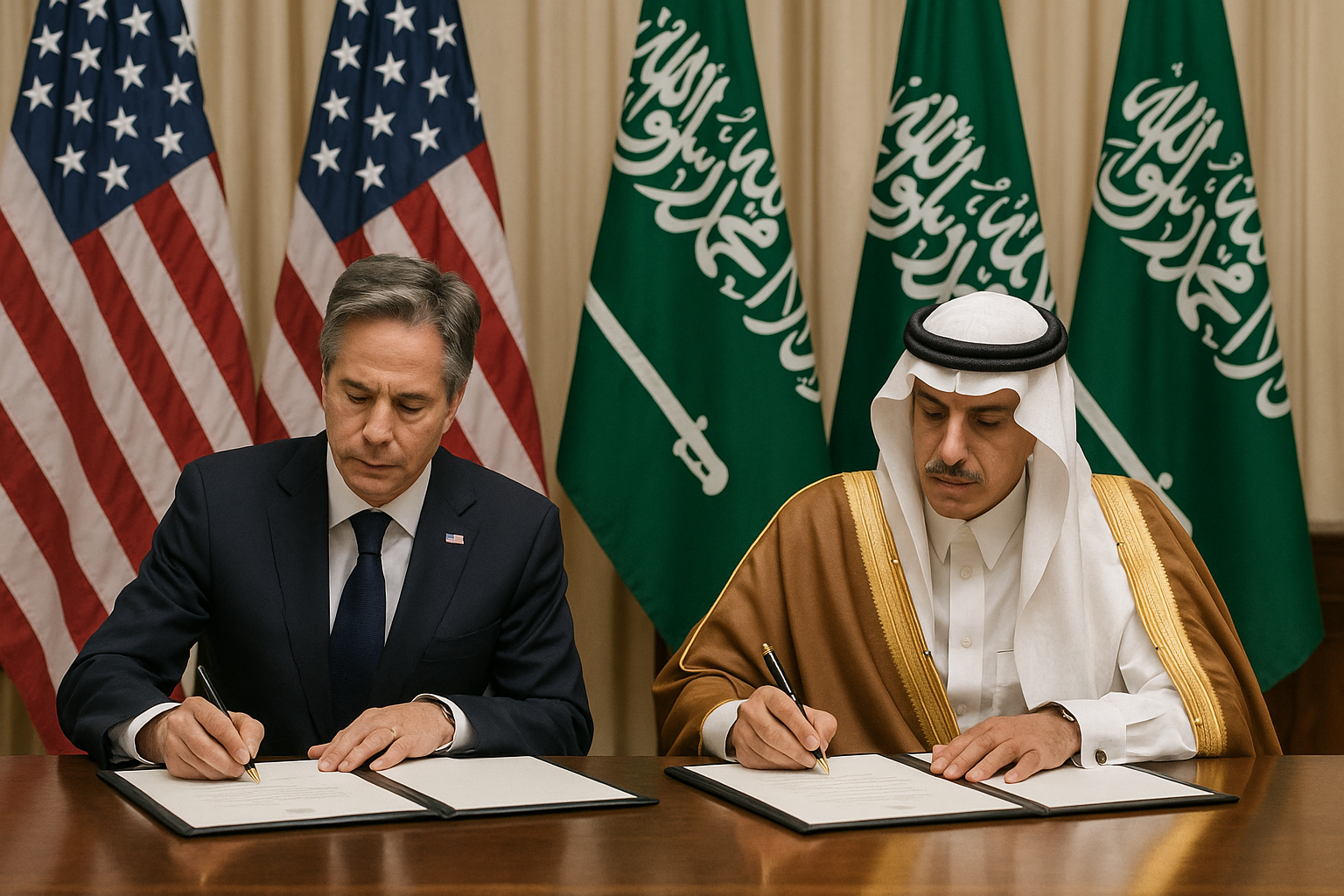
US and Saudi Arabia Sign Historic Nuclear Cooperation Deal

Four Republican representatives voted with Democrats to defeat an NDAA amendment that would have banned transgender individuals from serving in the U.S. military.

JULY 23, 2026 AT 7:01 AM

The Republican lawmakers who crossed the aisle on the controversial measure have drawn sharp criticism from conservative circles for abandoning party unity on a key cultural and military readiness issue embedded within the annual defense spending legislation.

The failed amendment sought to bar military service for personnel who identify as trans, framing the restriction as a matter of operational effectiveness and medical readiness. Defense hawks have long argued that accommodation of gender identity issues in military ranks introduces complications incompatible with combat effectiveness and unit cohesion.

The defection of four GOP members proved sufficient to sink the provision when combined with unified Democratic opposition, highlighting persistent fissures within the Republican caucus on social policy questions even as the party controls the House majority.

As Telegram @clashreport reports, the vote underscores ongoing tensions over the direction of military policy under a Republican-led Congress, particularly regarding personnel standards and the extent to which progressive social policies adopted during previous administrations should be reversed or retained.

The NDAA traditionally passes with bipartisan support as essential legislation funding military operations, salaries, and procurement. However, cultural amendments addressing issues like transgender service, diversity programs, and other contentious social policies have increasingly turned the annual defense bill into a battleground over American values and institutional priorities.

Conservative lawmakers and advocacy groups have expressed frustration that the four Republican votes enabled Democrats to preserve Obama-era and Biden-era policies they view as detrimental to military effectiveness and morale.

With information from Telegram @clashreport

Share:
Eleni Papadaki-Van Der Merwe

She was born in 1986 in Johannesburg, South Africa. She is the granddaughter of an immigrant from Crete who settled in the Greek community of Johannesburg (one of the largest in Africa). She holds a bachelor’s degree in International Relations and Political Science from the University of the Witwatersrand (Wits) in Johannesburg and a master’s degree in Journalism from Rhodes University in Grahamstown. She began her career at English-language media outlets in Johannesburg, covering politics and economics, with a focus on issues related to migration and the diaspora. She moved to Athens in 2015 to “return to her roots,” initially to pursue graduate studies, and has remained there permanently. She is married to an Afrikaner; they have two children and live in the southern suburbs of Athens.

The Republican lawmakers who crossed the aisle on the controversial measure have drawn sharp criticism from conservative circles for abandoning party unity on a key cultural and military readiness issue embedded within the annual defense spending legislation.

The failed amendment sought to bar military service for personnel who identify as trans, framing the restriction as a matter of operational effectiveness and medical readiness. Defense hawks have long argued that accommodation of gender identity issues in military ranks introduces complications incompatible with combat effectiveness and unit cohesion.

The defection of four GOP members proved sufficient to sink the provision when combined with unified Democratic opposition, highlighting persistent fissures within the Republican caucus on social policy questions even as the party controls the House majority.

As Telegram @clashreport reports, the vote underscores ongoing tensions over the direction of military policy under a Republican-led Congress, particularly regarding personnel standards and the extent to which progressive social policies adopted during previous administrations should be reversed or retained.

The NDAA traditionally passes with bipartisan support as essential legislation funding military operations, salaries, and procurement. However, cultural amendments addressing issues like transgender service, diversity programs, and other contentious social policies have increasingly turned the annual defense bill into a battleground over American values and institutional priorities.

Conservative lawmakers and advocacy groups have expressed frustration that the four Republican votes enabled Democrats to preserve Obama-era and Biden-era policies they view as detrimental to military effectiveness and morale.

With information from Telegram @clashreport

