Necessary Cookies

Required for the site to function. Cannot be disabled.

Analytics Cookies

Help us understand how visitors interact with our site (Google Analytics via GTM).

Marketing Cookies

Used to track visitors and deliver personalised advertisements.

We use cookies to enhance your browsing experience and analyse site traffic. By clicking Accept All, you consent to our use of cookies. Privacy Policy
NewsFire Global
Home News Europe World Christianity Culture Wars Opinion Video
Information
About Us Authors Advertising Terms & Conditions Privacy Policy Contact
R2B Media
R2B NEWSFIRE.GR PAPAFOTIS.GR THRACTION HELLENIC CONSERVATIVES RIGHT2THEBONE YT
News World

Unapproved Cameras Watching You Without Consent

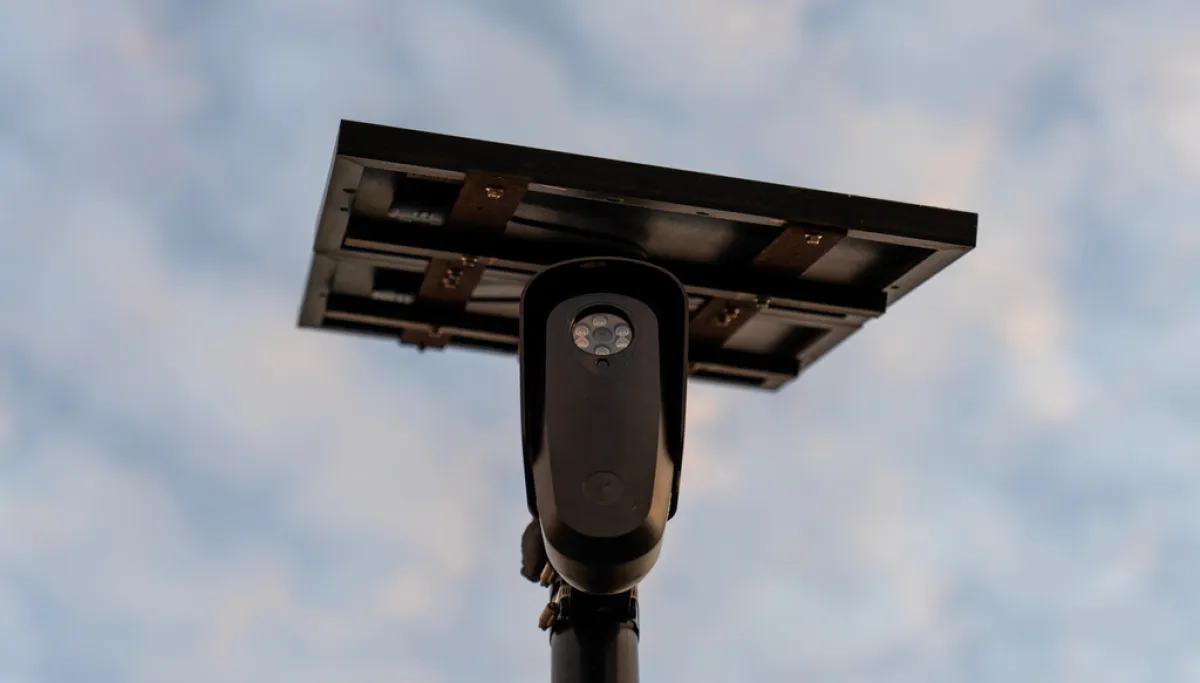
Citizens in at least five U.S. states have destroyed surveillance cameras operated by Flock Safety, an $8.4 billion company whose AI-enabled network now exceeds 100,000 cameras across more than 6,000 communities.
Stefanos Banos
Stefanos Banos Staff Writer
JULY 22, 2026 AT 3:21 PM

A wave of vigilante sabotage targeting artificial intelligence-enabled surveillance cameras has swept across the United States, with citizens in at least five states dismantling devices operated by Flock Safety, an $8.4 billion surveillance technology company, according to Connor Boyack writing in Washington Examiner.

On the Fourth of July, someone in Houston, Texas, severed two surveillance cameras in half and covered the wreckage with an American flag. In New Bern, North Carolina, police sought public assistance in identifying two suspects caught on video destroying a camera, only to receive hundreds of tongue-in-cheek responses identifying the perpetrators as Batman and Robin.

Since April 2025, Americans have begun systematically dismantling surveillance equipment belonging to Flock Safety, whose network now exceeds 100,000 AI-enabled cameras photographing passing vehicles across more than 6,000 communities nationwide.

Civil Disobedience or Criminal Vandalism

While the camera destroyers are undoubtedly breaking the law, Boyack argues in Washington Examiner that patterns of mass lawbreaking often contain vital information about public consent and overreach. He draws parallels to the universal defiance of the 55 mph speed limit that eventually led to its congressional repeal, and Prohibition-era juries that routinely refused to convict bootleggers.

Among those arrested is a Virginia engineer facing 25 charges who stated he acted in defense of the Fourth Amendment. The crowds applauding these actions are signaling something clear: this surveillance infrastructure was erected without public consent, and prudent legislators should heed the message rather than merely prosecuting the messengers.

From License Plate Readers to Total Surveillance

Garrett Langley, Flock’s chief executive officer, responded to critics by characterizing them as terrorists in an interview with Forbes. He labeled DeFlock, a volunteer project that simply maps camera locations, a terroristic organization. The rhetoric raises questions about a worldview that regards surveillance of the public as normal but views reciprocal transparency as a crisis.

Describing Flock’s technology as mere license plate readers significantly understates their capability. The cameras catalog each vehicle’s make, color, dents, and bumper stickers into a searchable fingerprint. The company’s forthcoming Nova product would merge this data with Social Security numbers, credit information, and property ownership records.

Warrantless Searches and Systemic Abuse

Thousands of law enforcement agencies can query the national network without obtaining warrants. Query logs reveal a disturbing pattern of abuse: a Texas officer searching 83,000 cameras to track a woman who had taken abortion pills, at least 18 officers using the system to stalk former romantic partners and love interests, federal immigration agents conducting thousands of unauthorized searches through jurisdictions whose laws prohibited such access, and Flock’s own sales staff browsing a Georgia city’s cameras more than 1,000 times, including one camera positioned inside a children’s gymnastics facility.

Almost none of these surveillance networks were subjected to voter approval. Police chiefs signed contracts, city managers approved budget line items, and the surveillance poles appeared. Government by procurement has apparently become the mechanism through which a free nation acquires the infrastructure of an unfree one, one purchase order at a time.

The Dystopian Future Already Arrived

Boyack poses a thought experiment in Washington Examiner: if a vendor proposed drones patrolling residential neighborhoods around the clock, running AI-enhanced video and facial recognition while feeding data into a national database accessible to any law enforcement officer without warrant, most Americans would recognize the proposal as something belonging to Beijing or a dystopian screenplay. Yet Flock already sells camera-equipped drones and gunshot detectors alongside its AI cameras, which have migrated from highways to parks and residential trails.

Langley undoubtedly believes he is keeping Americans safe, but the promise of safety has been the standing offer of every aspiring authoritarian throughout history. The USA PATRIOT Act was marketed as a temporary shield against terrorism and became two decades of warrantless bulk surveillance.

Constitutional Safeguards Deliberately Make Policing Inconvenient

The Constitution’s framers deliberately designed warrants, probable cause, and individualized suspicion of crime as inefficiencies. A camera network that presumptively tracks everyone inverts the presumption on which the Fourth Amendment rests: that a citizen conducting lawful business is none of the government’s concern.

The remedy ultimately belongs to legislators, not saboteurs. Lawmakers should require warrants for database searches, mandate short data retention periods and public audit logs, forbid data sharing with outside agencies absent legal process, and above all, require an affirmative vote of the people’s representatives following public hearings before any camera network is deployed or renewed.

With information from Washington Examiner

Share:
Stefanos Banos
Stefanos Banos

Stefanos Banos was born in Piraeus and is an editor at NewsFire.GR, specializing in political analysis and international relations. He graduated from the Department of Communication and Media at the University of Bremen in Germany, where he also completed his Master of Arts in Communication and Media Studies. Married to Zoi, he is a proud father of three boys.

A wave of vigilante sabotage targeting artificial intelligence-enabled surveillance cameras has swept across the United States, with citizens in at least five states dismantling devices operated by Flock Safety, an $8.4 billion surveillance technology company, according to Connor Boyack writing in Washington Examiner.
On the Fourth of July, someone in Houston, Texas, severed two surveillance cameras in half and covered the wreckage with an American flag. In New Bern, North Carolina, police sought public assistance in identifying two suspects caught on video destroying a camera, only to receive hundreds of tongue-in-cheek responses identifying the perpetrators as Batman and Robin.

Since April 2025, Americans have begun systematically dismantling surveillance equipment belonging to Flock Safety, whose network now exceeds 100,000 AI-enabled cameras photographing passing vehicles across more than 6,000 communities nationwide.

Civil Disobedience or Criminal Vandalism

While the camera destroyers are undoubtedly breaking the law, Boyack argues in Washington Examiner that patterns of mass lawbreaking often contain vital information about public consent and overreach. He draws parallels to the universal defiance of the 55 mph speed limit that eventually led to its congressional repeal, and Prohibition-era juries that routinely refused to convict bootleggers.

Among those arrested is a Virginia engineer facing 25 charges who stated he acted in defense of the Fourth Amendment. The crowds applauding these actions are signaling something clear: this surveillance infrastructure was erected without public consent, and prudent legislators should heed the message rather than merely prosecuting the messengers.

From License Plate Readers to Total Surveillance

Garrett Langley, Flock’s chief executive officer, responded to critics by characterizing them as terrorists in an interview with Forbes. He labeled DeFlock, a volunteer project that simply maps camera locations, a terroristic organization. The rhetoric raises questions about a worldview that regards surveillance of the public as normal but views reciprocal transparency as a crisis.

Describing Flock’s technology as mere license plate readers significantly understates their capability. The cameras catalog each vehicle’s make, color, dents, and bumper stickers into a searchable fingerprint. The company’s forthcoming Nova product would merge this data with Social Security numbers, credit information, and property ownership records.

Warrantless Searches and Systemic Abuse

Thousands of law enforcement agencies can query the national network without obtaining warrants. Query logs reveal a disturbing pattern of abuse: a Texas officer searching 83,000 cameras to track a woman who had taken abortion pills, at least 18 officers using the system to stalk former romantic partners and love interests, federal immigration agents conducting thousands of unauthorized searches through jurisdictions whose laws prohibited such access, and Flock’s own sales staff browsing a Georgia city’s cameras more than 1,000 times, including one camera positioned inside a children’s gymnastics facility.

Almost none of these surveillance networks were subjected to voter approval. Police chiefs signed contracts, city managers approved budget line items, and the surveillance poles appeared. Government by procurement has apparently become the mechanism through which a free nation acquires the infrastructure of an unfree one, one purchase order at a time.

The Dystopian Future Already Arrived

Boyack poses a thought experiment in Washington Examiner: if a vendor proposed drones patrolling residential neighborhoods around the clock, running AI-enhanced video and facial recognition while feeding data into a national database accessible to any law enforcement officer without warrant, most Americans would recognize the proposal as something belonging to Beijing or a dystopian screenplay. Yet Flock already sells camera-equipped drones and gunshot detectors alongside its AI cameras, which have migrated from highways to parks and residential trails.

Langley undoubtedly believes he is keeping Americans safe, but the promise of safety has been the standing offer of every aspiring authoritarian throughout history. The USA PATRIOT Act was marketed as a temporary shield against terrorism and became two decades of warrantless bulk surveillance.

Constitutional Safeguards Deliberately Make Policing Inconvenient

The Constitution’s framers deliberately designed warrants, probable cause, and individualized suspicion of crime as inefficiencies. A camera network that presumptively tracks everyone inverts the presumption on which the Fourth Amendment rests: that a citizen conducting lawful business is none of the government’s concern.

The remedy ultimately belongs to legislators, not saboteurs. Lawmakers should require warrants for database searches, mandate short data retention periods and public audit logs, forbid data sharing with outside agencies absent legal process, and above all, require an affirmative vote of the people’s representatives following public hearings before any camera network is deployed or renewed.

With information from Washington Examiner


