Necessary Cookies

Required for the site to function. Cannot be disabled.

Analytics Cookies

Help us understand how visitors interact with our site (Google Analytics via GTM).

Marketing Cookies

Used to track visitors and deliver personalised advertisements.

We use cookies to enhance your browsing experience and analyse site traffic. By clicking Accept All, you consent to our use of cookies. Privacy Policy
NewsFire Global
Home News Europe World Christianity Culture Wars Opinion Video
Information
About Us Authors Advertising Terms & Conditions Privacy Policy Contact
R2B Media
R2B NEWSFIRE.GR PAPAFOTIS.GR THRACTION HELLENIC CONSERVATIVES RIGHT2THEBONE YT
News Europe

Ukraine to Produce Aster 30 Anti-Missile Interceptors Locally

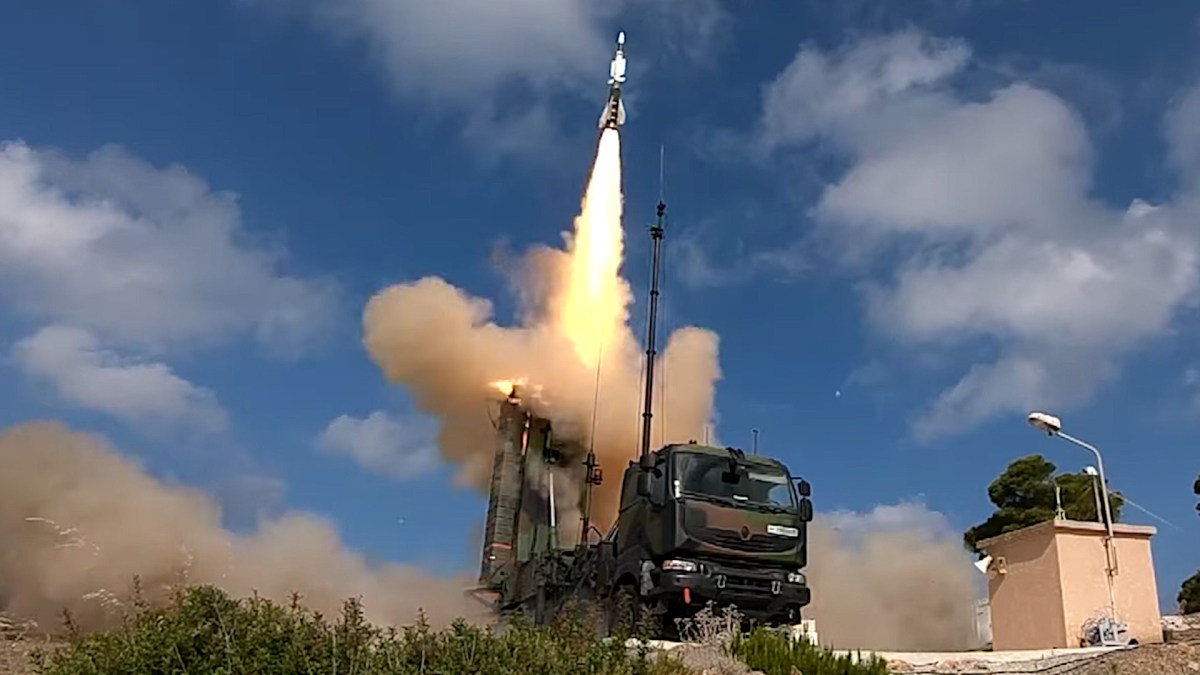
France will authorize Ukraine to produce Aster 30 interceptor missiles domestically, President Macron announced at a Paris defense summit alongside licensed production of guided bombs and cruise missiles.

Dimitris Papafotis
Dimitris Papafotis Editor in Chief
JULY 14, 2026 AT 8:27 AM

The Aster 30 is the primary anti-air interceptor used in the SAMP/T surface-to-air missile system, several of which are already deployed in Ukrainian service. The Franco-Italian SAMP/T platform is widely regarded as comparable to the American-made Patriot system, and both provide Ukraine with critical anti-ballistic missile defense capabilities against Russian strikes.

Emmanuel Macron made the announcement at a press conference alongside Ukrainian President Volodymyr Zelensky, British Prime Minister Keir Starmer, and German Chancellor Friedrich Merz during the Coalition of the Willing summit, which drew 25 world leaders. The gathering also saw the formal creation of an Integrated Anti-Ballistic Missile Coalition, bringing together Ukraine, Denmark, France, Germany, Italy, the Netherlands, Norway, Spain, Sweden, and the United Kingdom to pool resources for developing new missile defense capabilities.

Macron stated that he and Zelensky had agreed on a roadmap implementing bilateral defense cooperation first outlined last November, as The War Zone reports. Beyond Aster 30 production, the agreement covers licensed manufacturing of AASM Hammer precision-guided bombs and SCALP cruise missiles, all of which France has already supplied to Ukraine in previous tranches.

The French president also confirmed planned deliveries of both SAMP/T and the upgraded SAMP/T NG surface-to-air missile systems to Ukrainian forces, expected to begin later this year. The SAMP/T NG variant offers an expanded engagement envelope through enhanced radar systems and improved Aster 30 interceptors currently under development. Ukraine presently operates two baseline SAMP/T systems, one supplied by France and another by Italy.

Domestic Production Timelines Remain Uncertain

The move comes just one week after U.S. President Donald Trump similarly announced he would approve a license for Ukraine to produce Patriot interceptors domestically. However, significant questions persist regarding exact timelines and the practical challenges of establishing domestic production capacity for either system, according to The War Zone.

Ukraine faces acute shortages of interceptors for its Patriot batteries and remains in desperate need of additional capacity to counter incoming Russian ballistic missiles. Russian forces have deployed both ground-launched ballistic missiles and air-launched variants like the Kinzhal, which present exceptionally difficult targets due to their high terminal-phase velocities and enhanced maneuvering capabilities designed to evade even advanced air defense systems.

SAMP/T Performance Against Ballistic Threats

French Air Force Gen. Fabien Mandon, chief of the French defense staff, claimed last year that SAMP/T had proven more effective than Patriot against Russian ballistic threats. He noted that Russian forces had been compelled to adapt flight profiles of their most advanced missiles after realizing Ukrainian defenses were successfully intercepting them, and that while Patriot systems were struggling with these adapted profiles, SAMP/T continued to achieve intercepts.

Nevertheless, Ukraine operates more Patriot systems than SAMP/T batteries, and both platforms remain in extremely high demand with critically limited supply. The same shortage applies to their respective interceptors, making domestic production capability a strategic priority for Ukrainian defense planners.

Rafale Fighters on the Horizon

Macron also provided an update on Ukraine’s planned acquisition of French-made Rafale fighters, stating that the goal is now to deliver the first 16 aircraft in the 2028-2029 timeframe. Those plans were first announced last year as part of France’s expanding military support to Ukraine.

The technology transfer for Aster 30 production represents a significant escalation in Western support, potentially affecting European defense industrial balances and raising questions about how allied nations will manage their own air defense procurement while simultaneously enabling Ukrainian production capacity.

With information from The War Zone
Share:
Dimitris Papafotis
Dimitris Papafotis

Dimitris Papafotis is the editor-in-chief of NewsFire.GR. He was born and raised in Athens. He studied at the Journalism Workshop (1991-1993). He currently lives in Pyrgos, Ilia, where he has been active in radio and various newspapers, while also maintaining his personal blog, Papafotis.gr.

The Aster 30 is the primary anti-air interceptor used in the SAMP/T surface-to-air missile system, several of which are already deployed in Ukrainian service. The Franco-Italian SAMP/T platform is widely regarded as comparable to the American-made Patriot system, and both provide Ukraine with critical anti-ballistic missile defense capabilities against Russian strikes.

Emmanuel Macron made the announcement at a press conference alongside Ukrainian President Volodymyr Zelensky, British Prime Minister Keir Starmer, and German Chancellor Friedrich Merz during the Coalition of the Willing summit, which drew 25 world leaders. The gathering also saw the formal creation of an Integrated Anti-Ballistic Missile Coalition, bringing together Ukraine, Denmark, France, Germany, Italy, the Netherlands, Norway, Spain, Sweden, and the United Kingdom to pool resources for developing new missile defense capabilities.

Macron stated that he and Zelensky had agreed on a roadmap implementing bilateral defense cooperation first outlined last November, as The War Zone reports. Beyond Aster 30 production, the agreement covers licensed manufacturing of AASM Hammer precision-guided bombs and SCALP cruise missiles, all of which France has already supplied to Ukraine in previous tranches.

The French president also confirmed planned deliveries of both SAMP/T and the upgraded SAMP/T NG surface-to-air missile systems to Ukrainian forces, expected to begin later this year. The SAMP/T NG variant offers an expanded engagement envelope through enhanced radar systems and improved Aster 30 interceptors currently under development. Ukraine presently operates two baseline SAMP/T systems, one supplied by France and another by Italy.

Domestic Production Timelines Remain Uncertain

The move comes just one week after U.S. President Donald Trump similarly announced he would approve a license for Ukraine to produce Patriot interceptors domestically. However, significant questions persist regarding exact timelines and the practical challenges of establishing domestic production capacity for either system, according to The War Zone.

Ukraine faces acute shortages of interceptors for its Patriot batteries and remains in desperate need of additional capacity to counter incoming Russian ballistic missiles. Russian forces have deployed both ground-launched ballistic missiles and air-launched variants like the Kinzhal, which present exceptionally difficult targets due to their high terminal-phase velocities and enhanced maneuvering capabilities designed to evade even advanced air defense systems.

SAMP/T Performance Against Ballistic Threats

French Air Force Gen. Fabien Mandon, chief of the French defense staff, claimed last year that SAMP/T had proven more effective than Patriot against Russian ballistic threats. He noted that Russian forces had been compelled to adapt flight profiles of their most advanced missiles after realizing Ukrainian defenses were successfully intercepting them, and that while Patriot systems were struggling with these adapted profiles, SAMP/T continued to achieve intercepts.

Nevertheless, Ukraine operates more Patriot systems than SAMP/T batteries, and both platforms remain in extremely high demand with critically limited supply. The same shortage applies to their respective interceptors, making domestic production capability a strategic priority for Ukrainian defense planners.

Rafale Fighters on the Horizon

Macron also provided an update on Ukraine’s planned acquisition of French-made Rafale fighters, stating that the goal is now to deliver the first 16 aircraft in the 2028-2029 timeframe. Those plans were first announced last year as part of France’s expanding military support to Ukraine.

The technology transfer for Aster 30 production represents a significant escalation in Western support, potentially affecting European defense industrial balances and raising questions about how allied nations will manage their own air defense procurement while simultaneously enabling Ukrainian production capacity.

With information from The War Zone