Necessary Cookies

Required for the site to function. Cannot be disabled.

Analytics Cookies

Help us understand how visitors interact with our site (Google Analytics via GTM).

Marketing Cookies

Used to track visitors and deliver personalised advertisements.

We use cookies to enhance your browsing experience and analyse site traffic. By clicking Accept All, you consent to our use of cookies. Privacy Policy
NewsFire Global
Home News Europe World Christianity Culture Wars Opinion Video
Information
About Us Authors Advertising Terms & Conditions Privacy Policy Contact
R2B Media
R2B NEWSFIRE.GR PAPAFOTIS.GR THRACTION HELLENIC CONSERVATIVES RIGHT2THEBONE YT
News World

U.S. State Department to Designate Brazil’s Top Criminal Gangs as Terrorists

The State Department will designate Brazil's Comando Vermelho and Primeiro Comando da Capital as foreign terrorist organizations, imposing sanctions and criminalizing U.S. support for the groups.


Newsroom
Newsroom Staff Writer
MAY 29, 2026 AT 8:05 AM

The announcement, scheduled for Thursday, will formally classify Comando Vermelho (Red Command) and Primeiro Comando da Capital (First Capital Command, or PCC) as both Specially Designated Global Terrorists (SDGTs) and Foreign Terrorist Organizations (FTOs). The designations take effect on June 5.

The twin classifications will impose severe sanctions on both syndicates and their members, freeze any assets held in the United States, and criminalize any material support provided by American citizens to either organization. The State Department justified the move by citing the substantial security threat both gangs pose not only within Brazil but across international borders.

Comando Vermelho and the PCC collectively command thousands of members and have been responsible for brutal attacks targeting Brazilian police officers, government officials, and civilians, the State Department noted in its statement. Their criminal networks stretch well beyond Brazilian territory, reaching throughout the Western Hemisphere and into the United States.

The Trump Administration emphasized its determination to protect national security by disrupting the revenue streams that fund violent narco-terrorists and keeping illicit drugs off American streets. Thursday’s action underscores the administration’s commitment to dismantling cartels and criminal organizations operating in the region while safeguarding the American public.

Both criminal syndicates have built their power on transnational criminal enterprises including drug trafficking, weapons smuggling, and strategic alliances with other South American criminal organizations. Their rivalry has historically erupted in horrific prison massacres designed to intimidate opponents, while periods of cooperation between the two have resulted in expanded illicit operations and heightened public danger.
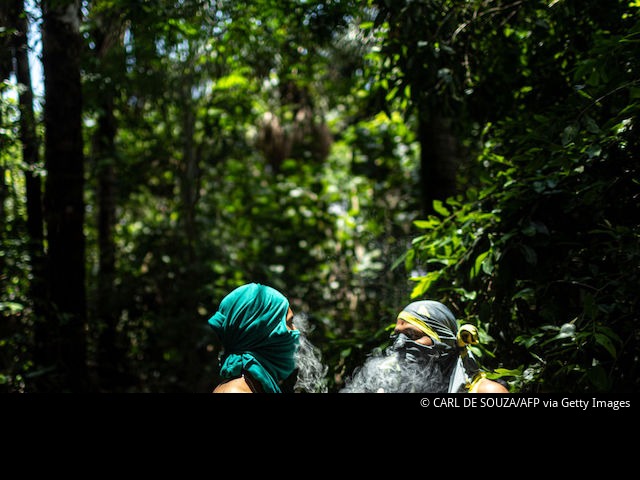
Drug traffickers spend their day at a drug den in the outskirts of Boa Vista, Roraima, Brazil, Wednesday, September 18, 2024. The First Capital Command (PCC), South America
Photo: CARL DE SOUZA/AFP via Getty Images

Security officials across South America have long raised alarms about potential connections between these Brazilian gangs and the Iranian terrorist proxy Hezbollah. Joseph Humire, currently Deputy Assistant Secretary of War for Americas Security Affairs, testified before Congress in 2018 about proven ties between the PCC and Hezbollah.

Argentine outlet Infobae reported a year later that the two gangs’ decision to form an alliance—prompted by then-President Jair Bolsonaro’s intensified law enforcement efforts—could provide additional opportunities for Hezbollah to cultivate relationships with both organizations without risking conflict between them.

That alliance unleashed a wave of violence across Brazil as the gangs launched terrorist campaigns to disrupt law enforcement operations. In 2019, messages circulated by gang members in Ceará openly called for criminals to set off general terror and threatened to leave the state in a condition of public calamity.

Recent intelligence from Brazil indicates the gangs have diversified their criminal portfolio to include trafficking in legal prescription medications through coordinated armed robberies of pharmacies. The New York Times documented a surge in thefts targeting weight loss medications such as Ozempic during the current truce between the PCC and Red Command, with stolen drugs quickly appearing on black markets accessed through mobile applications like WhatsApp.

Despite the havoc wrought by these criminal syndicates, leftist politicians in Brazil have resisted comprehensive efforts to neutralize their operations. Reports suggest that socialist President Luiz Inácio Lula da Silva opposed American terrorist designations for the gangs.

Following a major police operation in Rio de Janeiro ordered by conservative Governor Cláudio Castro in October, leftist lawmakers criticized law enforcement rather than the criminal organizations. Socialism and Liberty Party Congresswoman Talíria Petrone denounced what she characterized as a bloodbath approach to tackling criminal organizations, attacking Governor Castro as incompetent and cowardly.

Lula visited the White House in early May for discussions that both governments characterized as friendly and productive, despite previous tensions between the Brazilian president and President Trump.

With information from Breitbart News

Share:
Newsroom
Newsroom

NewsFire.GR is a website created with the hope that the media will rediscover their true identity, which is none other than informing the public about the real stakes of our times. Journalism and political analysis must hold power accountable, not serve it.

The announcement, scheduled for Thursday, will formally classify Comando Vermelho (Red Command) and Primeiro Comando da Capital (First Capital Command, or PCC) as both Specially Designated Global Terrorists (SDGTs) and Foreign Terrorist Organizations (FTOs). The designations take effect on June 5.

The twin classifications will impose severe sanctions on both syndicates and their members, freeze any assets held in the United States, and criminalize any material support provided by American citizens to either organization. The State Department justified the move by citing the substantial security threat both gangs pose not only within Brazil but across international borders.

Comando Vermelho and the PCC collectively command thousands of members and have been responsible for brutal attacks targeting Brazilian police officers, government officials, and civilians, the State Department noted in its statement. Their criminal networks stretch well beyond Brazilian territory, reaching throughout the Western Hemisphere and into the United States.

The Trump Administration emphasized its determination to protect national security by disrupting the revenue streams that fund violent narco-terrorists and keeping illicit drugs off American streets. Thursday’s action underscores the administration’s commitment to dismantling cartels and criminal organizations operating in the region while safeguarding the American public.

Both criminal syndicates have built their power on transnational criminal enterprises including drug trafficking, weapons smuggling, and strategic alliances with other South American criminal organizations. Their rivalry has historically erupted in horrific prison massacres designed to intimidate opponents, while periods of cooperation between the two have resulted in expanded illicit operations and heightened public danger.

Drug traffickers spend their day at a drug den in the outskirts of Boa Vista, Roraima, Brazil, Wednesday, September 18, 2024. The First Capital Command (PCC), South America
Photo: CARL DE SOUZA/AFP via Getty Images

Security officials across South America have long raised alarms about potential connections between these Brazilian gangs and the Iranian terrorist proxy Hezbollah. Joseph Humire, currently Deputy Assistant Secretary of War for Americas Security Affairs, testified before Congress in 2018 about proven ties between the PCC and Hezbollah.

Argentine outlet Infobae reported a year later that the two gangs’ decision to form an alliance—prompted by then-President Jair Bolsonaro’s intensified law enforcement efforts—could provide additional opportunities for Hezbollah to cultivate relationships with both organizations without risking conflict between them.

That alliance unleashed a wave of violence across Brazil as the gangs launched terrorist campaigns to disrupt law enforcement operations. In 2019, messages circulated by gang members in Ceará openly called for criminals to set off general terror and threatened to leave the state in a condition of public calamity.

Recent intelligence from Brazil indicates the gangs have diversified their criminal portfolio to include trafficking in legal prescription medications through coordinated armed robberies of pharmacies. The New York Times documented a surge in thefts targeting weight loss medications such as Ozempic during the current truce between the PCC and Red Command, with stolen drugs quickly appearing on black markets accessed through mobile applications like WhatsApp.

Despite the havoc wrought by these criminal syndicates, leftist politicians in Brazil have resisted comprehensive efforts to neutralize their operations. Reports suggest that socialist President Luiz Inácio Lula da Silva opposed American terrorist designations for the gangs.

Following a major police operation in Rio de Janeiro ordered by conservative Governor Cláudio Castro in October, leftist lawmakers criticized law enforcement rather than the criminal organizations. Socialism and Liberty Party Congresswoman Talíria Petrone denounced what she characterized as a bloodbath approach to tackling criminal organizations, attacking Governor Castro as incompetent and cowardly.

Lula visited the White House in early May for discussions that both governments characterized as friendly and productive, despite previous tensions between the Brazilian president and President Trump.

With information from Breitbart News

