Necessary Cookies

Required for the site to function. Cannot be disabled.

Analytics Cookies

Help us understand how visitors interact with our site (Google Analytics via GTM).

Marketing Cookies

Used to track visitors and deliver personalised advertisements.

We use cookies to enhance your browsing experience and analyse site traffic. By clicking Accept All, you consent to our use of cookies. Privacy Policy
NewsFire Global
Home News Europe World Christianity Culture Wars Opinion Video
Information
About Us Authors Advertising Terms & Conditions Privacy Policy Contact
R2B Media
R2B NEWSFIRE.GR PAPAFOTIS.GR THRACTION HELLENIC CONSERVATIVES RIGHT2THEBONE YT
News World

Trump’s rigorous vetting separates patriots from pretenders

Recent polling shows American support for immigration reached record highs after stricter enforcement, but experts warn this approval depends on immigration remaining legal, controlled, and culturally sustainable.


Dimitris Papafotis
Dimitris Papafotis Editor in Chief
AUGUST 3, 2026 AT 11:03 PM

According to David P. Deavel writing in Washington Examiner, June 2025 polling from Gallup showed that Americans whose concerns about immigration had grown steadily over the previous four years have grown markedly more positive over the past year. The share wanting immigration reduced dropped from 55 percent in 2024 to just 30 percent today, while a record 79 percent of American adults now say immigration is good for the country.

The reality, Deavel notes, is that most Americans, including most conservatives who favor temporary reductions or pauses, believe immigration is fundamentally beneficial. However, the sharp decline in approval from 2021 through 2024 demonstrates this support is highly conditional and can change rapidly depending on circumstances.
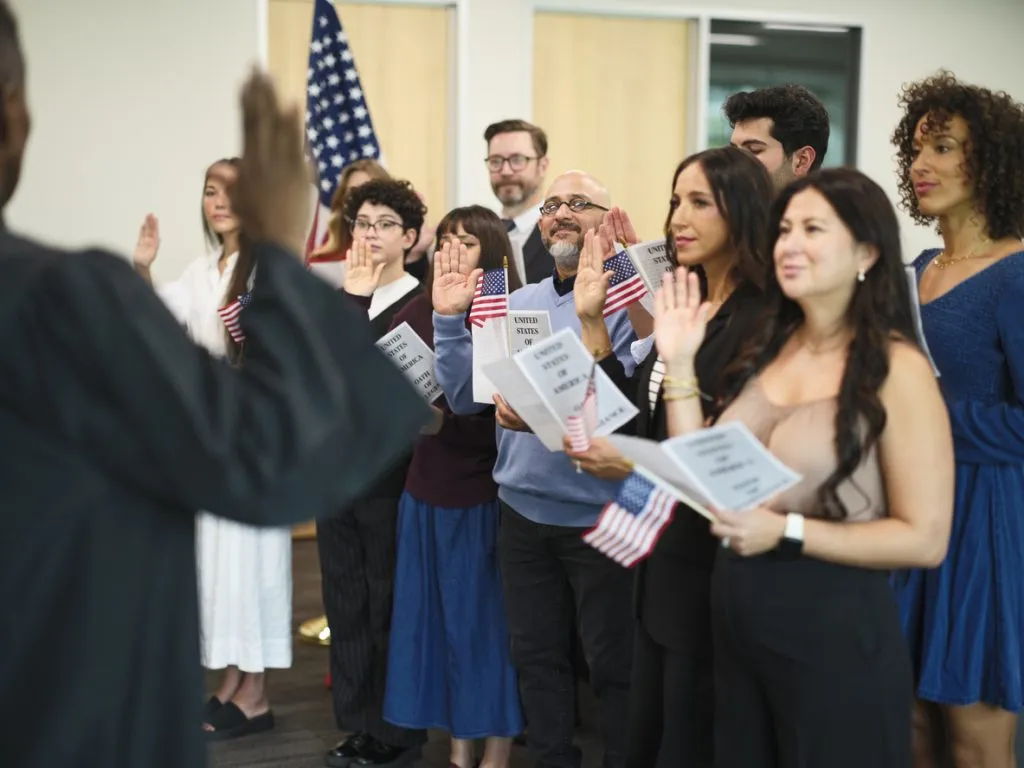

Immigration earns public approval only when it remains legal, controlled, managed at sustainable levels, avoids overwhelming communities and infrastructure, and does not create massive cultural disruption. When these conditions fail, Americans quickly conclude immigration must be reduced or halted entirely.

Deavel challenges the liberal narrative that opposition to illegal immigration serves merely as cover for opposing all immigration. While some Americans do want to stop all immigration following the previous administration’s border crisis, that group remains small, and most seek a temporary pause rather than permanent closure. The fundamental requirement for any immigration policy, he argues, must be that only legally admitted individuals should be allowed to remain.

Legal immigration must operate under a controlled system where applicants both follow admission rules and undergo thorough vetting. This vetting requirement inherently limits the scale. The illegal immigration Americans endured under the previous administration’s catch and release approach allowed zero control over who entered the country.

When members of Congress requested data about criminal illegal immigrants in 2024, ICE Deputy Director Patrick Lechleitner informed them that as of July 21, 2024, there were 662,566 noncitizens with criminal histories on ICE’s national docket. This figure included both detained individuals and those on the agency’s non-detained docket. Nearly two-thirds were convicted criminals, while one-third faced pending charges. Almost 15,000 were murderers, and 20,000 were sexual predators.

Immigrants can overwhelm systems simply through large-scale movement to particular locations. Massive influxes from completely different cultures often create significant problems through drains on school, healthcare, and housing resources, even when such groups contribute to regional economic success. This pattern has played out from border communities like Del Rio, Texas, to Midwestern towns such as Springfield, Ohio.

Most critically, Americans turn against immigration when it begins altering American culture. If America truly represents a set of ideas or a creed, as many claim, then American immigration policy should vet potential immigrants based on whether they understand American culture, American values, and the American system. The state of Minnesota’s experience with Somali immigration has demonstrated the near impossibility of assimilating people, at least in large numbers, from clan-based societies fundamentally opposed to modernity.

America needs a policy producing relatively small numbers of noncriminal immigrants of good character who genuinely want to become American and possess the capacity to do so, Deavel concludes.

David P. Deavel teaches at the University of St. Thomas in Houston. A former Lincoln fellow at the Claremont Institute, he serves as a senior contributor at the Imaginative Conservative.

With information from Washington Examiner

Share:
Dimitris Papafotis
Dimitris Papafotis

Dimitris Papafotis is the editor-in-chief of NewsFire.GR. He was born and raised in Athens. He studied at the Journalism Workshop (1991-1993). He currently lives in Pyrgos, Ilia, where he has been active in radio and various newspapers, while also maintaining his personal blog, Papafotis.gr.

Recent News

According to David P. Deavel writing in Washington Examiner, June 2025 polling from Gallup showed that Americans whose concerns about immigration had grown steadily over the previous four years have grown markedly more positive over the past year. The share wanting immigration reduced dropped from 55 percent in 2024 to just 30 percent today, while a record 79 percent of American adults now say immigration is good for the country.

The reality, Deavel notes, is that most Americans, including most conservatives who favor temporary reductions or pauses, believe immigration is fundamentally beneficial. However, the sharp decline in approval from 2021 through 2024 demonstrates this support is highly conditional and can change rapidly depending on circumstances.

Immigration earns public approval only when it remains legal, controlled, managed at sustainable levels, avoids overwhelming communities and infrastructure, and does not create massive cultural disruption. When these conditions fail, Americans quickly conclude immigration must be reduced or halted entirely.

Deavel challenges the liberal narrative that opposition to illegal immigration serves merely as cover for opposing all immigration. While some Americans do want to stop all immigration following the previous administration’s border crisis, that group remains small, and most seek a temporary pause rather than permanent closure. The fundamental requirement for any immigration policy, he argues, must be that only legally admitted individuals should be allowed to remain.

Legal immigration must operate under a controlled system where applicants both follow admission rules and undergo thorough vetting. This vetting requirement inherently limits the scale. The illegal immigration Americans endured under the previous administration’s catch and release approach allowed zero control over who entered the country.

When members of Congress requested data about criminal illegal immigrants in 2024, ICE Deputy Director Patrick Lechleitner informed them that as of July 21, 2024, there were 662,566 noncitizens with criminal histories on ICE’s national docket. This figure included both detained individuals and those on the agency’s non-detained docket. Nearly two-thirds were convicted criminals, while one-third faced pending charges. Almost 15,000 were murderers, and 20,000 were sexual predators.

Immigrants can overwhelm systems simply through large-scale movement to particular locations. Massive influxes from completely different cultures often create significant problems through drains on school, healthcare, and housing resources, even when such groups contribute to regional economic success. This pattern has played out from border communities like Del Rio, Texas, to Midwestern towns such as Springfield, Ohio.

Most critically, Americans turn against immigration when it begins altering American culture. If America truly represents a set of ideas or a creed, as many claim, then American immigration policy should vet potential immigrants based on whether they understand American culture, American values, and the American system. The state of Minnesota’s experience with Somali immigration has demonstrated the near impossibility of assimilating people, at least in large numbers, from clan-based societies fundamentally opposed to modernity.

America needs a policy producing relatively small numbers of noncriminal immigrants of good character who genuinely want to become American and possess the capacity to do so, Deavel concludes.

David P. Deavel teaches at the University of St. Thomas in Houston. A former Lincoln fellow at the Claremont Institute, he serves as a senior contributor at the Imaginative Conservative.

With information from Washington Examiner