Necessary Cookies

Required for the site to function. Cannot be disabled.

Analytics Cookies

Help us understand how visitors interact with our site (Google Analytics via GTM).

Marketing Cookies

Used to track visitors and deliver personalised advertisements.

We use cookies to enhance your browsing experience and analyse site traffic. By clicking Accept All, you consent to our use of cookies. Privacy Policy
NewsFire Global
Home News Europe World Christianity Culture Wars Opinion Video
Information
About Us Authors Advertising Terms & Conditions Privacy Policy Contact
R2B Media
R2B NEWSFIRE.GR PAPAFOTIS.GR THRACTION HELLENIC CONSERVATIVES RIGHT2THEBONE YT
News World

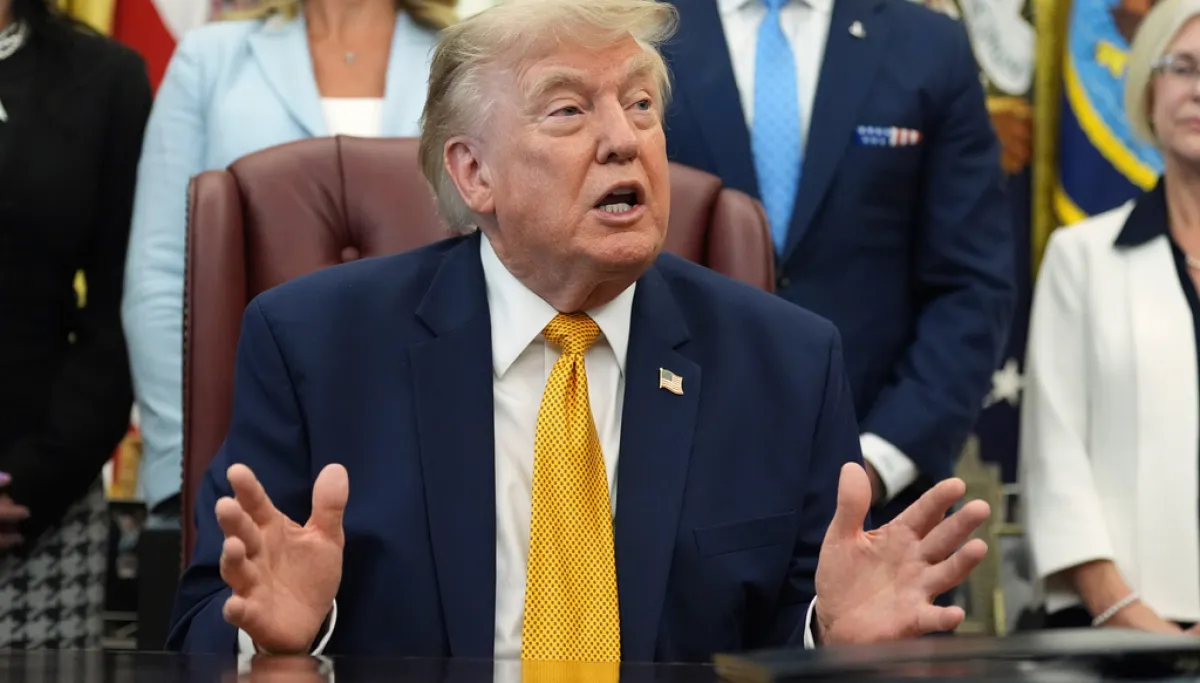
Trump’s Gaza Deal Lacks Enforcement Teeth, Destined to Fail

The Trump administration's Board of Peace framework for Gaza proposes phased Israeli withdrawal for Hamas disarmament, but disputes over implementation threaten the deal.

AUGUST 6, 2026 AT 8:13 PM

According to Jose Lev Alvarez writing in Washington Examiner, the agreement represents an exercise in self-delusion rather than serious statecraft. While Hamas demands immediate Israeli withdrawal, Jerusalem insists on verified demilitarization first—a sequencing dispute that signals the deal’s probable collapse.

The security challenge is immense. Hamas has converted Gaza’s 365 square kilometers into a fortified underground network, with between 350 and 650 kilometers of tunnels connected by 5,700 shafts. Hamas leader Yahya Sinwar previously claimed 500 kilometers of tunnels—a network longer than New York’s subway system. Israeli forces continue discovering complex seven-kilometer routes containing dozens of hideouts even during ceasefires.

Over 15 years of authoritarian rule, Hamas diverted approximately $1 billion in civilian construction materials—cement and steel—into terrorist infrastructure, spending an average of $3 million per major tunnel.
Western diplomats consistently ignore a fundamental reality: rejectionist ideology combined with Iranian funding guarantees terrorist reconstitution. Since 2005, Gaza-based terrorist organizations have launched over 50,000 rockets and projectiles at Israel, sustained by Tehran’s $100 million to $350 million annual support to Hamas and allied groups within the so-called Axis of Resistance.

Hamas extracts between 20% and 25% of all humanitarian aid flowing into Gaza through systematic taxation and outright theft. The World Bank, United Nations, and European Union now estimate Gaza reconstruction costs at $71 billion—seven times the combined expense of all previous rebuilding efforts. Reconstruction without dismantling the terrorist infrastructure simply finances the next conflict cycle.

Lebanon Precedent Offers Warning

The 2006 Lebanon War produced U.N. Security Council Resolution 1701, which tasked an expanded UNIFIL peacekeeping force with preventing non-state actors from maintaining weapons in southern Lebanon. Hezbollah systematically ignored the mandate, rebuilt its arsenal beneath the gaze of international monitors, and prepared for future confrontation. International oversight without enforcement mechanisms enabled precisely the rearmament it was meant to prevent—a pattern Gaza now risks repeating.

Three-Part Enforcement Framework

Alvarez proposes three concrete measures rooted in Congressional action, White House policy, and the U.S.-Israel alliance that could transform the current framework into an enforceable strategy.

First, Congress should enact a Gaza Demilitarization Verification Act mandating continuous commercial and military satellite surveillance combined with artificial intelligence systems to detect shaft activity and dual-use material transfers. Real-time intelligence feeds shared with Israel would automatically suspend reconstruction funding upon confirmed violations. Treasury and intelligence reporting on Iranian financing networks would feed the same triggers, converting monitoring from passive observation into active leverage.

Second, the White House must establish a permanent U.S.-Israel Joint Security Directorate for Gaza within existing alliance structures. This body would exclusively certify every phase of weapons storage elimination, tunnel destruction, and force deployment. Israel would maintain operational veto authority over any international stabilization force, blocking actors whose interests conflict with permanent demilitarization. American technical capabilities and political capital would thereby reinforce Israeli security requirements rather than diluting them through ineffective multilateral consensus.

Third, Congress must condition all Board of Peace funding on annual certification that Iranian financial channels to Gaza terrorist groups remain severed. Intelligence community assessments of Iranian Revolutionary Guard transfer networks would provide supporting evidence. Failure to meet certification standards would freeze U.S. contributions and activate secondary sanctions against third-party facilitators, directly linking Gaza outcomes to the broader campaign against Tehran’s regional operations.

Dismantlement Over Negotiation

This framework transforms a naive checklist into an aggressive denial strategy. Tunnel networks, cash flows, and rocket arsenals represent threats requiring elimination, not bargaining chips for negotiation. Only sustained American pressure fused with Israeli operational primacy can break the cycle of aid diversion that perpetually finances terrorism.

Without genuine enforcement mechanisms, Washington merely underwrites a temporary pause before the next round of violence erupts.

Jose Lev Alvarez is an American-Israeli scholar specializing in international security policy, a multilingual veteran of IDF special forces and the U.S. Army who holds three master’s degrees and is completing a Ph.D. in Intelligence.

With information from Washington Examiner

Share:
Eleni Papadaki-Van Der Merwe

She was born in 1986 in Johannesburg, South Africa. She is the granddaughter of an immigrant from Crete who settled in the Greek community of Johannesburg (one of the largest in Africa). She holds a bachelor’s degree in International Relations and Political Science from the University of the Witwatersrand (Wits) in Johannesburg and a master’s degree in Journalism from Rhodes University in Grahamstown. She began her career at English-language media outlets in Johannesburg, covering politics and economics, with a focus on issues related to migration and the diaspora. She moved to Athens in 2015 to “return to her roots,” initially to pursue graduate studies, and has remained there permanently. She is married to an Afrikaner; they have two children and live in the southern suburbs of Athens.

Recent News

According to Jose Lev Alvarez writing in Washington Examiner, the agreement represents an exercise in self-delusion rather than serious statecraft. While Hamas demands immediate Israeli withdrawal, Jerusalem insists on verified demilitarization first—a sequencing dispute that signals the deal’s probable collapse.

The security challenge is immense. Hamas has converted Gaza’s 365 square kilometers into a fortified underground network, with between 350 and 650 kilometers of tunnels connected by 5,700 shafts. Hamas leader Yahya Sinwar previously claimed 500 kilometers of tunnels—a network longer than New York’s subway system. Israeli forces continue discovering complex seven-kilometer routes containing dozens of hideouts even during ceasefires.

Over 15 years of authoritarian rule, Hamas diverted approximately $1 billion in civilian construction materials—cement and steel—into terrorist infrastructure, spending an average of $3 million per major tunnel.

Western diplomats consistently ignore a fundamental reality: rejectionist ideology combined with Iranian funding guarantees terrorist reconstitution. Since 2005, Gaza-based terrorist organizations have launched over 50,000 rockets and projectiles at Israel, sustained by Tehran’s $100 million to $350 million annual support to Hamas and allied groups within the so-called Axis of Resistance.

Hamas extracts between 20% and 25% of all humanitarian aid flowing into Gaza through systematic taxation and outright theft. The World Bank, United Nations, and European Union now estimate Gaza reconstruction costs at $71 billion—seven times the combined expense of all previous rebuilding efforts. Reconstruction without dismantling the terrorist infrastructure simply finances the next conflict cycle.

Lebanon Precedent Offers Warning

The 2006 Lebanon War produced U.N. Security Council Resolution 1701, which tasked an expanded UNIFIL peacekeeping force with preventing non-state actors from maintaining weapons in southern Lebanon. Hezbollah systematically ignored the mandate, rebuilt its arsenal beneath the gaze of international monitors, and prepared for future confrontation. International oversight without enforcement mechanisms enabled precisely the rearmament it was meant to prevent—a pattern Gaza now risks repeating.

Three-Part Enforcement Framework

Alvarez proposes three concrete measures rooted in Congressional action, White House policy, and the U.S.-Israel alliance that could transform the current framework into an enforceable strategy.

First, Congress should enact a Gaza Demilitarization Verification Act mandating continuous commercial and military satellite surveillance combined with artificial intelligence systems to detect shaft activity and dual-use material transfers. Real-time intelligence feeds shared with Israel would automatically suspend reconstruction funding upon confirmed violations. Treasury and intelligence reporting on Iranian financing networks would feed the same triggers, converting monitoring from passive observation into active leverage.

Second, the White House must establish a permanent U.S.-Israel Joint Security Directorate for Gaza within existing alliance structures. This body would exclusively certify every phase of weapons storage elimination, tunnel destruction, and force deployment. Israel would maintain operational veto authority over any international stabilization force, blocking actors whose interests conflict with permanent demilitarization. American technical capabilities and political capital would thereby reinforce Israeli security requirements rather than diluting them through ineffective multilateral consensus.

Third, Congress must condition all Board of Peace funding on annual certification that Iranian financial channels to Gaza terrorist groups remain severed. Intelligence community assessments of Iranian Revolutionary Guard transfer networks would provide supporting evidence. Failure to meet certification standards would freeze U.S. contributions and activate secondary sanctions against third-party facilitators, directly linking Gaza outcomes to the broader campaign against Tehran’s regional operations.

Dismantlement Over Negotiation

This framework transforms a naive checklist into an aggressive denial strategy. Tunnel networks, cash flows, and rocket arsenals represent threats requiring elimination, not bargaining chips for negotiation. Only sustained American pressure fused with Israeli operational primacy can break the cycle of aid diversion that perpetually finances terrorism.

Without genuine enforcement mechanisms, Washington merely underwrites a temporary pause before the next round of violence erupts.

Jose Lev Alvarez is an American-Israeli scholar specializing in international security policy, a multilingual veteran of IDF special forces and the U.S. Army who holds three master’s degrees and is completing a Ph.D. in Intelligence.

With information from Washington Examiner