
Trump: Younger Khamenei ‘More Rational,’ Threatens Force on Iran
President Trump expressed optimism about Iran's new Supreme Leader Mojtaba Khamenei and ongoing nuclear negotiations, saying a deal is near completion pending Iran's surrender of enriched uranium.
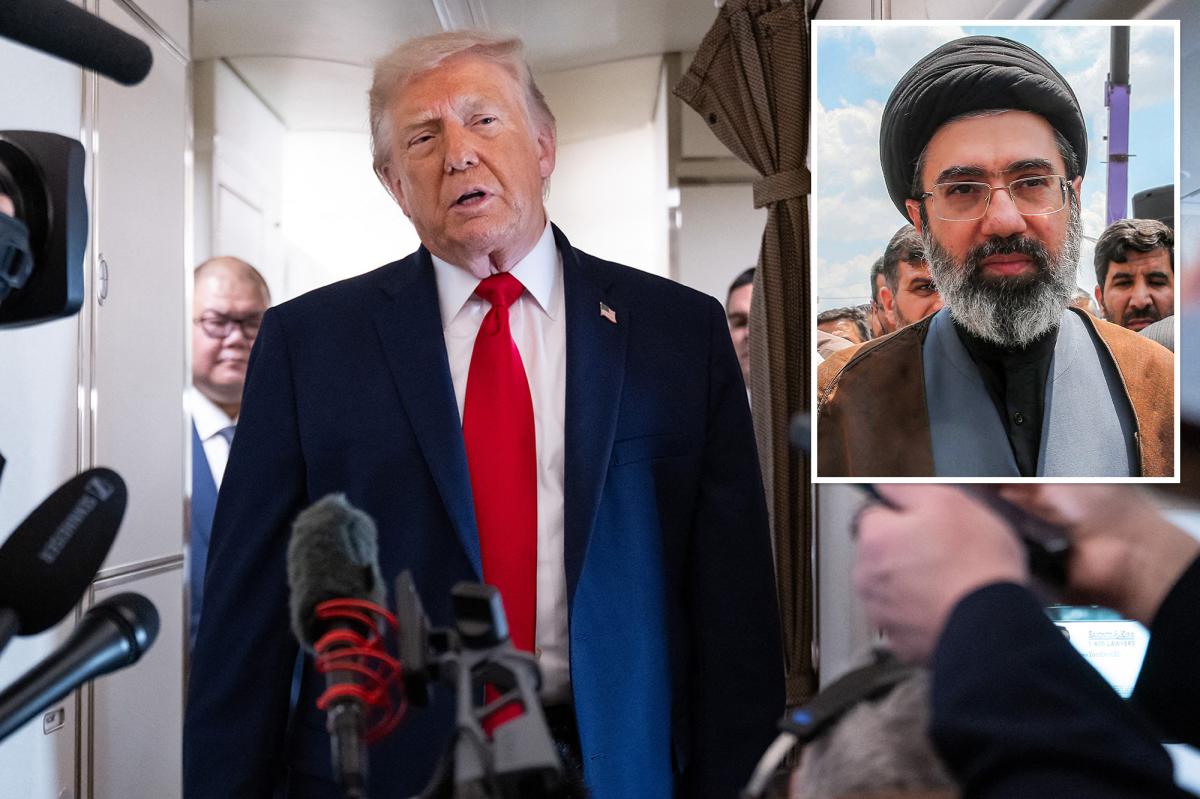

During an appearance on NBC’s “Meet the Press” broadcast Sunday, Trump characterized the new Iranian leader as younger and potentially more reasonable than his predecessor, the late Ayatollah Ali Khamenei, who was killed in an Israeli airstrike on February 28, according to New York Post.
The president noted that Mojtaba Khamenei sustained serious injuries in the same strike that claimed his father’s life and has not appeared publicly since the conflict began. Trump acknowledged a degree of courage in the leader’s continuation despite those injuries.
Following more than five weeks of intense military operations, Washington and Tehran agreed to a ceasefire on April 8. The two nations have spent the subsequent two months hammering out terms for a comprehensive peace framework.
Uranium Surrender Remains Central Demand
A critical component of any agreement remains Iran’s stockpile of uranium enriched to 60 percent purity, which sits dangerously close to weapons-grade material. The president has maintained an unwavering position that Tehran must relinquish this strategic asset.
Senior administration officials have publicly indicated that Iran’s 20 percent enriched uranium supplies should also be surrendered, though whether this constitutes a non-negotiable red line for Trump remains unclear.
I think we’re very close. We have a couple of points, Trump stated regarding the ongoing negotiations, as New York Post reports. He added that the remaining issues appear relatively minor and that Iran has already conceded it will not pursue nuclear weapons capability.
The president requested modifications to the negotiating framework late last month, signaling his hands-on approach to finalizing terms.
Economic Pressure Mounting on Tehran
Trump emphasized that current conditions prove unsustainable for the Islamic Republic, with the American naval blockade costing Iran an estimated 400 to 500 million dollars daily. The administration imposed the blockade in April after Iranian forces disrupted commercial traffic through the strategically vital Strait of Hormuz.
When questioned about why Iranian negotiators have not capitulated more quickly, the president pointed to national pride and decades of unchecked behavior. He noted that after 47 years of operating without meaningful constraints, Tehran now faces demands it never anticipated accepting.
Pushback Against “Endless War” Criticism
The Iranian conflict has generated friction within segments of Trump’s conservative base, particularly among supporters who rallied behind his campaign promises to avoid protracted Middle Eastern entanglements.
The president firmly rejected characterizations of the current operation as another endless war. He contrasted the three-month timeline of the Iran operation, much of it conducted under ceasefire conditions, with the 19-year Vietnam quagmire and the years-long occupations of Iraq and other nations under previous administrations.
Trump highlighted that American forces dismantled Iran’s military capabilities within days, achieving results unprecedented in modern warfare. He framed the current diplomatic phase as finishing what military action began.
Military Option Remains on Table
The president confirmed his willingness to deploy military force to secure Iran’s highly enriched uranium stockpiles if diplomatic efforts fail, though he acknowledged the operation’s inherent complexity and risk.
Under a successful diplomatic resolution, Trump envisions a cooperative approach where American personnel and equipment would jointly remove and destroy the nuclear material, either on Iranian soil or at an external location.
Should negotiations collapse, however, the president made clear that the United States would extract the uranium through harsh military action, waiting until Iranian defenses are neutralized before conducting retrieval operations to ensure personnel safety.
With information from New York Post





