
Trump Vows ‘Whatever It Takes’ to Beat China in AI Race
Rep. Brian Babin argues the U.S. must remove bureaucratic obstacles and empower innovation rather than impose government controls to maintain its artificial intelligence leadership against China.
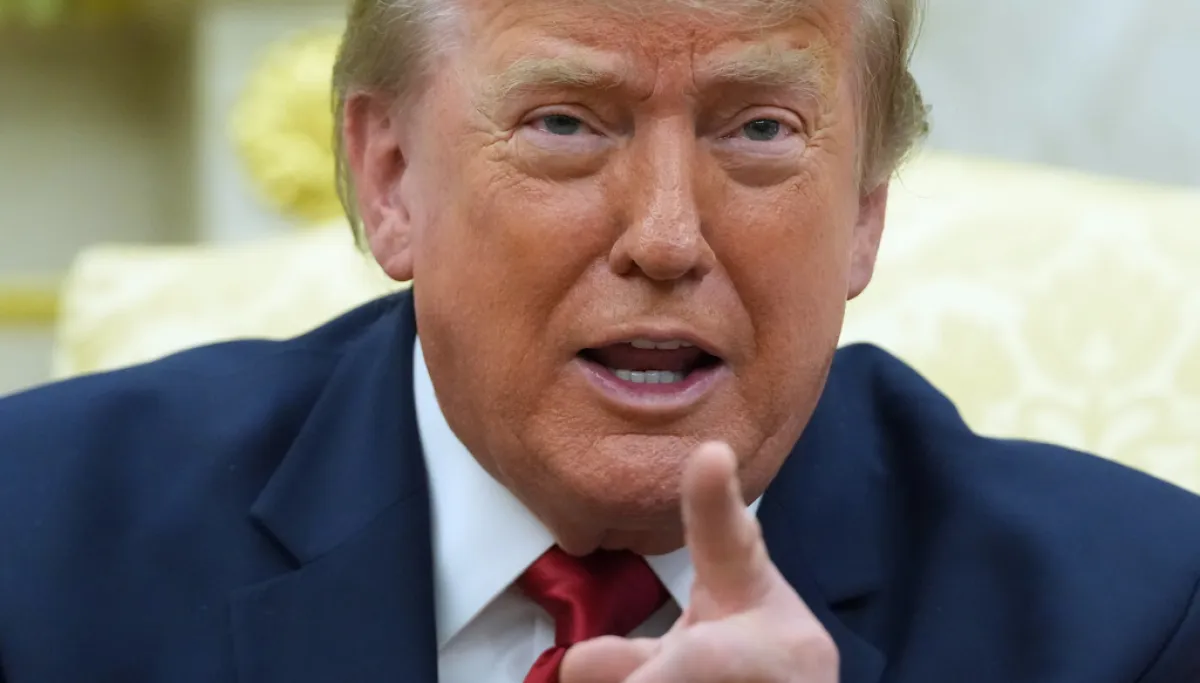

The stakes could not be higher. Artificial intelligence will determine which nation dominates the global economy, drives the next wave of scientific breakthroughs, and establishes the technological standards that shape the future. President Donald Trump understood this when he declared America must do whatever it takes to lead in AI.
While the United States enters this competition with significant advantages, leadership cannot be taken for granted. It must be earned, protected, and constantly reinforced through the right policies and investments.



China has made artificial intelligence a cornerstone of its national strategy, pouring resources into challenging American technological supremacy. But centralized government planning has never been America’s strength. The nation’s greatest asset remains the creativity, ingenuity, and entrepreneurial drive of its people.
Artificial intelligence has already moved beyond the realm of science fiction into everyday American life. From fraud detection and medical diagnostics to precision agriculture, advanced manufacturing, and national defense, AI technologies are transforming how citizens live and work.
The numbers speak for themselves. In 2025 alone, venture capital investment in U.S. AI companies reached approximately $194 billion—roughly three-quarters of all global AI investment. Combined with world-class universities, cutting-edge research facilities, and an unparalleled entrepreneurial ecosystem, America possesses the foundation needed to maintain its position at the forefront of AI development.
Yet talent, investment, and computing power alone will not guarantee victory. Success in the AI race also depends on access to high-quality data, one of the modern economy’s most valuable resources.
AI systems perform only as well as the information used to train them. Despite holding some of the world’s most extensive collections of scientific, environmental, economic, and technical data, the federal government’s information often remains difficult to access, inconsistently formatted, or inadequately prepared for AI applications. Researchers frequently waste more time organizing data than using it to drive innovation.
Rep. Babin has introduced the AI-Ready Federal Data Guidelines Act to address this problem. The bipartisan legislation, recently approved by the House Science, Space, and Technology Committee, directs the National Institute of Standards and Technology (NIST) to develop voluntary guidelines helping federal agencies prepare datasets—including open government data—for use in training AI models. By improving data quality, accessibility, and usability, the measure aims to eliminate unnecessary barriers and provide researchers and entrepreneurs with superior tools for building next-generation AI technologies.
Federal data preparation represents just one component of a broader strategy. The House Science, Space, and Technology Committee recently advanced a bipartisan package of ten AI bills designed to strengthen U.S. leadership in this critical sector. The measures expand researchers’ access to advanced computing resources through the CREATE AI Act, enhance AI security and resilience, prepare the next generation of AI talent through education and workforce programs, improve accountability and consumer confidence, and promote responsible innovation across the AI ecosystem.
This approach reflects the correct philosophy: rather than erecting new obstacles for American innovators and businesses, Congress should focus on removing barriers, strengthening the foundations of scientific discovery, and creating an environment where breakthrough technologies can flourish. Government cannot manufacture the next major innovation, but it can ensure researchers and entrepreneurs have the tools, resources, and certainty needed to succeed.
Meeting Trump’s challenge to do whatever it takes to lead in artificial intelligence does not require government to pick winners and losers. It demands policies that unleash innovation, encourage investment, enhance research, and ensure the world’s brightest minds continue to build, discover, and create on American soil.
The competition for AI leadership extends far beyond developing superior algorithms—it will shape the balance of economic and strategic power for generations to come.
With information from Washington Examiner





