Necessary Cookies

Required for the site to function. Cannot be disabled.

Analytics Cookies

Help us understand how visitors interact with our site (Google Analytics via GTM).

Marketing Cookies

Used to track visitors and deliver personalised advertisements.

We use cookies to enhance your browsing experience and analyse site traffic. By clicking Accept All, you consent to our use of cookies. Privacy Policy
NewsFire Global
Home News Europe World Christianity Culture Wars Opinion Video
Information
About Us Authors Advertising Terms & Conditions Privacy Policy Contact
R2B Media
R2B NEWSFIRE.GR PAPAFOTIS.GR THRACTION HELLENIC CONSERVATIVES RIGHT2THEBONE YT
News World

Trump: Iran’s Economic Prospects Bright with U.S. Cooperation

President Trump told reporters at the G7 summit that Iran could have economic opportunities if it cooperates with the U.S. but must first prove trustworthy and abandon nuclear ambitions.

Newsroom
Newsroom Staff Writer
JUNE 17, 2026 AT 4:05 AM

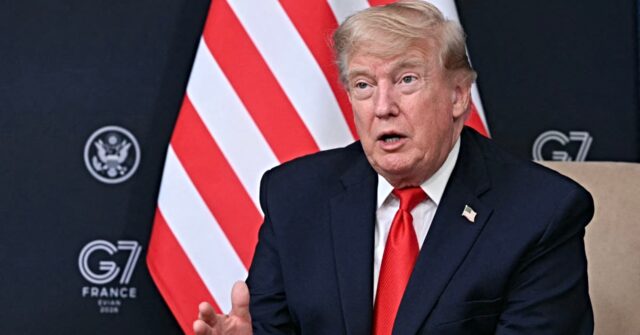
The president made his remarks during a bilateral meeting with the Emir of Qatar, Tamim bin Hamad bin Khalifa Al Thani, held on the sidelines of the G7 summit in Évian-les-Bains, France.

When asked by Breitbart News about potential economic opportunities for Iran contingent upon continued cooperation with Washington, Trump responded affirmatively but with clear conditions attached.

The president noted that while opportunities exist globally, Iran would first need to demonstrate trustworthiness before any meaningful engagement could occur. He pointed out that Qatar’s leader, whose nation borders Iran, understands the region’s oil-rich landscape well.

Trump then pivoted to what he characterized as a non-negotiable red line: Iran’s nuclear ambitions. The president declared that regardless of economic circumstances, Tehran cannot be permitted to develop nuclear weapons capability.

He warned that a nuclear-armed Iran would have destroyed Israel, destabilized the entire Middle East, and likely attacked the United States. Trump suggested America would have preempted such an attack but emphasized the catastrophic damage that could have resulted.

The president sharply criticized the Obama-era Joint Comprehensive Plan of Action, describing it as a pathway to nuclear weapons rather than a deterrent. He argued that without his termination of the JCPOA, Iran would have obtained nuclear weapons five years ago.

Trump contrasted his approach with the previous administration’s agreement, emphasizing that his policy involved no financial payments to Tehran. He condemned the JCPOA as one of the worst deals in American history, second only to NAFTA, noting that it transferred billions of dollars to the Iranian regime.

The president highlighted his second-term military action, specifically referencing B-2 bomber strikes during Operation Midnight Hammer that targeted Iran’s enriched nuclear material facilities. He described the operation as devastatingly effective, with entire mountains collapsing on enrichment sites.

Trump noted that even mainstream media outlets initially questioned the effectiveness of the strikes, but the Atomic Energy agency subsequently confirmed the bombing campaign was among the most destructive operations of its kind ever conducted.

He explained that while the buried material remains theoretically recoverable, the technical challenge is immense—requiring specialized equipment possessed only by the United States and China. The president suggested that with surveillance cameras monitoring the sites, retrieval might not be operationally necessary, though he acknowledged potential psychological benefits to securing the material.

Emir Al Thani also addressed Iran’s economic future positively but stressed that recent diplomatic efforts have focused primarily on peace rather than economic development.

The Qatari leader emphasized that both nations’ priority over recent months has been securing a comprehensive deal to end regional conflict. He characterized the current moment as critical for advancing toward a final agreement.

Once such an agreement is reached, Al Thani predicted, Iran would become accessible to international investment with substantial opportunities emerging. However, he reiterated that deal-making remains the immediate objective rather than economic planning.

With information from Breitbart News

Share:
Newsroom
Newsroom

NewsFire.GR is a website created with the hope that the media will rediscover their true identity, which is none other than informing the public about the real stakes of our times. Journalism and political analysis must hold power accountable, not serve it.

The president made his remarks during a bilateral meeting with the Emir of Qatar, Tamim bin Hamad bin Khalifa Al Thani, held on the sidelines of the G7 summit in Évian-les-Bains, France.

When asked by Breitbart News about potential economic opportunities for Iran contingent upon continued cooperation with Washington, Trump responded affirmatively but with clear conditions attached.

The president noted that while opportunities exist globally, Iran would first need to demonstrate trustworthiness before any meaningful engagement could occur. He pointed out that Qatar’s leader, whose nation borders Iran, understands the region’s oil-rich landscape well.

Trump then pivoted to what he characterized as a non-negotiable red line: Iran’s nuclear ambitions. The president declared that regardless of economic circumstances, Tehran cannot be permitted to develop nuclear weapons capability.

He warned that a nuclear-armed Iran would have destroyed Israel, destabilized the entire Middle East, and likely attacked the United States. Trump suggested America would have preempted such an attack but emphasized the catastrophic damage that could have resulted.

The president sharply criticized the Obama-era Joint Comprehensive Plan of Action, describing it as a pathway to nuclear weapons rather than a deterrent. He argued that without his termination of the JCPOA, Iran would have obtained nuclear weapons five years ago.

Trump contrasted his approach with the previous administration’s agreement, emphasizing that his policy involved no financial payments to Tehran. He condemned the JCPOA as one of the worst deals in American history, second only to NAFTA, noting that it transferred billions of dollars to the Iranian regime.

The president highlighted his second-term military action, specifically referencing B-2 bomber strikes during Operation Midnight Hammer that targeted Iran’s enriched nuclear material facilities. He described the operation as devastatingly effective, with entire mountains collapsing on enrichment sites.

Trump noted that even mainstream media outlets initially questioned the effectiveness of the strikes, but the Atomic Energy agency subsequently confirmed the bombing campaign was among the most destructive operations of its kind ever conducted.

He explained that while the buried material remains theoretically recoverable, the technical challenge is immense—requiring specialized equipment possessed only by the United States and China. The president suggested that with surveillance cameras monitoring the sites, retrieval might not be operationally necessary, though he acknowledged potential psychological benefits to securing the material.

Emir Al Thani also addressed Iran’s economic future positively but stressed that recent diplomatic efforts have focused primarily on peace rather than economic development.

The Qatari leader emphasized that both nations’ priority over recent months has been securing a comprehensive deal to end regional conflict. He characterized the current moment as critical for advancing toward a final agreement.

Once such an agreement is reached, Al Thani predicted, Iran would become accessible to international investment with substantial opportunities emerging. However, he reiterated that deal-making remains the immediate objective rather than economic planning.

With information from Breitbart News

