Necessary Cookies

Required for the site to function. Cannot be disabled.

Analytics Cookies

Help us understand how visitors interact with our site (Google Analytics via GTM).

Marketing Cookies

Used to track visitors and deliver personalised advertisements.

We use cookies to enhance your browsing experience and analyse site traffic. By clicking Accept All, you consent to our use of cookies. Privacy Policy
NewsFire Global
Home News Europe World Christianity Culture Wars Opinion
Information
About Us Authors Advertising Terms & Conditions Privacy Policy Contact
R2B Media
R2B NEWSFIRE.GR PAPAFOTIS.GR THRACTION HELLENIC CONSERVATIVES RIGHT2THEBONE YT
News World

Trump Announces Victory: Iran Agrees to Open Strait and Halt Uranium Enrichment

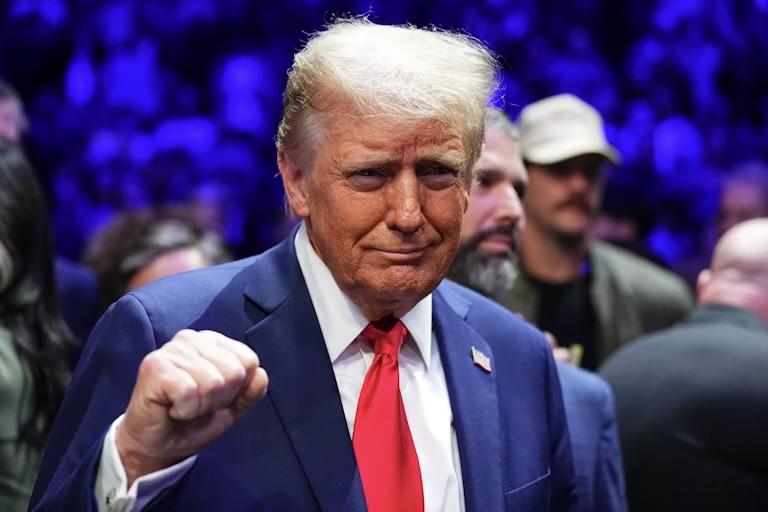
President Trump announced Iran’s full compliance with US demands, including reopening the Strait of Hormuz and halting uranium enrichment, signaling a swift resolution despite earlier Iranian resistance.

Dimitris Papafotis
Dimitris Papafotis Editor in Chief
APRIL 17, 2026 AT 10:29 PM Updated: May 17, 2026 3:26 AM

At the same time, the president emphasized that the United States will recover the enriched uranium from the facilities that were bombed during Operation Midnight Hammer last June.

He spoke to Kelly Meyer of NewsNation immediately after announcing the reopening of the strait. When asked if Iran agreed to halt enrichment, he replied “Yes.” “They agreed to everything,” he added shortly thereafter.

Yet, when the journalist asked if the development surprised him, Trump simply said he was surprised by nothing and ended the conversation.

The six red lines Iran initially rejected

A few days ago, during negotiations in Islamabad, the Iranian regime had initially rejected six key conditions put forth by the U.S. side. The delegation included Vice President J.D. Vance, Special Envoy Steve Witkoff, and Jared Kushner.

According to a U.S. official, the demands involved the recovery of highly enriched uranium, the complete dismantling of major enrichment facilities, the cessation of all uranium enrichment activities, the adoption of a broader framework for peace and de-escalation with regional allies, the full opening of the Strait of Hormuz without tolls, and the cessation of funding to Hamas, Hezbollah, and the Houthis.

Vance departed after submitting the final proposal, hoping the Iranians would accept it after consideration. “We are leaving with a very simple proposal, which is our final and best offer. We will see if the Iranians accept it,” he had said.

The naval blockade and Trump’s post on Truth Social

Trump, who had imposed a naval blockade on the Strait of Hormuz, reminded of the agreement with a post on Truth Social.

“The Strait of Hormuz is fully open and ready for business and full transit, but the naval blockade will remain fully in effect and enforced regarding Iran alone until our deal with Iran is 100% complete,” he wrote.

He went on to say that the process will advance very quickly, since most points have already been agreed upon, and thanked the audience for their attention.

Iran has already begun removing mines it had deployed in the strait and has committed never to close it again. The agreement is not linked to Lebanon.

The American president also thanked Pakistan, Saudi Arabia, the United Arab Emirates, and Qatar for their contributions.

Share:
Dimitris Papafotis
Dimitris Papafotis

Dimitris Papafotis is the editor-in-chief of NewsFire.GR. He was born and raised in Athens. He studied at the Journalism Workshop (1991-1993). He currently lives in Pyrgos, Ilia, where he has been active in radio and various newspapers, while also maintaining his personal blog, Papafotis.gr.

At the same time, the president emphasized that the United States will recover the enriched uranium from the facilities that were bombed during Operation Midnight Hammer last June.

He spoke to Kelly Meyer of NewsNation immediately after announcing the reopening of the strait. When asked if Iran agreed to halt enrichment, he replied “Yes.” “They agreed to everything,” he added shortly thereafter.

Yet, when the journalist asked if the development surprised him, Trump simply said he was surprised by nothing and ended the conversation.

The six red lines Iran initially rejected

A few days ago, during negotiations in Islamabad, the Iranian regime had initially rejected six key conditions put forth by the U.S. side. The delegation included Vice President J.D. Vance, Special Envoy Steve Witkoff, and Jared Kushner.

According to a U.S. official, the demands involved the recovery of highly enriched uranium, the complete dismantling of major enrichment facilities, the cessation of all uranium enrichment activities, the adoption of a broader framework for peace and de-escalation with regional allies, the full opening of the Strait of Hormuz without tolls, and the cessation of funding to Hamas, Hezbollah, and the Houthis.

Vance departed after submitting the final proposal, hoping the Iranians would accept it after consideration. “We are leaving with a very simple proposal, which is our final and best offer. We will see if the Iranians accept it,” he had said.

The naval blockade and Trump’s post on Truth Social

Trump, who had imposed a naval blockade on the Strait of Hormuz, reminded of the agreement with a post on Truth Social.

“The Strait of Hormuz is fully open and ready for business and full transit, but the naval blockade will remain fully in effect and enforced regarding Iran alone until our deal with Iran is 100% complete,” he wrote.

He went on to say that the process will advance very quickly, since most points have already been agreed upon, and thanked the audience for their attention.

Iran has already begun removing mines it had deployed in the strait and has committed never to close it again. The agreement is not linked to Lebanon.

The American president also thanked Pakistan, Saudi Arabia, the United Arab Emirates, and Qatar for their contributions.