Necessary Cookies

Required for the site to function. Cannot be disabled.

Analytics Cookies

Help us understand how visitors interact with our site (Google Analytics via GTM).

Marketing Cookies

Used to track visitors and deliver personalised advertisements.

We use cookies to enhance your browsing experience and analyse site traffic. By clicking Accept All, you consent to our use of cookies. Privacy Policy
NewsFire Global
Home News Europe World Christianity Culture Wars Opinion Video
Information
About Us Authors Advertising Terms & Conditions Privacy Policy Contact
R2B Media
R2B NEWSFIRE.GR PAPAFOTIS.GR THRACTION HELLENIC CONSERVATIVES RIGHT2THEBONE YT
News Culture Wars

Superman Skips America’s 250th After Big 1976 Celebration

DC Comics has quietly abandoned plans to celebrate America's 250th anniversary in 2026, contrasting sharply with its patriotic Superman Bicentennial edition in 1976.
Stefanos Banos
Stefanos Banos Staff Writer
JUNE 10, 2026 AT 1:00 PM

According to New York Post, a search of DC Comics’ official website reveals no commemoration of America’s Semiquincentennial by Superman or any other superhero character, despite the milestone anniversary approaching in 2026.

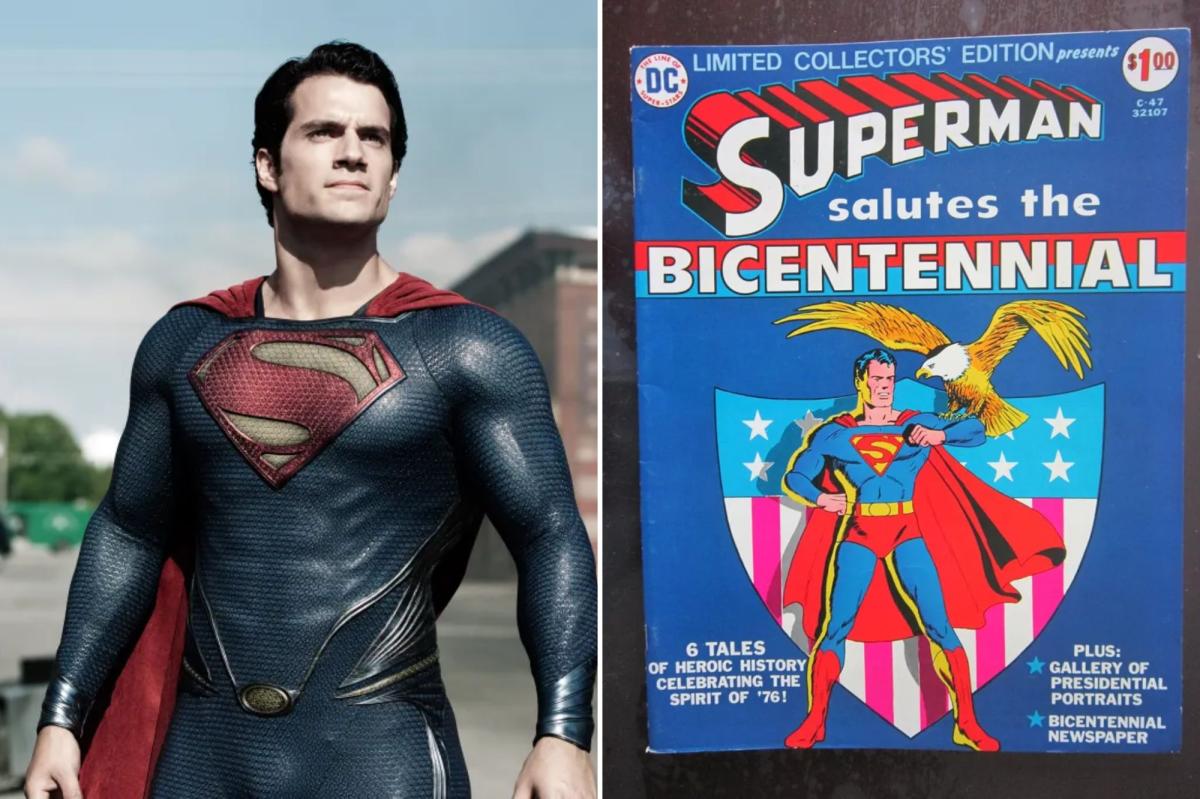
The silence stands in sharp relief against the company’s enthusiastic embrace of American history nearly five decades ago. In the summer of 1976, DC published a special oversize edition titled “Superman Salutes the Bicentennial,” featuring a reprinted 1940s cover showing a bald eagle perched on Superman’s arm against a stars-and-stripes shield. The publication contained six historical tales celebrating the Revolution and the Spirit of ’76.

The corporate retreat from patriotism appears all the more striking given the challenging context of 1976 itself. The nation had just emerged from the Vietnam War, which claimed 58,000 American lives. Watergate and Richard Nixon’s resignation had damaged faith in political institutions, while the assassinations of Dr. Martin Luther King Jr. and Robert F. Kennedy, followed by devastating riots, had tested American ideals to their limits.

Yet despite those trials, DC Comics joined tens of millions of Americans in celebrating the country’s Bicentennial. The era had witnessed the greatest expansion of the middle class and national wealth in human history, alongside the final legislative push to secure civil rights for all citizens.

A Tradition of Civic Education

The patriotic tradition continued beyond 1976. In September 1987, DC partnered with the New York Daily News to publish a special comic commemorating the bicentennial of the Constitution. The story featured Superman traveling back in time with three young Americans to thwart Lex Luthor’s plot to hijack the Constitutional Convention and install himself as dictator.

The comic delivered civics lessons to young readers, with Superman explaining that while the Constitution initially failed to outlaw slavery or grant women the vote, the Framers had wisely built in the amendment process to allow the document to evolve with the times.

As New York Post reports, next to educational programs like “Schoolhouse Rock,” Superman likely provided more civic education to young readers than most elementary school classrooms.

The Globalist Turn

The corporate philosophy shifted dramatically in 2011, when DC used Action Comics’ 900th issue as a platform for Superman to renounce his American citizenship. A decade later, the publisher officially changed Superman’s motto from “truth, justice and the American way” to “truth, justice and a better tomorrow.”

DC Comics did not respond to a request for comment from New York Post regarding the absence of Semiquincentennial content.

The original Superman of the 1930s was distinctly American in character and creation. Jerry Siegel and Joe Schuster, two Jewish teenagers and children of immigrants in Depression-era Cleveland, created the Man of Steel as the ultimate immigrant story. The sole survivor of the doomed planet Krypton, Superman embodied the American narrative of newcomers seeking to build a more perfect world.

America Erased

Modern comics have deliberately distanced themselves from their American origins. While 1970s comics addressed social problems like drug addiction and racism, they maintained faith in American values. Banners proclaiming “DC Comics Salutes the Bicentennial” adorned not just Superman titles but other publications across the company’s catalog in 1976.

Today, Superman exists as rootless by DC’s editorial standards—physically in America but not identified with it. The shift reflects a broader abandonment of the uniquely American ideals that made the character resonate globally for generations.

With information from New York Post

Share:
Stefanos Banos
Stefanos Banos

Stefanos Banos was born in Piraeus and is an editor at NewsFire.GR, specializing in political analysis and international relations. He graduated from the Department of Communication and Media at the University of Bremen in Germany, where he also completed his Master of Arts in Communication and Media Studies. Married to Zoi, he is a proud father of three boys.

According to New York Post, a search of DC Comics’ official website reveals no commemoration of America’s Semiquincentennial by Superman or any other superhero character, despite the milestone anniversary approaching in 2026.

The silence stands in sharp relief against the company’s enthusiastic embrace of American history nearly five decades ago. In the summer of 1976, DC published a special oversize edition titled “Superman Salutes the Bicentennial,” featuring a reprinted 1940s cover showing a bald eagle perched on Superman’s arm against a stars-and-stripes shield. The publication contained six historical tales celebrating the Revolution and the Spirit of ’76.

The corporate retreat from patriotism appears all the more striking given the challenging context of 1976 itself. The nation had just emerged from the Vietnam War, which claimed 58,000 American lives. Watergate and Richard Nixon’s resignation had damaged faith in political institutions, while the assassinations of Dr. Martin Luther King Jr. and Robert F. Kennedy, followed by devastating riots, had tested American ideals to their limits.

Yet despite those trials, DC Comics joined tens of millions of Americans in celebrating the country’s Bicentennial. The era had witnessed the greatest expansion of the middle class and national wealth in human history, alongside the final legislative push to secure civil rights for all citizens.

A Tradition of Civic Education

The patriotic tradition continued beyond 1976. In September 1987, DC partnered with the New York Daily News to publish a special comic commemorating the bicentennial of the Constitution. The story featured Superman traveling back in time with three young Americans to thwart Lex Luthor’s plot to hijack the Constitutional Convention and install himself as dictator.

The comic delivered civics lessons to young readers, with Superman explaining that while the Constitution initially failed to outlaw slavery or grant women the vote, the Framers had wisely built in the amendment process to allow the document to evolve with the times.

As New York Post reports, next to educational programs like “Schoolhouse Rock,” Superman likely provided more civic education to young readers than most elementary school classrooms.

The Globalist Turn

The corporate philosophy shifted dramatically in 2011, when DC used Action Comics’ 900th issue as a platform for Superman to renounce his American citizenship. A decade later, the publisher officially changed Superman’s motto from “truth, justice and the American way” to “truth, justice and a better tomorrow.”

DC Comics did not respond to a request for comment from New York Post regarding the absence of Semiquincentennial content.

The original Superman of the 1930s was distinctly American in character and creation. Jerry Siegel and Joe Schuster, two Jewish teenagers and children of immigrants in Depression-era Cleveland, created the Man of Steel as the ultimate immigrant story. The sole survivor of the doomed planet Krypton, Superman embodied the American narrative of newcomers seeking to build a more perfect world.

America Erased

Modern comics have deliberately distanced themselves from their American origins. While 1970s comics addressed social problems like drug addiction and racism, they maintained faith in American values. Banners proclaiming “DC Comics Salutes the Bicentennial” adorned not just Superman titles but other publications across the company’s catalog in 1976.

Today, Superman exists as rootless by DC’s editorial standards—physically in America but not identified with it. The shift reflects a broader abandonment of the uniquely American ideals that made the character resonate globally for generations.

With information from New York Post