
Stupidity is a right, Charlie Hebdo reminds us once again
Charlie Hebdo's cartoon mocking football coach Didier Deschamps over his mother's death sparked outrage while reigniting debates about free expression boundaries in Western democracies.
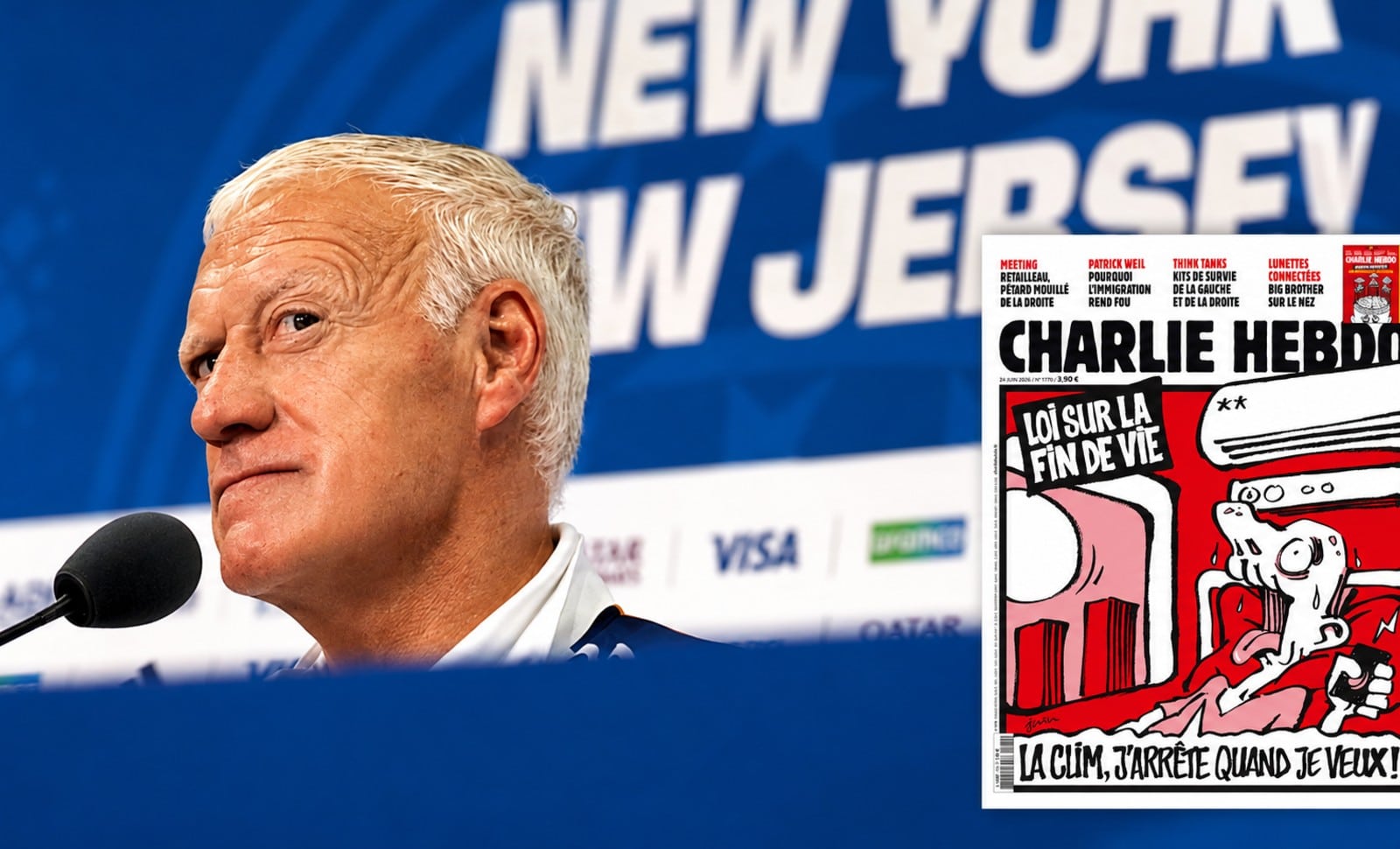

The controversial illustration depicts Didier Deschamps, the French national football team’s manager, holding a funeral urn above his head bearing the inscription “maman” (mother). Deschamps had just lost his mother and left the United States, where the World Cup was taking place, to return to France for her funeral, according to Causeur.
The cartoon, posted on social media by Charlie Hebdo on June 24, 2026, immediately drew fierce criticism from across the political spectrum. Many commentators denounced the publication’s decision as indecent, callous, and crossing fundamental lines of human decency during a moment of private grief.
As Causeur reports, the image provoked visceral reactions of disgust. The French outlet acknowledged that for ordinary citizens, the immediate question is straightforward: how could anyone dare to publish something so brazenly disrespectful? The cartoon represents what many see as transgression for transgression’s sake, exploitation of personal tragedy for shock value.
Defending Offensive Speech
Yet Causeur argues that this very outrageousness serves an important purpose: it reminds Western societies of an uncomfortable truth often swept under the rug. Even reprehensible speech, what the French outlet calls “the right to stupidity,” remains inseparable from freedom of expression itself.
The publication poses a pointed question to its readers: in how many other countries would going this far in exercising freedom of speech, even to the point of desecration, actually be possible? In France, this liberty still exists, though for how much longer remains an open question.
Freedom Includes the Right to Offend
Causeur acknowledges the cartoon is vile, base, and sordid. It concedes the material can provoke nausea and righteous anger. But the outlet maintains that defending objectionable expression, even when it causes pain, remains essential to preserving broader free speech protections in Western civilization.
The French publication notes that if Charlie Hebdo has the right to express stupidity, citizens equally possess the right to purchase the magazine and immediately dispose of it in the toilet, as the founders of the earlier satirical publication Hara-Kiri once advocated. Freedom, even when saturated with bile, remains precious—a truth requiring daily reaffirmation.
Charlie Hebdo has built its reputation on provocative and often offensive satire, famously maintaining its confrontational editorial stance even after Islamist terrorists murdered twelve people at its offices in 2015. The publication continues to test the limits of acceptable speech in contemporary France, drawing both fierce defenders and vocal critics.
With information from Causeur





