Necessary Cookies

Required for the site to function. Cannot be disabled.

Analytics Cookies

Help us understand how visitors interact with our site (Google Analytics via GTM).

Marketing Cookies

Used to track visitors and deliver personalised advertisements.

We use cookies to enhance your browsing experience and analyse site traffic. By clicking Accept All, you consent to our use of cookies. Privacy Policy
NewsFire Global
Home News Europe World Christianity Culture Wars Opinion Video
Information
About Us Authors Advertising Terms & Conditions Privacy Policy Contact
R2B Media
R2B NEWSFIRE.GR PAPAFOTIS.GR THRACTION HELLENIC CONSERVATIVES RIGHT2THEBONE YT
News Culture Wars

Streamer’s ‘Yesteryear’ Takes Shallow Swipe at Tradwife Culture

A novel sends a tradwife influencer to the 1850s to expose the gap between romanticized online domesticity and the harsh reality of historical women's lives without modern rights or comforts.
Stefanos Banos
Stefanos Banos Staff Writer
AUGUST 2, 2026 AT 2:52 PM

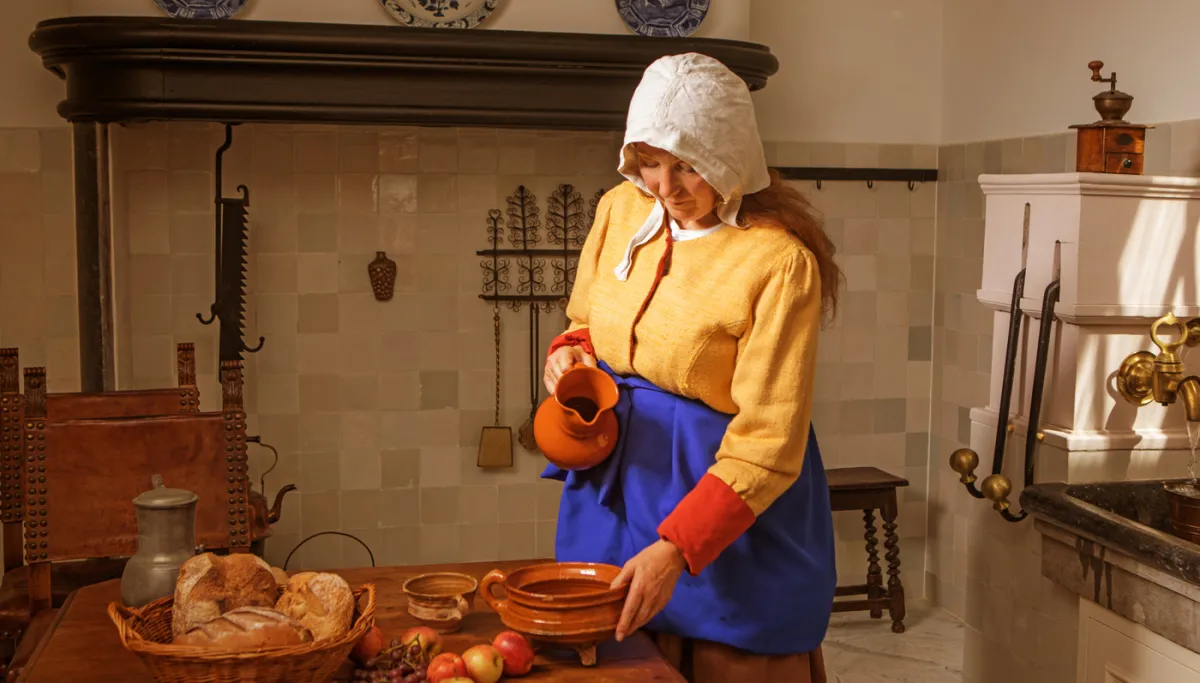
Caro Claire Burke’s novel Yesteryear centres on a 2026 tradwife whose carefully curated online persona becomes all too real when she finds herself transported to the 19th century, according to Jessica Hooten Wilson writing in Washington Examiner. The premise asks whether the idealised domestic past celebrated by tradwife influencers ever truly existed, or whether it represents mere nostalgic fantasy.

The tradwife movement provokes contradictory reactions, Wilson notes. Viewers feel drawn to images of women baking bread and tending children on sun-drenched farms, yet simultaneously reject such portrayals as reductive and sentimentally backwards. The novel’s protagonist Natalie discovers the formula for social media success: being simultaneously loveable and unbearable, creating addictive content where her entire life becomes performance.

Wilson invokes Kurt Vonnegut’s warning that we become what we pretend to be, making our chosen performances critically important. When Natalie awakens in the actual 1850s, she confronts life without electricity, indoor plumbing, or basic women’s rights. Early in the novel, her 1850s husband slaps her across the face for hysterics, and she must accept it as normal for the period. Her playdough fantasy life has become brutal reality.


The novel rests on a false dichotomy about women’s options, Wilson argues, pitting the Christian conservative traditional wife-mother against the Harvard-educated, ambitious, career-oriented single woman facing loneliness. This either-or framework comes from the unreliable narrator Natalie herself, who predicts her Harvard roommate Reena will suffer working hard to get a job, keep it, and earn promotion. Natalie sees her only alternative as pouring herself into an idealised home life, curated for photographs, funded by her wealthy father-in-law, and supported by exploiting right-wing culture warriors’ fears.

While the novel contains fragments of truth, Wilson contends, its caricatures of motherhood versus career play off lies. Natalie correctly observes that some women compromise themselves building lives they do not enjoy, but the same applies to men or anyone discovering corner offices and senatorial races pale compared to family or integrity. Many wives likely recognise Natalie’s revelation about marriage unveiling every man as a freak, though Wilson suggests wives reveal their own imperfections equally.

The portrayal of Natalie’s husband as either impotent when married to a strong modern woman or abusive and virile in 1855 represents another false choice. Wilson cites 19th century African American author and educator Anna Julia Cooper, who observed that strong women promote strong men. Women no longer needed to diminish themselves to bolster male machismo; instead, men would strive toward the noblest achievements demanded by empowered women. Natalie could have had a strong husband, remained a strong woman, and enjoyed indoor plumbing simultaneously.

Nor should Reena face lonely ambition simply for pursuing career success, Wilson argues. That outdated notion echoes mid-twentieth century novels like Alice Curtayne’s House of Cards from 1940, which gave protagonist Anne Farrelly an unhappy ending for choosing work over marriage, declaring marriage the only real haven and life itself.

Wilson questions why contemporary fiction repeats previous centuries’ fallacies by insisting women face either unsatisfied lives at home with babies and gardens, or pantsuits and paychecks accompanied by despair and drinking problems. The novel could have shown a path through this artificial dilemma fabricated for women in society, but instead devolves into parody, with Natalie becoming more than merely unlikeable but fundamentally unbelievable as a character.

The analysis highlights how Yesteryear simultaneously critiques tradwife culture while reinforcing the very binary thinking that constrains women’s choices, presenting domestic life and professional ambition as mutually exclusive rather than potentially complementary paths.

With information from Washington Examiner

Share:
Stefanos Banos
Stefanos Banos

Stefanos Banos was born in Piraeus and is an editor at NewsFire.GR, specializing in political analysis and international relations. He graduated from the Department of Communication and Media at the University of Bremen in Germany, where he also completed his Master of Arts in Communication and Media Studies. Married to Zoi, he is a proud father of three boys.

Caro Claire Burke’s novel Yesteryear centres on a 2026 tradwife whose carefully curated online persona becomes all too real when she finds herself transported to the 19th century, according to Jessica Hooten Wilson writing in Washington Examiner. The premise asks whether the idealised domestic past celebrated by tradwife influencers ever truly existed, or whether it represents mere nostalgic fantasy.

The tradwife movement provokes contradictory reactions, Wilson notes. Viewers feel drawn to images of women baking bread and tending children on sun-drenched farms, yet simultaneously reject such portrayals as reductive and sentimentally backwards. The novel’s protagonist Natalie discovers the formula for social media success: being simultaneously loveable and unbearable, creating addictive content where her entire life becomes performance.

Wilson invokes Kurt Vonnegut’s warning that we become what we pretend to be, making our chosen performances critically important. When Natalie awakens in the actual 1850s, she confronts life without electricity, indoor plumbing, or basic women’s rights. Early in the novel, her 1850s husband slaps her across the face for hysterics, and she must accept it as normal for the period. Her playdough fantasy life has become brutal reality.

The novel rests on a false dichotomy about women’s options, Wilson argues, pitting the Christian conservative traditional wife-mother against the Harvard-educated, ambitious, career-oriented single woman facing loneliness. This either-or framework comes from the unreliable narrator Natalie herself, who predicts her Harvard roommate Reena will suffer working hard to get a job, keep it, and earn promotion. Natalie sees her only alternative as pouring herself into an idealised home life, curated for photographs, funded by her wealthy father-in-law, and supported by exploiting right-wing culture warriors’ fears.

While the novel contains fragments of truth, Wilson contends, its caricatures of motherhood versus career play off lies. Natalie correctly observes that some women compromise themselves building lives they do not enjoy, but the same applies to men or anyone discovering corner offices and senatorial races pale compared to family or integrity. Many wives likely recognise Natalie’s revelation about marriage unveiling every man as a freak, though Wilson suggests wives reveal their own imperfections equally.

The portrayal of Natalie’s husband as either impotent when married to a strong modern woman or abusive and virile in 1855 represents another false choice. Wilson cites 19th century African American author and educator Anna Julia Cooper, who observed that strong women promote strong men. Women no longer needed to diminish themselves to bolster male machismo; instead, men would strive toward the noblest achievements demanded by empowered women. Natalie could have had a strong husband, remained a strong woman, and enjoyed indoor plumbing simultaneously.

Nor should Reena face lonely ambition simply for pursuing career success, Wilson argues. That outdated notion echoes mid-twentieth century novels like Alice Curtayne’s House of Cards from 1940, which gave protagonist Anne Farrelly an unhappy ending for choosing work over marriage, declaring marriage the only real haven and life itself.

Wilson questions why contemporary fiction repeats previous centuries’ fallacies by insisting women face either unsatisfied lives at home with babies and gardens, or pantsuits and paychecks accompanied by despair and drinking problems. The novel could have shown a path through this artificial dilemma fabricated for women in society, but instead devolves into parody, with Natalie becoming more than merely unlikeable but fundamentally unbelievable as a character.

The analysis highlights how Yesteryear simultaneously critiques tradwife culture while reinforcing the very binary thinking that constrains women’s choices, presenting domestic life and professional ambition as mutually exclusive rather than potentially complementary paths.

With information from Washington Examiner


