
Stand Up for Jailed Muslim Leader to Protect Pakistan’s Christians
Pakistan's detention of former Prime Minister Imran Khan tests democratic institutions whose erosion threatens not only majority rights but also the country's persecuted Christian and Hindu minorities.
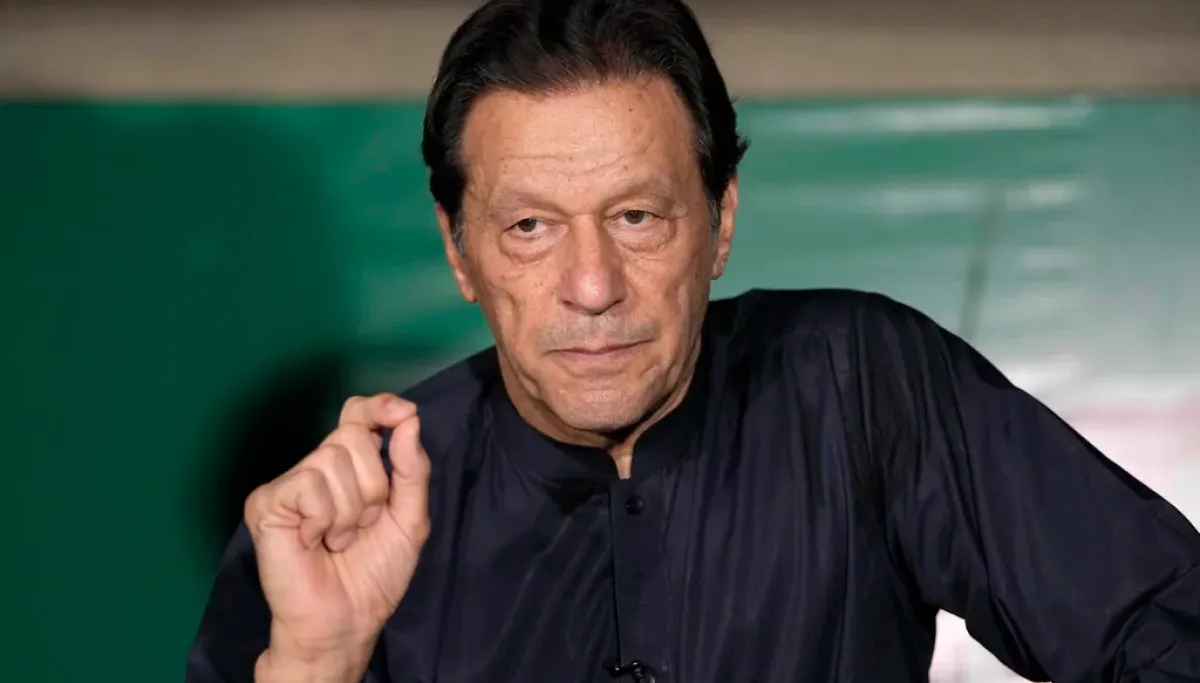

Pakistan’s Supreme Court ordered on August 18 that Khan be transferred to a hospital for medical evaluation after months of deteriorating health concerns and disputes over access to proper medical care during his more than three-year imprisonment, according to Junaid Khan writing in Washington Examiner.
While the immediate circumstances of Khan’s medical treatment remain in flux, the broader crisis reflects a systematic erosion of civilian governance and democratic institutions under the overwhelming political influence of Pakistan’s military establishment.
Democratic Crisis With Religious Freedom Implications
The case raises urgent questions for American faith leaders and policymakers: in a nation where the political and fundamental rights of the majority population cannot be safeguarded, what realistic prospect exists for protecting the rights of vulnerable religious minorities?


Pakistan’s Christian, Hindu, and other religious minority communities have endured prolonged discrimination, persecution, and violence. Their future security depends on the same institutional foundations—due process, representative government, freedom of conscience, and independent judiciary—whose destruction now threatens the entire Pakistani population.
Khan assumed office in 2018 but by 2022 his relationship with Pakistan’s dominant military establishment had disintegrated completely. He was removed from power through a parliamentary no-confidence vote and subsequently entered into an intensifying confrontation with the country’s entrenched power structure. Authorities launched an extraordinary crackdown, ultimately charging Khan with more than 100 criminal offenses.
UN Findings on Arbitrary Detention
In 2024, the United Nations Working Group on Arbitrary Detention concluded that Khan’s imprisonment was arbitrary and characterized his legal persecution as part of a broader campaign of repression targeting both Khan personally and his Pakistan Tehreek-e-Insaf party.
Concerns have also mounted regarding Khan’s wife, Bushra Imran Khan, who remains incarcerated and has reportedly suffered health complications while facing restrictions on family visits and access to legal representation. UN human rights experts have separately expressed alarm about her detention conditions and medical situation.
Despite his imprisonment, Khan retains substantial political support. Major polling conducted before Pakistan’s 2024 election showed Khan commanding the highest approval ratings among the country’s political figures. After PTI was stripped of its election symbol and forced to field candidates as independents, Khan-backed candidates still secured the largest number of directly elected seats in the National Assembly.
Bipartisan Congressional Concern
For millions of Pakistanis both domestically and throughout the global diaspora, Khan represents something more significant than a single political party or leader: the fundamental principle that their vote should determine who governs them. To many supporters, he has become a symbol of resistance against an entrenched political order and a champion for representative democracy.
On August 11, a bipartisan coalition of U.S. Congress members wrote to Secretary of State Marco Rubio raising concerns about the detention conditions of both Imran Khan and Bushra Imran Khan. The signatories spanned America’s ideological spectrum, including both Republican and Democratic lawmakers.
Call for American Faith Leadership
The bipartisan nature of the congressional letter underscores that due process and human dignity should not be partisan issues, nor should they depend on the religion of those whose rights are threatened.
American faith leaders are uniquely positioned to demonstrate this principle. For decades, American Christians, including prominent evangelical voices, have advocated globally for persecuted Christians, prisoners of conscience, and religious minorities.
The potential impact of American Christian leaders publicly defending the fundamental rights of a Muslim political figure—not because they share his faith or endorse his political record, but because they believe those rights are universal—could send a transformative message to more than 250 million people in this Muslim-majority nation.
Millions of young Pakistanis are observing this political crisis closely. A generation that witnesses Christians abroad standing for the rights of Muslims may prove more willing to recognize its own responsibilities toward Pakistan’s Christian, Hindu, and other minority communities.
Whatever assessment one makes of Khan’s governmental record, which merits scrutiny like any political leader, the fundamental issue transcends one politician. It concerns whether democratic institutions and human rights can survive in Pakistan, with direct consequences for the nation’s most vulnerable religious minorities.
With information from Washington Examiner





