
Middle East sees no more red lines after Mecca Pact signed
Turkey, Saudi Arabia, and Pakistan formed the Mecca Defense Pact in August 2026, responding to regional instability and declining trust in Western security guarantees.
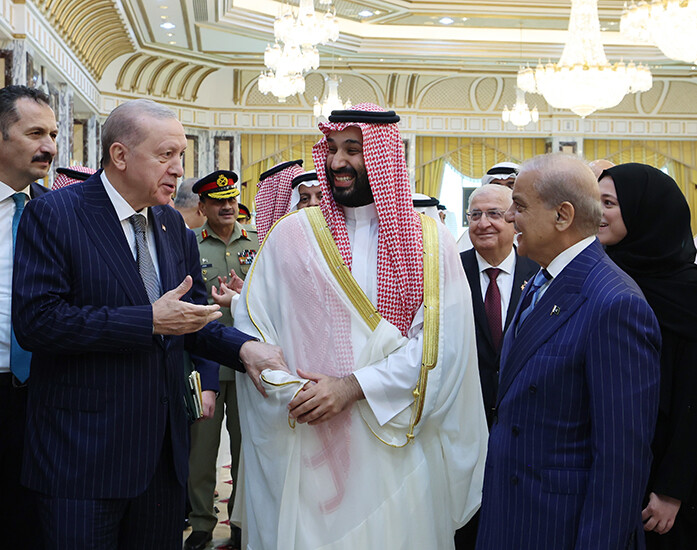

The Mecca Defense Pact, signed on August 7, 2026, in Mecca, represents a coordinated response to escalating regional threats and marks a turning point in how Muslim-majority nations approach collective defense, according to Junge Freiheit.
Yusuf Erim, a strategic analyst closely monitoring the alliance’s formation, explained that the pact did not emerge suddenly but rather grew from years of discussion among regional intellectual circles about establishing a new security architecture. The three founding nations had already held numerous trilateral meetings, sometimes expanded to a quartet format with Egyptian participation.
Regional Instability Drives Strategic Realignment
The formation of the Mecca Alliance cannot be attributed to a single event, Erim noted, but rather to a deteriorating geopolitical situation marked by war in Iran, Israeli preemptive strikes across multiple Middle Eastern countries, eroding trust in the United States as a security guarantor, and the failure of the United Nations and international law to prevent these conflicts.
If pressed to identify a catalyzing moment, Erim pointed to Israel’s attack on Hamas negotiators in Qatar as the decisive trigger. Regional powers were shocked by such a brazen assault on a peaceful nation hosting diplomatic talks, creating the impression that no red lines remained in the Middle East.
Country-Specific Security Concerns Present Challenges
While the alliance members share broad regional security concerns, each faces unique threats that complicate unified strategy. Pakistan confronts challenges from India, Turkey from Greece, and Saudi Arabia from Iran and Yemeni groups. Managing these country-specific security priorities will constitute the greatest challenge for the trilateral partnership, Erim assessed.
The success of NATO, he observed, stems from a common perception of Russia as a threat among member states. The Mecca Alliance must build similar consensus despite more diverse threat perceptions among its founding members.
Future Expansion and Military Integration Planned
Like any newly formed defense alliance, the Mecca Pact will focus on building political and military mechanisms, strengthening interoperability, enhancing defense capabilities, and deepening cooperation in the defense industry. After an adjustment period, expansion is expected to include members who can add value and additional capabilities to the coalition.
Near-term expansion will likely include a core group consisting of Egypt and Qatar, both of which recently held minilateral meetings with the founding trio. Algeria could also emerge as a surprising addition during this initial expansion phase. A subsequent growth phase might pursue strategic expansion focused on maritime presence, potentially incorporating Syria, Libya, and Somalia, though this depends on stability in those countries over the next five to ten years.
Iraq presents an intriguing option but could heighten tensions with Iran. The alliance is expected to avoid any measures that might suggest the pact targets a specific regional actor.
American Factor Looms Over Pact Formation
Rather than a Trump factor specifically, Erim identified an American factor driving the alliance’s creation. The long-discussed Pacific pivot by the United States would reduce American presence in the Middle East to focus more intensely on China. The question has always been how Middle Eastern security would be maintained with diminished U.S. presence.
Many American lawmakers likely would have preferred a protective umbrella with Israel at its center, but the past three years have made this geopolitically impossible. The Mecca Alliance now appears to be the answer to that question.
Initial U.S. reactions have been positive, as the alliance will likely assume some of the security burden America previously carried. Some negative commentary from ethnic lobby groups in Washington is expected, and elements of the U.S. defense industry may view the coalition as increased competition for Gulf state arms spending. However, the overwhelming majority placing American interests first will likely welcome the Mecca Alliance, Erim predicted.
Regional NATO Structure Expected to Emerge
The strategic analyst anticipates a structure resembling a regional NATO will take shape as the alliance matures. This development reflects broader trends of regional powers assuming greater responsibility for their own security in an era of shifting great power priorities.
India does not currently appear on the alliance’s agenda. New Delhi’s hostile posture toward Pakistan complicates the development of a shared threat understanding within the alliance, given Riyadh’s warm relations with India and Turkey’s preference for improving ties with the South Asian power.
The Mecca Defense Pact represents the most significant realignment of Middle Eastern security architecture in decades, potentially reshaping regional power dynamics and the role of external guarantors in maintaining stability across the Islamic world.
With information from Junge Freiheit





