Necessary Cookies

Required for the site to function. Cannot be disabled.

Analytics Cookies

Help us understand how visitors interact with our site (Google Analytics via GTM).

Marketing Cookies

Used to track visitors and deliver personalised advertisements.

We use cookies to enhance your browsing experience and analyse site traffic. By clicking Accept All, you consent to our use of cookies. Privacy Policy
NewsFire Global
Home News Europe World Christianity Culture Wars Opinion Video
Information
About Us Authors Advertising Terms & Conditions Privacy Policy Contact
R2B Media
R2B NEWSFIRE.GR PAPAFOTIS.GR THRACTION HELLENIC CONSERVATIVES RIGHT2THEBONE YT
News World

South Africa: Mood Turns Against Migrants Amid Violent Protests

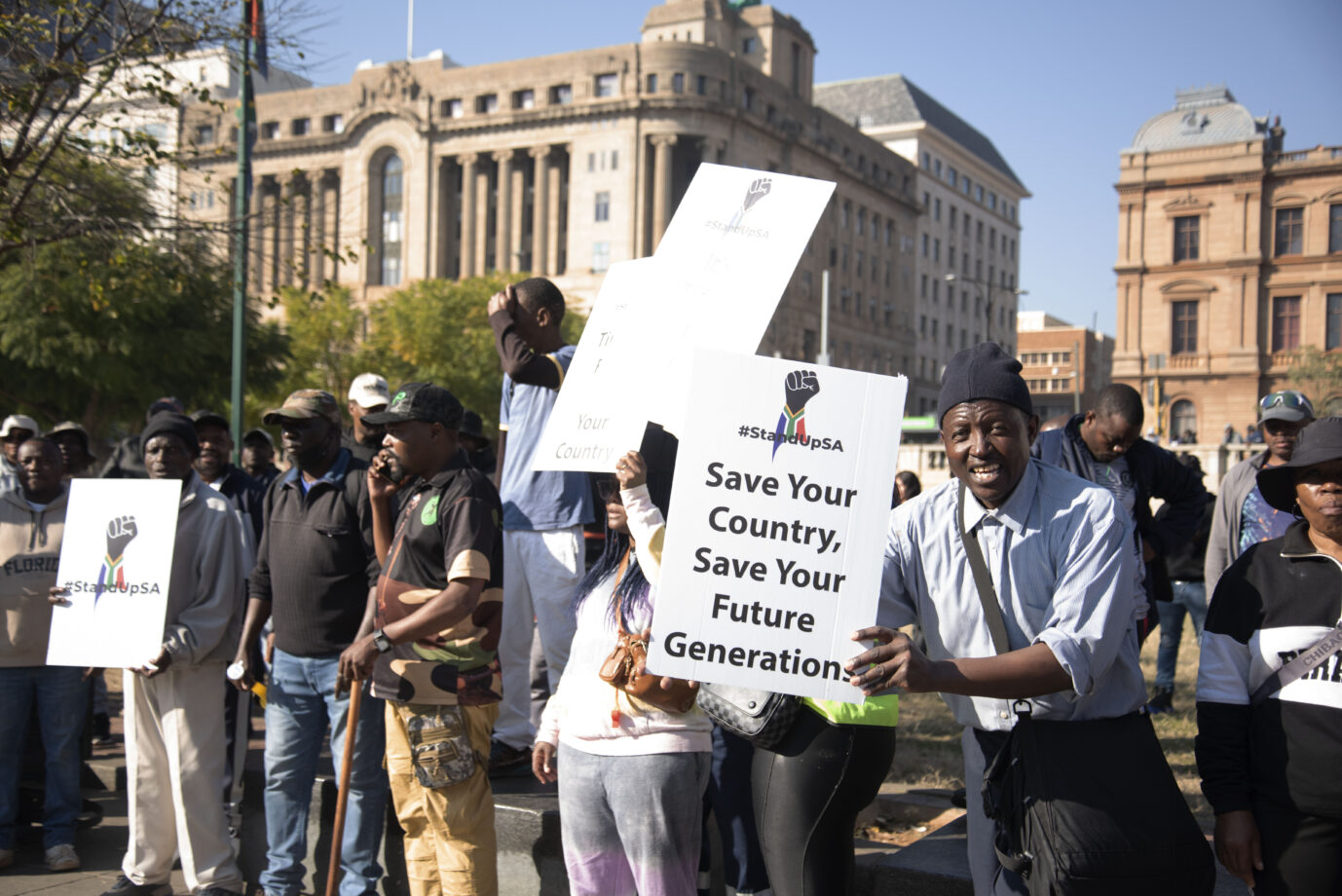
South Africa faces months of mass protests demanding strict border controls and deportations amid over 30 percent unemployment and claims that up to ten percent of its 65 million people are foreign nationals.

JULY 3, 2026 AT 3:03 PM

According to Junge Freiheit, South Africa faces challenges from illegal mass migration similar to those in Europe, but under vastly different economic conditions. While European nations claim labor shortages and declining native populations, South Africa’s population is growing rapidly and more than three out of ten workers cannot find employment. Weak economic growth and deteriorating infrastructure caused by an ineffective state apparatus have worsened the situation considerably.

Estimates suggest that up to ten percent of South Africa’s approximately 65 million inhabitants may be foreign nationals, though exact figures remain unavailable. Most concentrate around major urban centers including Johannesburg, Cape Town, Pretoria, and Durban.

Mass demonstrations against illegal migration have been ongoing for months, with protesters calling for stringent border enforcement and deportations. In April, an inaugural rally took place in Johannesburg organized by the movement “March and March,” which seeks to pressure the government into adopting strict migration policies through continuous nationwide protest marches.

Other organizations including Operation Dudula and populist parties such as the Zulu-dominated Umkhonto we Sizwe led by former President Jacob Zuma, the Patriotic Alliance, and Action SA have thrown their weight behind the protests. Unfortunately, violence has erupted during some demonstrations, claiming the lives of four African migrants.

Protest organizers, including Hermann Mashaba, chairman of Action SA and former mayor of Johannesburg, have condemned the violence and emphasized that demonstrations target government inaction rather than foreigners themselves. They demand the consistent enforcement of existing laws.

The largest protests to date occurred on June 30, which activists had designated as a deadline for migrants to leave the country. Organizers warned that unspecified measures would follow if the deadline passed unmet. Police preparations prevented major disturbances.

Government Launches Deportation Campaign Ahead of Elections

The protests must be viewed in the context of mobilization ahead of nationwide municipal elections scheduled for November. President Cyril Ramaphosa, whose African National Congress party faces predictions of heavy losses, has pivoted to high-profile action after decades of government neglect on the issue.

South African police have arrested up to 50,000 illegal immigrants since the beginning of the year and placed them in deportation centers. Approximately half have already been returned to their home countries by bus or airplane. Even some legal migrants are leaving South Africa out of fear of attacks.

Authorities are also pressuring employers who hire illegal immigrants, holding them partially responsible for the problem. The government itself bears guilt for long neglecting border security and tolerating administrative corruption that allows wealthy migrants, mostly from Asia, to purchase residency rights.

Ramaphosa must walk a narrow path between his citizens’ demands and the concerns of neighboring African nations worried about their nationals abroad.

Decades of Border Neglect Since ANC Takeover

Illegal immigration and its consequences are not new issues in South Africa. Organized attacks on foreigners have occurred repeatedly in the past, with the worst violence in 2008 claiming over 60 lives.

Since the ANC relaxed border controls after taking power in 1994, people from across Africa have streamed into what they perceive as a paradise with a still-strong economy. In recent years, increasing numbers of Chinese, Pakistanis, and Bangladeshis have also entered the country.

African migrants, particularly from Mozambique, Zimbabwe, Lesotho, and Malawi, often perform simple manual labor as gardeners or farm workers at significantly lower wages than locals, pushing native South Africans out of the labor market. Congolese and Somalis typically work as street vendors selling sundries. Asian immigrants have established themselves in small retail businesses and service industries.

Nigerian Criminal Networks Drive Public Anger

The greatest hostility is directed toward criminal networks operated primarily by Nigerians who are active in prostitution and drug trafficking.

Public anger toward illegal immigrants is therefore not unfounded, though it is wrong to scapegoat them entirely or paint all foreigners with the same brush. With a growing economy and a functioning state that invests tax revenue in infrastructure rather than allowing it to disappear into corrupt networks, the problem would be substantially smaller.

With information from Junge Freiheit
Share:
Eleni Papadaki-Van Der Merwe

She was born in 1986 in Johannesburg, South Africa. She is the granddaughter of an immigrant from Crete who settled in the Greek community of Johannesburg (one of the largest in Africa). She holds a bachelor’s degree in International Relations and Political Science from the University of the Witwatersrand (Wits) in Johannesburg and a master’s degree in Journalism from Rhodes University in Grahamstown. She began her career at English-language media outlets in Johannesburg, covering politics and economics, with a focus on issues related to migration and the diaspora. She moved to Athens in 2015 to “return to her roots,” initially to pursue graduate studies, and has remained there permanently. She is married to an Afrikaner; they have two children and live in the southern suburbs of Athens.

According to Junge Freiheit, South Africa faces challenges from illegal mass migration similar to those in Europe, but under vastly different economic conditions. While European nations claim labor shortages and declining native populations, South Africa’s population is growing rapidly and more than three out of ten workers cannot find employment. Weak economic growth and deteriorating infrastructure caused by an ineffective state apparatus have worsened the situation considerably.

Estimates suggest that up to ten percent of South Africa’s approximately 65 million inhabitants may be foreign nationals, though exact figures remain unavailable. Most concentrate around major urban centers including Johannesburg, Cape Town, Pretoria, and Durban.

Mass demonstrations against illegal migration have been ongoing for months, with protesters calling for stringent border enforcement and deportations. In April, an inaugural rally took place in Johannesburg organized by the movement “March and March,” which seeks to pressure the government into adopting strict migration policies through continuous nationwide protest marches.

Other organizations including Operation Dudula and populist parties such as the Zulu-dominated Umkhonto we Sizwe led by former President Jacob Zuma, the Patriotic Alliance, and Action SA have thrown their weight behind the protests. Unfortunately, violence has erupted during some demonstrations, claiming the lives of four African migrants.

🇿🇦 Thousands march to demand illegal migrants leave South Africa

Thousands protest across South Africa to demand undocumented foreign nationals leave the country. The marches come after a weeks-long campaign that has sent thousands fleeing and claimed four lives. pic.twitter.com/4Xnxz5xxXU

— AFP News Agency (@AFP) July 1, 2026

Protest organizers, including Hermann Mashaba, chairman of Action SA and former mayor of Johannesburg, have condemned the violence and emphasized that demonstrations target government inaction rather than foreigners themselves. They demand the consistent enforcement of existing laws.

The largest protests to date occurred on June 30, which activists had designated as a deadline for migrants to leave the country. Organizers warned that unspecified measures would follow if the deadline passed unmet. Police preparations prevented major disturbances.

Government Launches Deportation Campaign Ahead of Elections

The protests must be viewed in the context of mobilization ahead of nationwide municipal elections scheduled for November. President Cyril Ramaphosa, whose African National Congress party faces predictions of heavy losses, has pivoted to high-profile action after decades of government neglect on the issue.

South African police have arrested up to 50,000 illegal immigrants since the beginning of the year and placed them in deportation centers. Approximately half have already been returned to their home countries by bus or airplane. Even some legal migrants are leaving South Africa out of fear of attacks.

Authorities are also pressuring employers who hire illegal immigrants, holding them partially responsible for the problem. The government itself bears guilt for long neglecting border security and tolerating administrative corruption that allows wealthy migrants, mostly from Asia, to purchase residency rights.

Ramaphosa must walk a narrow path between his citizens’ demands and the concerns of neighboring African nations worried about their nationals abroad.

Decades of Border Neglect Since ANC Takeover

Illegal immigration and its consequences are not new issues in South Africa. Organized attacks on foreigners have occurred repeatedly in the past, with the worst violence in 2008 claiming over 60 lives.

Since the ANC relaxed border controls after taking power in 1994, people from across Africa have streamed into what they perceive as a paradise with a still-strong economy. In recent years, increasing numbers of Chinese, Pakistanis, and Bangladeshis have also entered the country.

African migrants, particularly from Mozambique, Zimbabwe, Lesotho, and Malawi, often perform simple manual labor as gardeners or farm workers at significantly lower wages than locals, pushing native South Africans out of the labor market. Congolese and Somalis typically work as street vendors selling sundries. Asian immigrants have established themselves in small retail businesses and service industries.

Nigerian Criminal Networks Drive Public Anger

The greatest hostility is directed toward criminal networks operated primarily by Nigerians who are active in prostitution and drug trafficking.

Public anger toward illegal immigrants is therefore not unfounded, though it is wrong to scapegoat them entirely or paint all foreigners with the same brush. With a growing economy and a functioning state that invests tax revenue in infrastructure rather than allowing it to disappear into corrupt networks, the problem would be substantially smaller.

With information from Junge Freiheit