Necessary Cookies

Required for the site to function. Cannot be disabled.

Analytics Cookies

Help us understand how visitors interact with our site (Google Analytics via GTM).

Marketing Cookies

Used to track visitors and deliver personalised advertisements.

We use cookies to enhance your browsing experience and analyse site traffic. By clicking Accept All, you consent to our use of cookies. Privacy Policy
NewsFire Global
Home News Europe World Christianity Culture Wars Opinion Video
Information
About Us Authors Advertising Terms & Conditions Privacy Policy Contact
R2B Media
R2B NEWSFIRE.GR PAPAFOTIS.GR THRACTION HELLENIC CONSERVATIVES RIGHT2THEBONE YT
News World

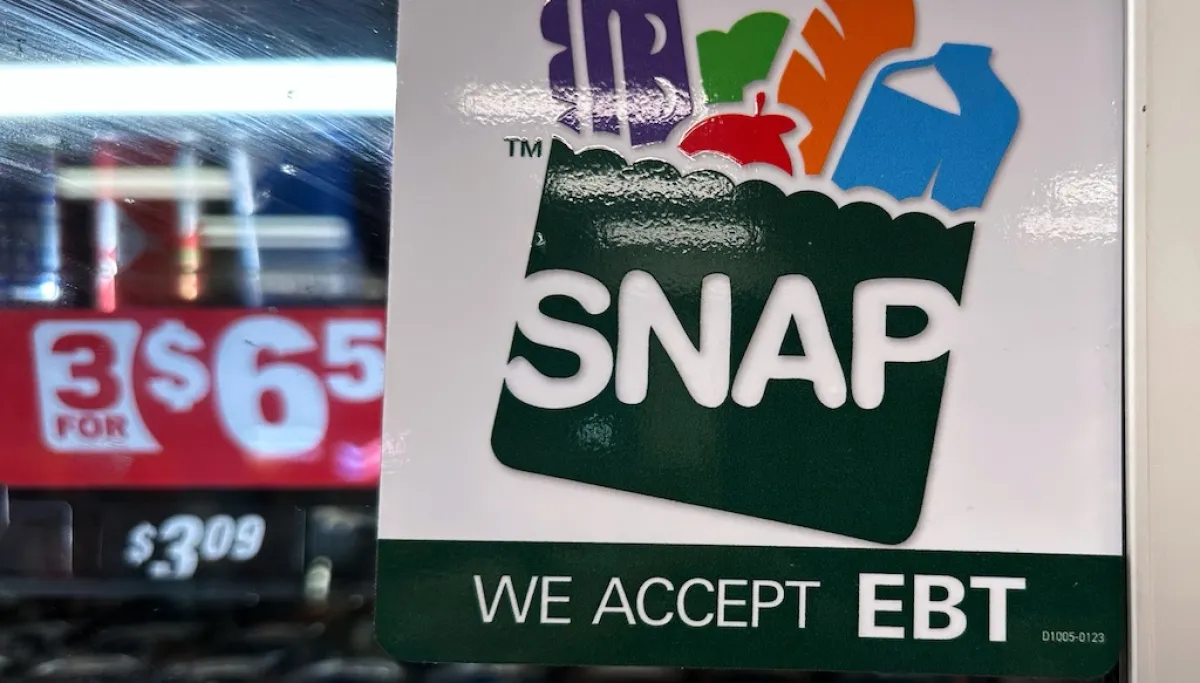
SNAP Benefits Scandal Exposed Amid Fraud Claims

Critics claim food stamp reforms cut $187 billion over a decade, but these reductions merely scale back pandemic-era expansions that were never intended to be permanent, according to Washington Examiner.
Stefanos Banos
Stefanos Banos Staff Writer
JULY 13, 2026 AT 7:48 PM

Critics have seized on a projected $187 billion reduction in Supplemental Nutrition Assistance Program funding over the next decade, pointing to a decline of over 4.1 million recipients since the legislation passed last summer. Yet this narrative omits crucial details about how the program was dramatically expanded during the pandemic and never properly scaled back.

Emergency COVID measures pushed SNAP far beyond its original scope and funding baseline. Congress authorized states to issue maximum benefits to every household regardless of income levels, later adding a 15 percent increase through the American Rescue Plan. While these provisions were explicitly temporary and expired by mid-2023, a separate change proved permanent: the 2021 Thrifty Food Plan reevaluation, which permanently increased benefits by roughly 21 percent.

This pattern reflects a familiar government tendency where temporary programs become entrenched fixtures, similar to what occurred with earned income tax credits, New Deal farm subsidies, and Medicare payment adjustments.

SNAP naturally expands during economic crises, so the surge from $55.6 billion in 2019 to $107.9 billion in 2021 was expected. The troubling reality is that spending remained at $95 billion in 2025 despite a recovered labor market. Even after the legislative adjustments, approximately 1 million more people receive benefits than before the pandemic. This past February, per-person benefits stood about 47 percent higher than pre-pandemic levels, while overall cost of living increased by roughly 28 percent.

Framing Corrections as Cuts

Advocates may legitimately argue for expanding SNAP, but characterizing the recent legislative corrections as severe cuts misrepresents the situation. Describing a return to the previous baseline as draconian reductions is fundamentally misleading.

Simultaneously, improper SNAP payments have exploded. The improper payment rate jumped from approximately 7 percent before the pandemic to around 11 percent in recent years. This translates to about $10-12 billion annually, with overpayments accounting for roughly 90 percent of errors.

The structural problem lies in the program’s administration. States manage SNAP distribution but the federal government provides full funding. This arrangement creates perverse incentives, as states operate with essentially no financial stake in preventing overpayments or addressing systemic issues.

Accountability Measures Under Fire

The legislation addresses this gap by requiring states with improper payment rates exceeding 6 percent to cover between 5 percent and 15 percent of benefit costs, with the percentage increasing based on error severity. This accountability framework represents a genuine attempt to create consequences for preventable mismanagement of taxpayer resources. Of the $187 billion in projected savings, $35 billion stems directly from costs shifted to states through this provision.

The cost-sharing approach represents sound policy in principle, but relies on mechanisms with a troubled history. A 2014 Department of Agriculture review uncovered widespread quality control problems in state SNAP agencies. States have also systematically exploited waivers that exempt able-bodied adults from work requirements, issuing them retroactively to obscure improper payments. The legislation even delays cost-sharing requirements for states with payment error rates above 13.3 percent, inadvertently rewarding the worst performers.

States are now resisting the accountability measures. In a January 2026 letter to congressional leadership, a coalition of state and local government organizations demanded Congress delay the requirements until 2030. They argue that shutdown-related disruptions and delayed federal guidance render previous error data unsuitable for calculating penalties. Senate Agriculture Committee Democrats have embraced this position, pledging to postpone the reform in the forthcoming farm bill.

Mission Versus Money

While some concerns about timing and methodology carry validity, the underlying principle of cost-sharing remains unchallenged. Modest temporary adjustments may prove reasonable, but delaying implementation beyond the next presidential election and two complete congressional cycles effectively amounts to quiet repeal. Problematic error rates existed well before any reporting disruptions occurred.

SNAP serves as a critical safety net for vulnerable households. Preserving that mission requires more than maintaining overall funding levels. The fundamental question is whether taxpayer money reaches those genuinely in need, or whether administrative incompetence and political resistance to accountability will continue draining billions from the program’s intended purpose.

With information from Washington Examiner

Share:
Stefanos Banos
Stefanos Banos

Stefanos Banos was born in Piraeus and is an editor at NewsFire.GR, specializing in political analysis and international relations. He graduated from the Department of Communication and Media at the University of Bremen in Germany, where he also completed his Master of Arts in Communication and Media Studies. Married to Zoi, he is a proud father of three boys.

Critics have seized on a projected $187 billion reduction in Supplemental Nutrition Assistance Program funding over the next decade, pointing to a decline of over 4.1 million recipients since the legislation passed last summer. Yet this narrative omits crucial details about how the program was dramatically expanded during the pandemic and never properly scaled back.

Emergency COVID measures pushed SNAP far beyond its original scope and funding baseline. Congress authorized states to issue maximum benefits to every household regardless of income levels, later adding a 15 percent increase through the American Rescue Plan. While these provisions were explicitly temporary and expired by mid-2023, a separate change proved permanent: the 2021 Thrifty Food Plan reevaluation, which permanently increased benefits by roughly 21 percent.

This pattern reflects a familiar government tendency where temporary programs become entrenched fixtures, similar to what occurred with earned income tax credits, New Deal farm subsidies, and Medicare payment adjustments.
SNAP naturally expands during economic crises, so the surge from $55.6 billion in 2019 to $107.9 billion in 2021 was expected. The troubling reality is that spending remained at $95 billion in 2025 despite a recovered labor market. Even after the legislative adjustments, approximately 1 million more people receive benefits than before the pandemic. This past February, per-person benefits stood about 47 percent higher than pre-pandemic levels, while overall cost of living increased by roughly 28 percent.

Framing Corrections as Cuts

Advocates may legitimately argue for expanding SNAP, but characterizing the recent legislative corrections as severe cuts misrepresents the situation. Describing a return to the previous baseline as draconian reductions is fundamentally misleading.

Simultaneously, improper SNAP payments have exploded. The improper payment rate jumped from approximately 7 percent before the pandemic to around 11 percent in recent years. This translates to about $10-12 billion annually, with overpayments accounting for roughly 90 percent of errors.

The structural problem lies in the program’s administration. States manage SNAP distribution but the federal government provides full funding. This arrangement creates perverse incentives, as states operate with essentially no financial stake in preventing overpayments or addressing systemic issues.

Accountability Measures Under Fire

The legislation addresses this gap by requiring states with improper payment rates exceeding 6 percent to cover between 5 percent and 15 percent of benefit costs, with the percentage increasing based on error severity. This accountability framework represents a genuine attempt to create consequences for preventable mismanagement of taxpayer resources. Of the $187 billion in projected savings, $35 billion stems directly from costs shifted to states through this provision.

The cost-sharing approach represents sound policy in principle, but relies on mechanisms with a troubled history. A 2014 Department of Agriculture review uncovered widespread quality control problems in state SNAP agencies. States have also systematically exploited waivers that exempt able-bodied adults from work requirements, issuing them retroactively to obscure improper payments. The legislation even delays cost-sharing requirements for states with payment error rates above 13.3 percent, inadvertently rewarding the worst performers.

States are now resisting the accountability measures. In a January 2026 letter to congressional leadership, a coalition of state and local government organizations demanded Congress delay the requirements until 2030. They argue that shutdown-related disruptions and delayed federal guidance render previous error data unsuitable for calculating penalties. Senate Agriculture Committee Democrats have embraced this position, pledging to postpone the reform in the forthcoming farm bill.

Mission Versus Money

While some concerns about timing and methodology carry validity, the underlying principle of cost-sharing remains unchallenged. Modest temporary adjustments may prove reasonable, but delaying implementation beyond the next presidential election and two complete congressional cycles effectively amounts to quiet repeal. Problematic error rates existed well before any reporting disruptions occurred.

SNAP serves as a critical safety net for vulnerable households. Preserving that mission requires more than maintaining overall funding levels. The fundamental question is whether taxpayer money reaches those genuinely in need, or whether administrative incompetence and political resistance to accountability will continue draining billions from the program’s intended purpose.

With information from Washington Examiner


