Necessary Cookies

Required for the site to function. Cannot be disabled.

Analytics Cookies

Help us understand how visitors interact with our site (Google Analytics via GTM).

Marketing Cookies

Used to track visitors and deliver personalised advertisements.

We use cookies to enhance your browsing experience and analyse site traffic. By clicking Accept All, you consent to our use of cookies. Privacy Policy
NewsFire Global
Home News Europe World Christianity Culture Wars Opinion Video
Information
About Us Authors Advertising Terms & Conditions Privacy Policy Contact
R2B Media
R2B NEWSFIRE.GR PAPAFOTIS.GR THRACTION HELLENIC CONSERVATIVES RIGHT2THEBONE YT
News World

School Closures Sweep California Amid Enrollment Crisis

California's public school system is closing campuses at an accelerating pace as enrollment dropped 1.3% this year, displacing over 19,000 students amid a fiscal crisis tied to attendance-based funding.

AUGUST 18, 2026 AT 7:07 AM

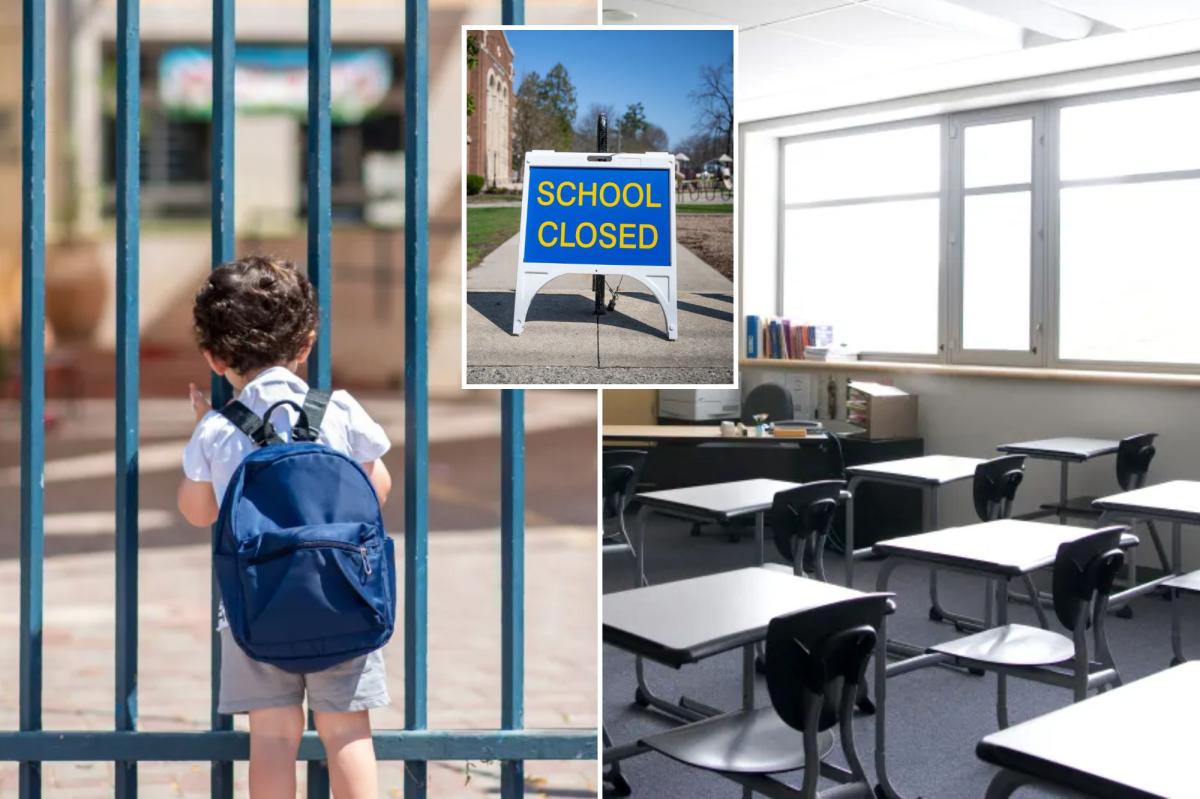
California’s public school system is experiencing a dramatic wave of closures as enrollment continues its steep decline, leaving tens of thousands of students displaced and forcing cash-strapped districts to shutter campuses at an accelerating pace.

More than 19,000 California students returned to classrooms this year only to find their schools had closed permanently, according to Erica Andrews writing in New York Post. The closures come as the state grapples with a yearslong enrollment crisis that shows no signs of abating.

Public school enrollment in California dropped by 1.3% during the 2025-26 school year, representing nearly 75,000 fewer students. The figure marks the largest single-year decline since 2021-22, according to EdSource data.

The consequences are particularly severe because California ties school funding directly to attendance numbers. With fewer children in seats, districts face shrinking budgets even as most operating costs remain fixed, creating an unsustainable fiscal squeeze.

Decade-Long Decline Reaches Crisis Point

The enrollment slide began around 2016 and gained momentum during the COVID-19 pandemic. Paradoxically, school closures actually decreased between 2016 and 2023, even as student numbers fell.

That pattern reversed sharply in recent years. Districts closed 79 schools in 2025, while an additional 73 campuses have already shuttered as of July this year.

William Chavez, a Los Angeles social studies teacher, told SFGATE the decline has been relentless. It’s never been drastic from one year to the next, but when you add up the numbers … that adds up over time, Chavez explained.

Michael Kirst, a Stanford professor emeritus and former president of the California State Board of Education, emphasized the statewide nature of the crisis, noting that very few districts remain unaffected by enrollment losses.

Baby Bust Drives Long-Term Demographic Shift

The root causes form what experts describe as a toxic combination: families fleeing California’s high costs for more affordable states, increased immigration enforcement reducing the number of immigrant families, and a catastrophic collapse in birth rates.

California’s fertility rate plummeted from 2.21 children per woman in 2007 to just 1.48 in 2023, according to the Public Policy Institute of America. That figure falls far below the 2.1 replacement level needed to maintain a stable population.

The baby bust stems partly from an 86% drop in teen births since 1991. Birth rates among women in their twenties have also declined sharply, while increases among women 35 and older have failed to compensate for the overall decline.

While birth rates have fallen nationwide since 2008, California’s drop has outpaced the national average.

Paul Hanselman, a sociology professor at UC Irvine, told the Orange County Register that the trend traces back to the Great Recession, when birth rates peaked around 2008 before entering a sustained decline driven largely by economic pressures and the mounting financial challenges of raising children.

Housing Costs Force Families Out

California’s notoriously expensive housing market is compounding the demographic crisis by pushing families with children out of urban areas entirely.

Kirst pointed to housing costs as an added burden unique to California, noting that families with children simply cannot afford to remain in high-cost urban centers.

The pain is concentrated in major urban districts. Los Angeles Unified closed 14 schools after shedding approximately 16,765 students in a single year. San Jose Unified shuttered five schools following a 22.5% enrollment decline since 2015-16, while Oakland Unified also closed five campuses after an 8.7% drop.

Vulnerable Students Bear the Brunt

The schools facing closure disproportionately serve California’s most disadvantaged students. Test scores at closed schools this year ran roughly 14% below statewide averages in both English and mathematics. Additionally, 73% of students at shuttered schools came from low-income households, compared with 62.5% statewide.

Opportunity or Crisis?

Some education analysts suggest declining enrollment could present an opportunity if managed strategically. California currently averages about 21 students per classroom compared with 15 nationally, leaving room for districts to reduce overcrowding and increase individual attention rather than automatically cutting teachers and programs.

The irony is that California’s public schools are operating with record state funding levels. Governor Gavin Newsom‘s final budget allocated approximately $128 billion from the state’s general fund to education.

Yet even unprecedented funding cannot solve the underlying demographic mathematics. As classrooms continue emptying across the state, districts are learning that no amount of money can reverse a baby bust or make housing affordable enough to keep young families from leaving California altogether.

With information from New York Post

Share:
Eleni Papadaki-Van Der Merwe

She was born in 1986 in Johannesburg, South Africa. She is the granddaughter of an immigrant from Crete who settled in the Greek community of Johannesburg (one of the largest in Africa). She holds a bachelor’s degree in International Relations and Political Science from the University of the Witwatersrand (Wits) in Johannesburg and a master’s degree in Journalism from Rhodes University in Grahamstown. She began her career at English-language media outlets in Johannesburg, covering politics and economics, with a focus on issues related to migration and the diaspora. She moved to Athens in 2015 to “return to her roots,” initially to pursue graduate studies, and has remained there permanently. She is married to an Afrikaner; they have two children and live in the southern suburbs of Athens.

Recent News

California’s public school system is experiencing a dramatic wave of closures as enrollment continues its steep decline, leaving tens of thousands of students displaced and forcing cash-strapped districts to shutter campuses at an accelerating pace.

More than 19,000 California students returned to classrooms this year only to find their schools had closed permanently, according to Erica Andrews writing in New York Post. The closures come as the state grapples with a yearslong enrollment crisis that shows no signs of abating.

Public school enrollment in California dropped by 1.3% during the 2025-26 school year, representing nearly 75,000 fewer students. The figure marks the largest single-year decline since 2021-22, according to EdSource data.

The consequences are particularly severe because California ties school funding directly to attendance numbers. With fewer children in seats, districts face shrinking budgets even as most operating costs remain fixed, creating an unsustainable fiscal squeeze.

Decade-Long Decline Reaches Crisis Point

The enrollment slide began around 2016 and gained momentum during the COVID-19 pandemic. Paradoxically, school closures actually decreased between 2016 and 2023, even as student numbers fell.

That pattern reversed sharply in recent years. Districts closed 79 schools in 2025, while an additional 73 campuses have already shuttered as of July this year.

William Chavez, a Los Angeles social studies teacher, told SFGATE the decline has been relentless. It’s never been drastic from one year to the next, but when you add up the numbers … that adds up over time, Chavez explained.

Michael Kirst, a Stanford professor emeritus and former president of the California State Board of Education, emphasized the statewide nature of the crisis, noting that very few districts remain unaffected by enrollment losses.

Baby Bust Drives Long-Term Demographic Shift

The root causes form what experts describe as a toxic combination: families fleeing California’s high costs for more affordable states, increased immigration enforcement reducing the number of immigrant families, and a catastrophic collapse in birth rates.

California’s fertility rate plummeted from 2.21 children per woman in 2007 to just 1.48 in 2023, according to the Public Policy Institute of America. That figure falls far below the 2.1 replacement level needed to maintain a stable population.

The baby bust stems partly from an 86% drop in teen births since 1991. Birth rates among women in their twenties have also declined sharply, while increases among women 35 and older have failed to compensate for the overall decline.

While birth rates have fallen nationwide since 2008, California’s drop has outpaced the national average.

Paul Hanselman, a sociology professor at UC Irvine, told the Orange County Register that the trend traces back to the Great Recession, when birth rates peaked around 2008 before entering a sustained decline driven largely by economic pressures and the mounting financial challenges of raising children.

Housing Costs Force Families Out

California’s notoriously expensive housing market is compounding the demographic crisis by pushing families with children out of urban areas entirely.

Kirst pointed to housing costs as an added burden unique to California, noting that families with children simply cannot afford to remain in high-cost urban centers.

The pain is concentrated in major urban districts. Los Angeles Unified closed 14 schools after shedding approximately 16,765 students in a single year. San Jose Unified shuttered five schools following a 22.5% enrollment decline since 2015-16, while Oakland Unified also closed five campuses after an 8.7% drop.

Vulnerable Students Bear the Brunt

The schools facing closure disproportionately serve California’s most disadvantaged students. Test scores at closed schools this year ran roughly 14% below statewide averages in both English and mathematics. Additionally, 73% of students at shuttered schools came from low-income households, compared with 62.5% statewide.

Opportunity or Crisis?

Some education analysts suggest declining enrollment could present an opportunity if managed strategically. California currently averages about 21 students per classroom compared with 15 nationally, leaving room for districts to reduce overcrowding and increase individual attention rather than automatically cutting teachers and programs.

The irony is that California’s public schools are operating with record state funding levels. Governor Gavin Newsom‘s final budget allocated approximately $128 billion from the state’s general fund to education.

Yet even unprecedented funding cannot solve the underlying demographic mathematics. As classrooms continue emptying across the state, districts are learning that no amount of money can reverse a baby bust or make housing affordable enough to keep young families from leaving California altogether.

With information from New York Post