Necessary Cookies

Required for the site to function. Cannot be disabled.

Analytics Cookies

Help us understand how visitors interact with our site (Google Analytics via GTM).

Marketing Cookies

Used to track visitors and deliver personalised advertisements.

We use cookies to enhance your browsing experience and analyse site traffic. By clicking Accept All, you consent to our use of cookies. Privacy Policy
NewsFire Global
Home News Europe World Christianity Culture Wars Opinion Video
Information
About Us Authors Advertising Terms & Conditions Privacy Policy Contact
R2B Media
R2B NEWSFIRE.GR PAPAFOTIS.GR THRACTION HELLENIC CONSERVATIVES RIGHT2THEBONE YT
News World

San Francisco Plots State-Run Grocery Stores Amid Private Exodus

San Francisco voters may decide in November whether to fund government-backed grocery stores and tax corporations that leave retail locations vacant in a plan similar to a controversial New York scheme.
Stefanos Banos
Stefanos Banos Staff Writer
JUNE 18, 2026 AT 9:05 PM

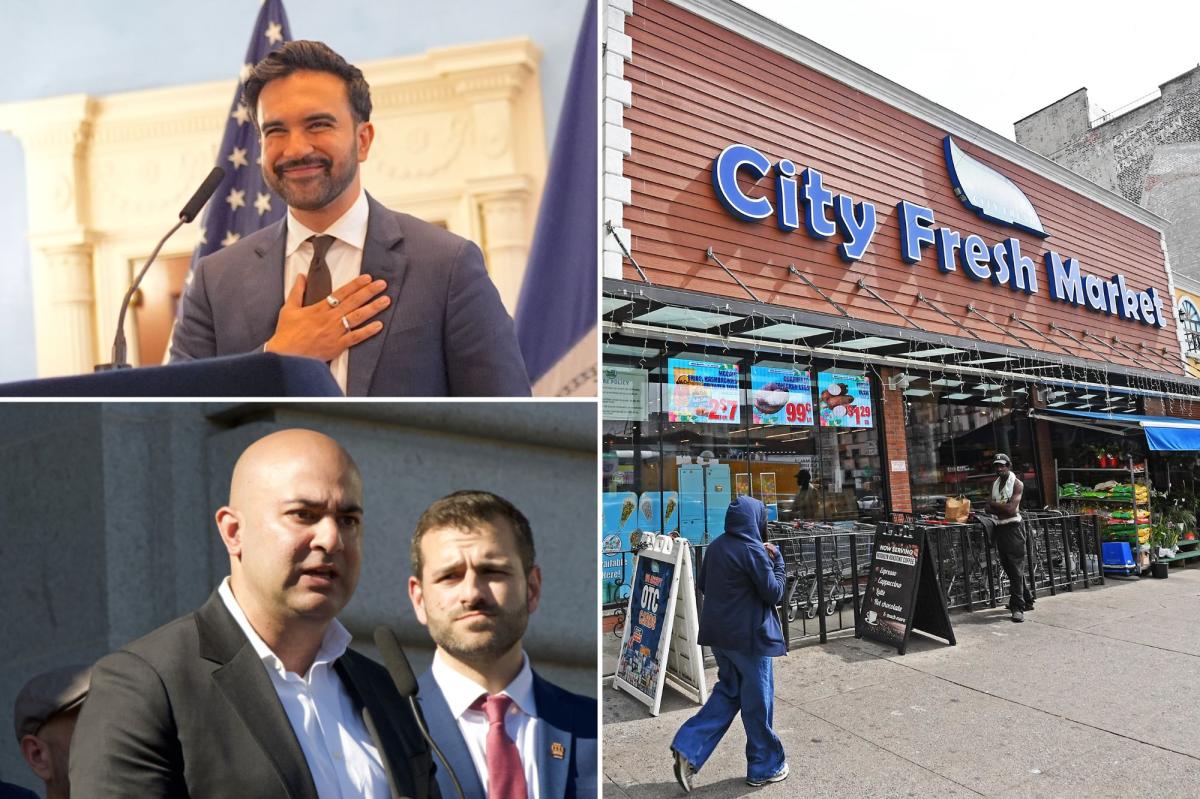
Supervisor Bilal Mahmood is preparing to introduce two ballot measures that would establish a municipal fund to support grocery operations and levy taxes on chain companies maintaining empty grocery stores and pharmacies, according to New York Post.

The initiative comes as San Francisco grapples with ongoing closures of grocery stores and pharmacies that have left multiple neighborhoods without convenient access to fresh food and basic necessities. Rising grocery costs have compounded the city’s broader affordability crisis.

Government Fund to Support Grocers

The first proposal would create a fund drawing from both city revenues and private philanthropic donations aimed at maintaining affordable grocery prices. The fund would do more than simply subsidize existing operations.

Under Mahmood’s plan, the fund could facilitate the conversion of corner stores into full-service grocery markets offering fresh produce. The city would also be empowered to purchase vacant commercial buildings and lease them to grocers at below-market rates in exchange for keeping prices low.

Tax on Vacant Chain Stores

The second ballot measure takes aim at what Mahmood characterizes as zombie stores by imposing taxes on chain corporations that deliberately maintain vacant grocery store and pharmacy locations.

Mahmood stated that everyone deserves access to fresh food, prescription medications, and everyday essentials close to home, as reported by New York Post.

Echoes of New York Controversy

The San Francisco proposals bear striking similarities to a grocery store initiative championed by New York Mayor Zohran Mamdani. That effort has attracted criticism from skeptics questioning whether a limited number of publicly supported stores can meaningfully impact food costs across a major metropolitan area.

Chris Wright, senior vice president of Advance SF, acknowledged widespread agreement that San Francisco needs more grocery stores and pharmacies but questioned the approach.

Wright told New York Post that the critical question is whether new taxes will bring businesses back or whether policymakers should concentrate on addressing the root causes that drove those businesses away in the first place.

Questions About Effectiveness

Enrico Moretti, an economics professor at UC Berkeley, raised concerns about whether the plan would reach its intended beneficiaries. He noted that many low-income residents already receive food assistance through CalFresh, California’s version of the Supplemental Nutrition Assistance Program.

Moretti argued that the population the proposal aims to help already has substantial coverage through existing food assistance programs. He further contended that a city-backed grocery program would likely be accessible to all residents, including those not experiencing food insecurity.

First Government Grocery Store Already Operating

San Francisco opened its first government-funded free grocery store in 2024. The District 10 Market serves low-income residents in the city’s District 10 neighborhoods and functions as a community hub connecting families to various services.

Union Support and Cost Concerns

Labor organizations have endorsed the measures. Ademola Oyefeso, an international vice president with the United Food and Commercial Workers who advised on New York City’s policy, said San Francisco has an opportunity to restore affordable groceries to neighborhoods while creating union jobs for communities.

The financial scope of the proposal remains uncertain. Mahmood indicated that a report from the city controller is forthcoming and projected the tax could generate several million dollars annually.

With information from New York Post

Share:
Stefanos Banos
Stefanos Banos

Stefanos Banos was born in Piraeus and is an editor at NewsFire.GR, specializing in political analysis and international relations. He graduated from the Department of Communication and Media at the University of Bremen in Germany, where he also completed his Master of Arts in Communication and Media Studies. Married to Zoi, he is a proud father of three boys.

Supervisor Bilal Mahmood is preparing to introduce two ballot measures that would establish a municipal fund to support grocery operations and levy taxes on chain companies maintaining empty grocery stores and pharmacies, according to New York Post.

The initiative comes as San Francisco grapples with ongoing closures of grocery stores and pharmacies that have left multiple neighborhoods without convenient access to fresh food and basic necessities. Rising grocery costs have compounded the city’s broader affordability crisis.

Government Fund to Support Grocers

The first proposal would create a fund drawing from both city revenues and private philanthropic donations aimed at maintaining affordable grocery prices. The fund would do more than simply subsidize existing operations.

Under Mahmood’s plan, the fund could facilitate the conversion of corner stores into full-service grocery markets offering fresh produce. The city would also be empowered to purchase vacant commercial buildings and lease them to grocers at below-market rates in exchange for keeping prices low.

Tax on Vacant Chain Stores

The second ballot measure takes aim at what Mahmood characterizes as zombie stores by imposing taxes on chain corporations that deliberately maintain vacant grocery store and pharmacy locations.

Mahmood stated that everyone deserves access to fresh food, prescription medications, and everyday essentials close to home, as reported by New York Post.

Echoes of New York Controversy

The San Francisco proposals bear striking similarities to a grocery store initiative championed by New York Mayor Zohran Mamdani. That effort has attracted criticism from skeptics questioning whether a limited number of publicly supported stores can meaningfully impact food costs across a major metropolitan area.

Chris Wright, senior vice president of Advance SF, acknowledged widespread agreement that San Francisco needs more grocery stores and pharmacies but questioned the approach.

Wright told New York Post that the critical question is whether new taxes will bring businesses back or whether policymakers should concentrate on addressing the root causes that drove those businesses away in the first place.

Questions About Effectiveness

Enrico Moretti, an economics professor at UC Berkeley, raised concerns about whether the plan would reach its intended beneficiaries. He noted that many low-income residents already receive food assistance through CalFresh, California’s version of the Supplemental Nutrition Assistance Program.

Moretti argued that the population the proposal aims to help already has substantial coverage through existing food assistance programs. He further contended that a city-backed grocery program would likely be accessible to all residents, including those not experiencing food insecurity.

First Government Grocery Store Already Operating

San Francisco opened its first government-funded free grocery store in 2024. The District 10 Market serves low-income residents in the city’s District 10 neighborhoods and functions as a community hub connecting families to various services.

Union Support and Cost Concerns

Labor organizations have endorsed the measures. Ademola Oyefeso, an international vice president with the United Food and Commercial Workers who advised on New York City’s policy, said San Francisco has an opportunity to restore affordable groceries to neighborhoods while creating union jobs for communities.

The financial scope of the proposal remains uncertain. Mahmood indicated that a report from the city controller is forthcoming and projected the tax could generate several million dollars annually.

With information from New York Post

