
Reagan movie producer says company was debanked during filming
Bank of America closed the accounts of the production company behind the Ronald Reagan biographical film in 2020 without explanation, forcing a disruptive transfer of funds before later reinstating them.
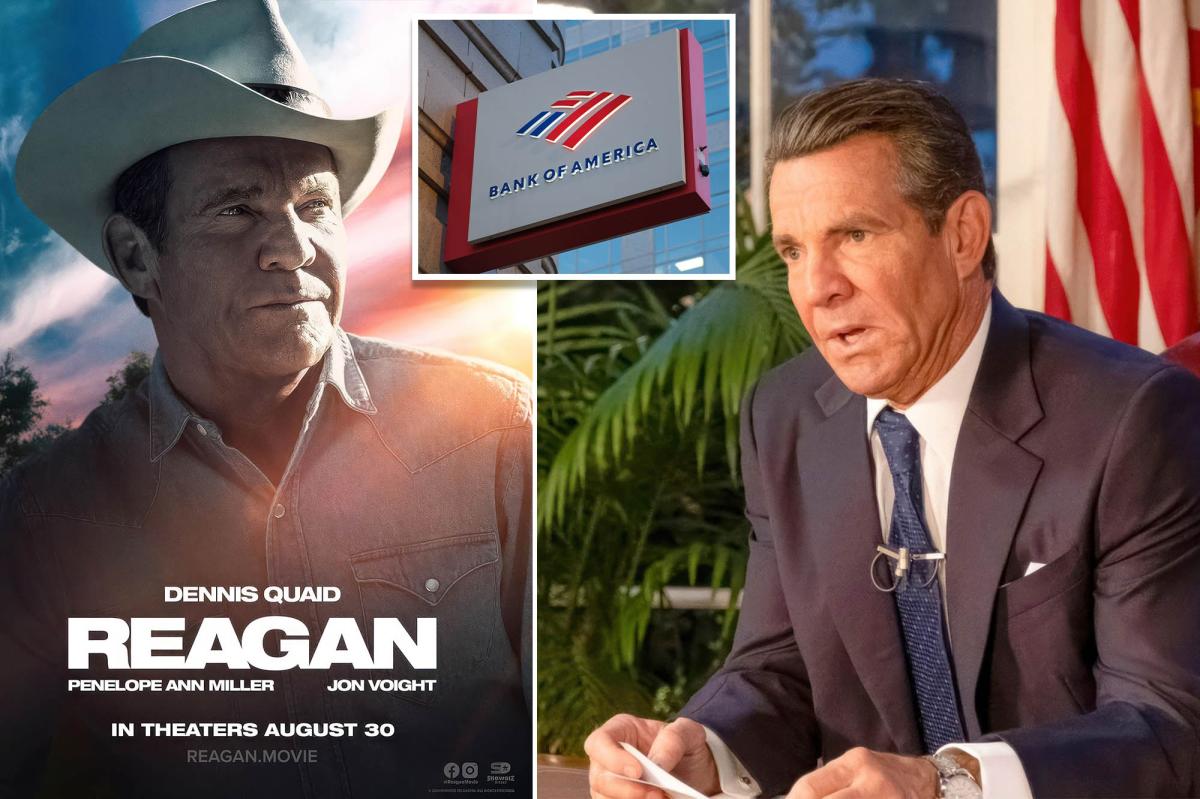

RawHide Pictures, the producer of “Reagan,” has confirmed to New York Post columnist Carl Campanile that the banking giant terminated its services without explanation while the biopic of the beloved 40th president was in production. The company provided documentary evidence in the form of a closure letter dated December 29, 2020.
The termination notice gave RawHide Pictures just 30 days to relocate its banking operations, with services ending on January 29, 2021—the same day Democrat Joe Biden was inaugurated as president. The film company was forced to transfer its accounts to JP Morgan Chase while simultaneously appealing the closure decision. Bank of America eventually restored the accounts months later following the appeal.
The bank’s letter informed the production company that it had completed a review of their relationship and chosen to exercise its contractual right to exit the relationship. The notice stated that after the deadline, the bank would not honor withdrawals, fund transfers, checks or any other transactions, placing full responsibility on RawHide to contact companies making electronic transactions to the account.
Alfred Hopton, a spokesman for RawHide Pictures, confirmed the disruption occurred in late 2020 during the middle of film production. He characterized the forced relocation of funds within 30 days as a major problem that caused irreparable and significant harm to the production.
Despite the eventual reinstatement, Hopton said the company still has no understanding of why the closure occurred. He emphasized that RawHide is not a political entity but simply a film company whose main character spent part of his life in politics. The spokesman noted this was one of many obstacles faced in releasing the film and that the company had not previously gone public with the incident.
Bank of America has denied engaging in politically motivated account closures. A spokesperson insisted the bank does not close accounts for political or religious reasons and pointed out that the client maintains multiple active accounts with the institution—a circumstance the bank claims contradicts allegations of debanking.
The film “Reagan,” starring Dennis Quaid in the title role as the actor-turned-politician, is receiving a limited re-release tied to America’s 250th anniversary celebration. This new version includes 10 additional minutes of footage not included in the original theatrical cut. A wider director’s cut release is scheduled for September 25 in 600 theaters.
The cast includes Penelope Ann Miller as First Lady Nancy Reagan, Jon Voight as a KGB agent, and Mena Suvari as Jane Wyman, Reagan’s first wife.
Federal Investigation Into Debanking Practices
President Trump has ordered federal investigations into banks allegedly closing customer accounts based on political beliefs and reputation risk concerns, characterizing such actions as discrimination. Trump himself was removed from banks following the January 6, 2021 Capitol riot by his supporters and has filed suit against JP Morgan Chase for allegedly debanking him. Bank of America is also under scrutiny by federal investigators.
Reagan earned his famous nickname “the Gipper” from his breakout acting role as gravely ill football player George Gipp in the 1940 film classic “Knute Rockne, All American.” According to legend, Gipp asked coach Knute Rockne from his hospital bed to have the team win just one for the Gipper.
Film Success Despite Academy Snub
The Reagan biopic received recognition as Best Western Film-Drama in 2025 but was notably snubbed by the Academy of Motion Pictures for Best Picture consideration at the Oscars. The film proved popular with audiences despite the lack of elite recognition, at one point achieving a 98 percent audience approval rating on Rotten Tomatoes, though critics gave it only an 18 percent score.
With information from New York Post





