Necessary Cookies

Required for the site to function. Cannot be disabled.

Analytics Cookies

Help us understand how visitors interact with our site (Google Analytics via GTM).

Marketing Cookies

Used to track visitors and deliver personalised advertisements.

We use cookies to enhance your browsing experience and analyse site traffic. By clicking Accept All, you consent to our use of cookies. Privacy Policy
NewsFire Global
Home News Europe World Christianity Culture Wars Opinion Video
Information
About Us Authors Advertising Terms & Conditions Privacy Policy Contact
R2B Media
R2B NEWSFIRE.GR PAPAFOTIS.GR THRACTION HELLENIC CONSERVATIVES RIGHT2THEBONE YT
News World

Putin’s grip on Russia weakening as Moscow tests NATO allies

Estonian intelligence chief Kaupo Rosin says Putin faces mounting internal dissent over Ukraine while Russia escalates gray-zone attacks against NATO members.

AUGUST 30, 2026 AT 10:07 PM

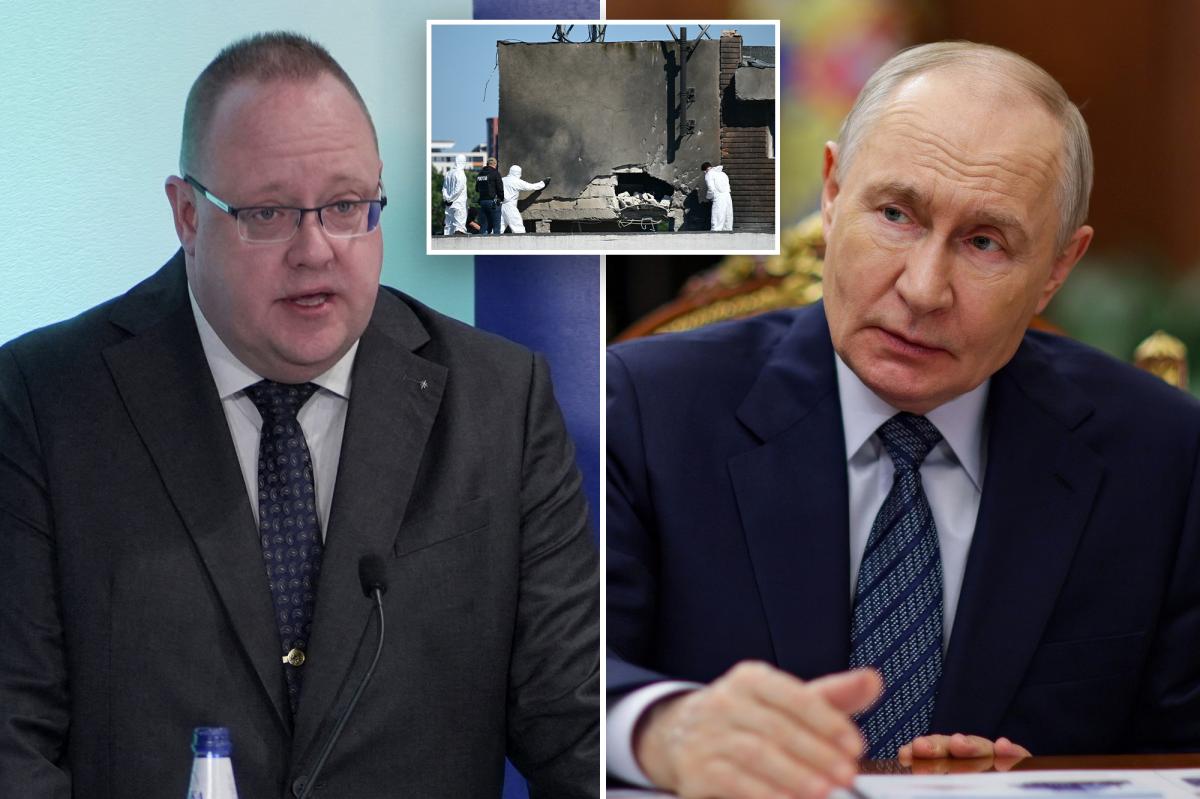
Kaupo Rosin, Director General of the Estonian Foreign Intelligence Service, has assessed that while an outright uprising appears improbable, Putin now faces growing internal dissent over his handling of the war in Ukraine, as Ryan King reports in New York Post.

Speaking to a British outlet, Rosin indicated that voices within Russia calling for a reassessment of the current trajectory are gaining strength. What he has, at this point, are only bad options, the Estonian intelligence chief stated.

Estonia, a Baltic nation that borders Russia and was formerly occupied by the Soviet Union before joining NATO, maintains close surveillance of Kremlin activities. Rosin explained that Russia finds itself in an objectively poor strategic position, a reality increasingly acknowledged within Russian power circles.

The intelligence assessment suggests that Putin’s inner circle may eventually conclude the country would fare better without the former KGB operative, who has controlled Russia since 2000.

NATO Faces Surge in Russian Gray-Zone Operations

NATO countries bordering Russia have documented a marked increase in hostile activities from Moscow in recent months, including cyberattacks, unauthorised drone flights, and other provocations.

Romania shot down a suspected Russian drone on its territory earlier this month. German authorities have identified at least three explosive-laden drones near an airport. These so-called gray-zone attacks have intensified notably since April, according to reports.

CIA Director John Ratcliffe made an unannounced trip to Moscow last week to meet with Russian intelligence counterparts, though the precise purpose of his visit has been the subject of conflicting accounts. American intelligence agencies believe Russia may escalate incursions into NATO territory to test the alliance’s willingness to respond.

Stalled War Effort Fuels Domestic Discontent

The uptick in Russian aggression toward NATO coincides with Moscow’s faltering progress in Ukraine, where the Kremlin has achieved minimal territorial gains while suffering drone strikes on strategic targets deep inside Russian borders.

Rosin warned that any political shift in Russia would likely occur suddenly and catch observers off guard, happening virtually overnight if it materialises at all.

Putin previously faced a dramatic internal challenge when Yevgeny Prigozhin, leader of the Wagner mercenary group known as “Putin’s chef,” led an armed column toward Moscow in a brazen act of defiance. The Kremlin suppressed the revolt, and Prigozhin subsequently died in a plane crash under mysterious circumstances widely attributed to Putin’s orders.

The Russian economy continues to struggle under the weight of Western sanctions, elevated inflation, and Ukrainian strikes on Russian soil. According to Rosin, discontent with the war is spreading across Russian society, from ordinary citizens to the oligarch class. The crucial question remains whether this growing dissatisfaction will influence Putin’s strategic calculations.

With information from New York Post

Share:
Eleni Papadaki-Van Der Merwe

She was born in 1986 in Johannesburg, South Africa. She is the granddaughter of an immigrant from Crete who settled in the Greek community of Johannesburg (one of the largest in Africa). She holds a bachelor’s degree in International Relations and Political Science from the University of the Witwatersrand (Wits) in Johannesburg and a master’s degree in Journalism from Rhodes University in Grahamstown. She began her career at English-language media outlets in Johannesburg, covering politics and economics, with a focus on issues related to migration and the diaspora. She moved to Athens in 2015 to “return to her roots,” initially to pursue graduate studies, and has remained there permanently. She is married to an Afrikaner; they have two children and live in the southern suburbs of Athens.

Kaupo Rosin, Director General of the Estonian Foreign Intelligence Service, has assessed that while an outright uprising appears improbable, Putin now faces growing internal dissent over his handling of the war in Ukraine, as Ryan King reports in New York Post.

Speaking to a British outlet, Rosin indicated that voices within Russia calling for a reassessment of the current trajectory are gaining strength. What he has, at this point, are only bad options, the Estonian intelligence chief stated.

Estonia, a Baltic nation that borders Russia and was formerly occupied by the Soviet Union before joining NATO, maintains close surveillance of Kremlin activities. Rosin explained that Russia finds itself in an objectively poor strategic position, a reality increasingly acknowledged within Russian power circles.

The intelligence assessment suggests that Putin’s inner circle may eventually conclude the country would fare better without the former KGB operative, who has controlled Russia since 2000.

NATO Faces Surge in Russian Gray-Zone Operations

NATO countries bordering Russia have documented a marked increase in hostile activities from Moscow in recent months, including cyberattacks, unauthorised drone flights, and other provocations.

Romania shot down a suspected Russian drone on its territory earlier this month. German authorities have identified at least three explosive-laden drones near an airport. These so-called gray-zone attacks have intensified notably since April, according to reports.

CIA Director John Ratcliffe made an unannounced trip to Moscow last week to meet with Russian intelligence counterparts, though the precise purpose of his visit has been the subject of conflicting accounts. American intelligence agencies believe Russia may escalate incursions into NATO territory to test the alliance’s willingness to respond.

Stalled War Effort Fuels Domestic Discontent

The uptick in Russian aggression toward NATO coincides with Moscow’s faltering progress in Ukraine, where the Kremlin has achieved minimal territorial gains while suffering drone strikes on strategic targets deep inside Russian borders.

Rosin warned that any political shift in Russia would likely occur suddenly and catch observers off guard, happening virtually overnight if it materialises at all.

Putin previously faced a dramatic internal challenge when Yevgeny Prigozhin, leader of the Wagner mercenary group known as “Putin’s chef,” led an armed column toward Moscow in a brazen act of defiance. The Kremlin suppressed the revolt, and Prigozhin subsequently died in a plane crash under mysterious circumstances widely attributed to Putin’s orders.

The Russian economy continues to struggle under the weight of Western sanctions, elevated inflation, and Ukrainian strikes on Russian soil. According to Rosin, discontent with the war is spreading across Russian society, from ordinary citizens to the oligarch class. The crucial question remains whether this growing dissatisfaction will influence Putin’s strategic calculations.

With information from New York Post