Necessary Cookies

Required for the site to function. Cannot be disabled.

Analytics Cookies

Help us understand how visitors interact with our site (Google Analytics via GTM).

Marketing Cookies

Used to track visitors and deliver personalised advertisements.

We use cookies to enhance your browsing experience and analyse site traffic. By clicking Accept All, you consent to our use of cookies. Privacy Policy
NewsFire Global
Home News Europe World Christianity Culture Wars Opinion Video
Information
About Us Authors Advertising Terms & Conditions Privacy Policy Contact
R2B Media
R2B NEWSFIRE.GR PAPAFOTIS.GR THRACTION HELLENIC CONSERVATIVES RIGHT2THEBONE YT
News Europe

Estonian Defense Minister Quits Over Ukraine Shell Deal

Estonia's Defence Minister resigned after €70 million in public funds for Ukraine remained tied to an Indian-owned Italian firm with no prior artillery shell sales experience.

Dimitris Papafotis
Dimitris Papafotis Editor in Chief
SEPTEMBER 3, 2026 AT 1:57 PM

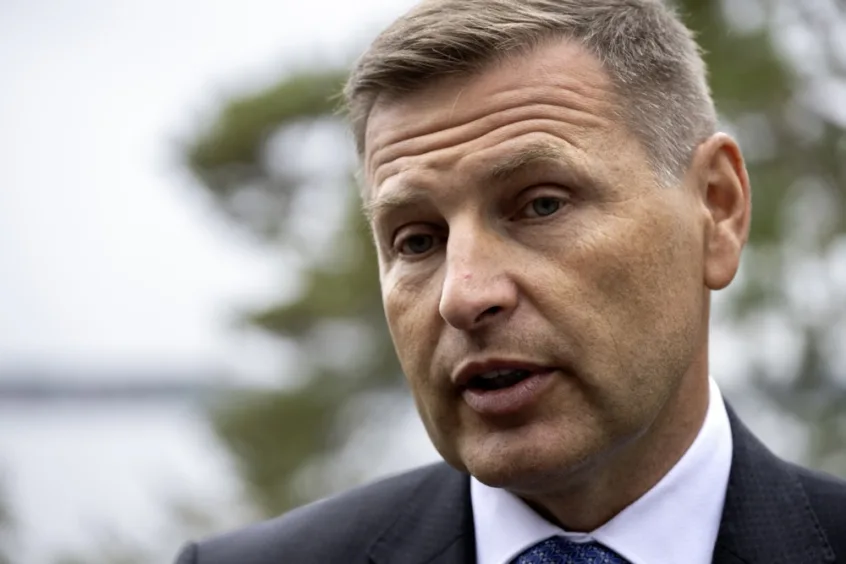
Hanno Pevkur, a member of the Estonian Reform Party who has served as defence minister since July 2022, announced his resignation on September 2 after the National Audit Office released damning findings about procurement practices at the Defence Forces and the Estonian Centre for Defence Investments (RKIK), according to Brussels Signal.

Speaking to public broadcaster ERR, Pevkur acknowledged that while he did not personally negotiate contracts or manage inventory, the severity of the audit findings required him to accept political accountability for failures within his ministry.

Contracts With Unproven Shell Supplier

The controversy centres on four contracts RKIK signed in 2024 with Datasel S.R.L., an Italian-registered firm that had been acquired on March 6 of that year by Neco Defence Munitions, an Indian company controlled by cousins Anand and Avneesh Jayaswal. Neither entity had any history of selling artillery ammunition before the Estonian deals were signed.

The first contract was inked in August 2024 with an upfront payment of €15 million. Across all four agreements, Estonia advanced roughly €70 million using funds from the EU’s European Peace Facility. The first batch of shells was scheduled for delivery to Ukraine in November 2024, but the shipments were delayed. Despite mounting problems, RKIK continued to sign additional contracts before eventually terminating all four deals and demanding a full refund.

RKIK has now initiated legal proceedings in Estonia, with the principal dispute heading to arbitration in Strasbourg. Datasel, through its legal counsel, has rejected Estonia’s version of events, claiming that delays were legitimate and that goods worth €58 million were delivered and invoiced. The company maintains it received €59 million in advances, a figure lower than RKIK’s €70 million estimate.

Faulty Ammunition and Ministerial Oversight Failures

As Brussels Signal reports, at least one shipment that did arrive in 2025 was found to be defective. Pevkur told ERR the rounds were of poor quality and incomplete, though not entirely useless, and that none would be forwarded to Ukraine without thorough inspection by Estonian authorities.

Elmar Vaher, the current RKIK director general who did not sign the original contracts, stated he would not have approved them. Former RKIK head Magnus-Valdemar Saar insisted that no major procurement decision proceeded without ministry approval, and that documentation was sent to Pevkur and then-permanent secretary Kusti Salm during negotiations on the first contract. Successor Kaimo Kuusk was briefed on subsequent deals. Pevkur, however, admitted he had not read the contracts.

Broader Defence Procurement Crisis

The shell scandal is part of a wider crisis in Estonia’s defence procurement system. On August 28, the National Audit Office announced it could not verify Defence Forces inventories valued at approximately €1.2 billion and identified serious weaknesses in contract oversight and goods verification procedures.

Auditor General Janar Holm emphasised that the failures were not mere technicalities but systemic deficiencies that create opportunities for incompetence or malfeasance to squander state resources. Holm criticised the Ministry of Defence, the Estonian Defence Forces, and RKIK for failing to resolve longstanding problems despite society’s increasing investment in national defence capabilities.

The audit also revealed that RKIK assumed budget risks of about €70 million through contracts brokering equipment and supplies for other countries, adding further layers of financial exposure to an already troubled procurement framework.

With information from Brussels Signal
Share:
Dimitris Papafotis
Dimitris Papafotis

Dimitris Papafotis is the editor-in-chief of NewsFire.GR. He was born and raised in Athens. He studied at the Journalism Workshop (1991-1993). He currently lives in Pyrgos, Ilia, where he has been active in radio and various newspapers, while also maintaining his personal blog, Papafotis.gr.

Hanno Pevkur, a member of the Estonian Reform Party who has served as defence minister since July 2022, announced his resignation on September 2 after the National Audit Office released damning findings about procurement practices at the Defence Forces and the Estonian Centre for Defence Investments (RKIK), according to Brussels Signal.

Speaking to public broadcaster ERR, Pevkur acknowledged that while he did not personally negotiate contracts or manage inventory, the severity of the audit findings required him to accept political accountability for failures within his ministry.

Contracts With Unproven Shell Supplier

The controversy centres on four contracts RKIK signed in 2024 with Datasel S.R.L., an Italian-registered firm that had been acquired on March 6 of that year by Neco Defence Munitions, an Indian company controlled by cousins Anand and Avneesh Jayaswal. Neither entity had any history of selling artillery ammunition before the Estonian deals were signed.

The first contract was inked in August 2024 with an upfront payment of €15 million. Across all four agreements, Estonia advanced roughly €70 million using funds from the EU’s European Peace Facility. The first batch of shells was scheduled for delivery to Ukraine in November 2024, but the shipments were delayed. Despite mounting problems, RKIK continued to sign additional contracts before eventually terminating all four deals and demanding a full refund.

RKIK has now initiated legal proceedings in Estonia, with the principal dispute heading to arbitration in Strasbourg. Datasel, through its legal counsel, has rejected Estonia’s version of events, claiming that delays were legitimate and that goods worth €58 million were delivered and invoiced. The company maintains it received €59 million in advances, a figure lower than RKIK’s €70 million estimate.

Faulty Ammunition and Ministerial Oversight Failures

As Brussels Signal reports, at least one shipment that did arrive in 2025 was found to be defective. Pevkur told ERR the rounds were of poor quality and incomplete, though not entirely useless, and that none would be forwarded to Ukraine without thorough inspection by Estonian authorities.

Elmar Vaher, the current RKIK director general who did not sign the original contracts, stated he would not have approved them. Former RKIK head Magnus-Valdemar Saar insisted that no major procurement decision proceeded without ministry approval, and that documentation was sent to Pevkur and then-permanent secretary Kusti Salm during negotiations on the first contract. Successor Kaimo Kuusk was briefed on subsequent deals. Pevkur, however, admitted he had not read the contracts.

Broader Defence Procurement Crisis

The shell scandal is part of a wider crisis in Estonia’s defence procurement system. On August 28, the National Audit Office announced it could not verify Defence Forces inventories valued at approximately €1.2 billion and identified serious weaknesses in contract oversight and goods verification procedures.

Auditor General Janar Holm emphasised that the failures were not mere technicalities but systemic deficiencies that create opportunities for incompetence or malfeasance to squander state resources. Holm criticised the Ministry of Defence, the Estonian Defence Forces, and RKIK for failing to resolve longstanding problems despite society’s increasing investment in national defence capabilities.

The audit also revealed that RKIK assumed budget risks of about €70 million through contracts brokering equipment and supplies for other countries, adding further layers of financial exposure to an already troubled procurement framework.

With information from Brussels Signal