
Pope Leo XIV Reaffirms Catholic Teaching, Shocks Spain
Pope Leo XIV told Spain's Parliament that human dignity predates state authority and praised Spanish contributions to international law and Western civilization.
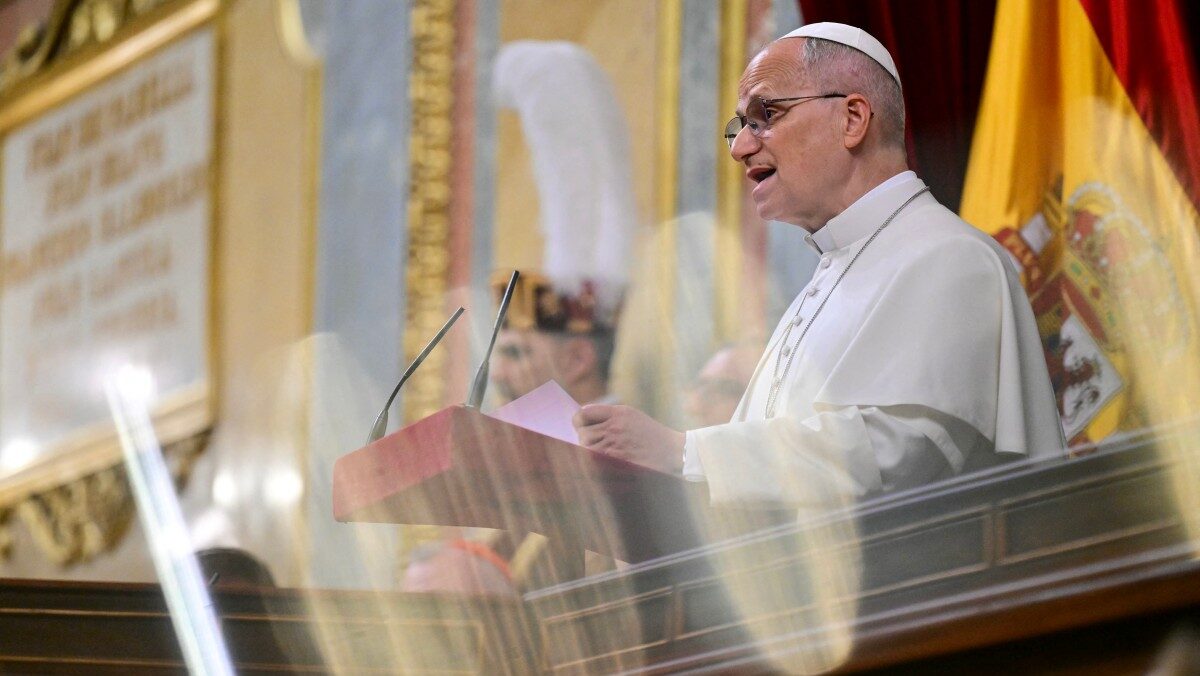

The pontiff’s speech focused on the Christian understanding of human dignity, political authority, and Spain’s distinctive role in Western civilization, offering what observers described as an authentically Catholic intervention rather than a partisan political statement.
Pope Leo XIV opened his remarks by acknowledging Spain’s historical identity as a nation forged through a rich cultural and spiritual tradition. He emphasized that Spanish civilization has been characterized by the productive interaction between faith and reason, artistic expression and legal frameworks, inherited tradition and intellectual innovation.
The Holy Father praised this heritage as still vibrant within Spain’s institutions, cultural life, and national self-understanding.
Recognition of Spanish Intellectual Contributions
A substantial section of the papal address highlighted the School of Salamanca, Francisco de Vitoria, and the broader Spanish intellectual legacy that contributed foundational concepts to modern international law, as The European Conservative reports.
Pope Leo XIV presented Spanish history not as a catalogue of moral failures requiring perpetual apology, but as a record of a nation capable of uniting historical action with moral reasoning and ethical reflection.
Strong Statements on Human Dignity and State Authority
The latter portion of the speech generated the most significant public response. The pope asserted that human dignity exists prior to the state and cannot be made contingent upon evolving social agreements or transient parliamentary majorities.
He proceeded to address several contentious cultural issues that Christians have historically understood as matters of fundamental moral principle.
The address represents a clear articulation of traditional Catholic teaching on the relationship between religious truth, political authority, and individual rights in an era when European political discourse often marginalizes religious perspectives.
Pope Leo XIV’s willingness to present distinctly Christian arguments before a secular legislative body marks a departure from recent decades of more diplomatically cautious papal rhetoric in European capitals.
With information from The European Conservative





