Necessary Cookies

Required for the site to function. Cannot be disabled.

Analytics Cookies

Help us understand how visitors interact with our site (Google Analytics via GTM).

Marketing Cookies

Used to track visitors and deliver personalised advertisements.

We use cookies to enhance your browsing experience and analyse site traffic. By clicking Accept All, you consent to our use of cookies. Privacy Policy
NewsFire Global
Home News Europe World Christianity Culture Wars Opinion Video
Information
About Us Authors Advertising Terms & Conditions Privacy Policy Contact
R2B Media
R2B NEWSFIRE.GR PAPAFOTIS.GR THRACTION HELLENIC CONSERVATIVES RIGHT2THEBONE YT
News Europe

Polish President Blocks Windfall Tax on Fuel Companies

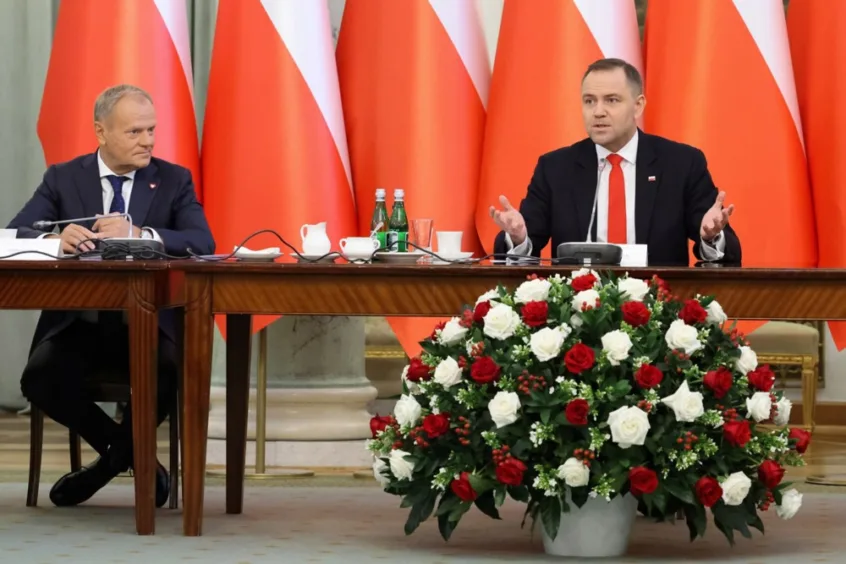
Poland's President Karol Nawrocki blocked a windfall tax on fuel companies, arguing it violates constitutional protections against retroactive taxation and sparking a clash with Prime Minister Donald Tusk.

Dimitris Papafotis
Dimitris Papafotis Editor in Chief
JULY 28, 2026 AT 11:32 AM

According to Brussels Signal, Nawrocki referred the law on July 24, arguing that the measure violates constitutional protections against retroactive taxation. The legislation, passed on July 3, 2026, would have taxed extraordinary profits from liquid fuel sales between March and December 2026.

The dispute centers on whether the government can lawfully tax income already earned earlier in the year. The President contends that imposing a tax in August on profits generated as early as March amounts to retroactive legislation, which he said contradicts the fundamental principle of Lex retro non agit — the law does not operate retroactively.

Tusk responded sharply on July 25, writing on X that Nawrocki had made a “shocking decision” by blocking a law that would have taxed the enormous profits of fuel companies. The Prime Minister claimed the revenues could have financed cheaper fuel at petrol stations through the CPN programme.

Finance Minister Andrzej Domański said the presidential action blocked legislation that would have generated 4 billion złoty (€940 million) for measures shielding consumers from high fuel prices. He accused the President of siding with fuel companies benefiting from high prices rather than with Polish citizens, and of striking “once again at public finances”.

Presidential Office Fires Back

Paweł Szefernaker, head of the President’s Office, dismissed Tusk’s economic credentials and accused him of trying to convince Poles that imposing a new fuel tax would lower prices at petrol stations. He called on the government to reduce VAT and excise duty instead, as the Law and Justice (PiS) government had done, stating that such measures genuinely lower prices rather than shifting costs onto drivers.

Nawrocki emphasized in his statement that he had not vetoed the bill but referred it for constitutional review due to serious legal concerns. He stressed his duty to consider the consequences for Polish family budgets.

Tax Would Hit Consumers, Not Just Companies

The President warned that an additional tax of up to 60 per cent would ultimately be passed on to customers at petrol stations. He noted that drivers have already experienced higher fuel prices following the expiration of protective measures introduced in March after conflict in the Middle East pushed up oil prices.

As Brussels Signal reports, the tax rate would apply not to all profits but to margins exceeding those achieved in 2025 plus 20 per cent, covering both fuel producers and importers.

Nawrocki argued that beyond drivers, farmers, transport companies, small businesses, and families buying food would all bear the burden, since food prices depend on transport costs. He rejected what he described as an attempt to patch up public finances being presented as protecting citizens’ interests when the real consequence would be another wave of price increases.

Campaign Promises at Stake

The President had pledged during the 2025 presidential election that he would not support taxes that would mean higher prices for the public or increase the tax burden on individuals. He has instead urged the ruling coalition to fulfill its promise of raising the amount free of income tax from 30,000 złoty.

The CPN programme — Fuel Prices Lower — was a package of VAT and excise cuts with price caps introduced in March and wound down at the start of July.

With information from Brussels Signal

Share:
Dimitris Papafotis
Dimitris Papafotis

Dimitris Papafotis is the editor-in-chief of NewsFire.GR. He was born and raised in Athens. He studied at the Journalism Workshop (1991-1993). He currently lives in Pyrgos, Ilia, where he has been active in radio and various newspapers, while also maintaining his personal blog, Papafotis.gr.

Recent News

According to Brussels Signal, Nawrocki referred the law on July 24, arguing that the measure violates constitutional protections against retroactive taxation. The legislation, passed on July 3, 2026, would have taxed extraordinary profits from liquid fuel sales between March and December 2026.

The dispute centers on whether the government can lawfully tax income already earned earlier in the year. The President contends that imposing a tax in August on profits generated as early as March amounts to retroactive legislation, which he said contradicts the fundamental principle of Lex retro non agit — the law does not operate retroactively.

Tusk responded sharply on July 25, writing on X that Nawrocki had made a “shocking decision” by blocking a law that would have taxed the enormous profits of fuel companies. The Prime Minister claimed the revenues could have financed cheaper fuel at petrol stations through the CPN programme.

Finance Minister Andrzej Domański said the presidential action blocked legislation that would have generated 4 billion złoty (€940 million) for measures shielding consumers from high fuel prices. He accused the President of siding with fuel companies benefiting from high prices rather than with Polish citizens, and of striking “once again at public finances”.

Presidential Office Fires Back

Paweł Szefernaker, head of the President’s Office, dismissed Tusk’s economic credentials and accused him of trying to convince Poles that imposing a new fuel tax would lower prices at petrol stations. He called on the government to reduce VAT and excise duty instead, as the Law and Justice (PiS) government had done, stating that such measures genuinely lower prices rather than shifting costs onto drivers.

Nawrocki emphasized in his statement that he had not vetoed the bill but referred it for constitutional review due to serious legal concerns. He stressed his duty to consider the consequences for Polish family budgets.

Tax Would Hit Consumers, Not Just Companies

The President warned that an additional tax of up to 60 per cent would ultimately be passed on to customers at petrol stations. He noted that drivers have already experienced higher fuel prices following the expiration of protective measures introduced in March after conflict in the Middle East pushed up oil prices.

As Brussels Signal reports, the tax rate would apply not to all profits but to margins exceeding those achieved in 2025 plus 20 per cent, covering both fuel producers and importers.

Nawrocki argued that beyond drivers, farmers, transport companies, small businesses, and families buying food would all bear the burden, since food prices depend on transport costs. He rejected what he described as an attempt to patch up public finances being presented as protecting citizens’ interests when the real consequence would be another wave of price increases.

Campaign Promises at Stake

The President had pledged during the 2025 presidential election that he would not support taxes that would mean higher prices for the public or increase the tax burden on individuals. He has instead urged the ruling coalition to fulfill its promise of raising the amount free of income tax from 30,000 złoty.

The CPN programme — Fuel Prices Lower — was a package of VAT and excise cuts with price caps introduced in March and wound down at the start of July.

With information from Brussels Signal