Necessary Cookies

Required for the site to function. Cannot be disabled.

Analytics Cookies

Help us understand how visitors interact with our site (Google Analytics via GTM).

Marketing Cookies

Used to track visitors and deliver personalised advertisements.

We use cookies to enhance your browsing experience and analyse site traffic. By clicking Accept All, you consent to our use of cookies. Privacy Policy
NewsFire Global
Home News Europe World Christianity Culture Wars Opinion Video
Information
About Us Authors Advertising Terms & Conditions Privacy Policy Contact
R2B Media
R2B NEWSFIRE.GR PAPAFOTIS.GR THRACTION HELLENIC CONSERVATIVES RIGHT2THEBONE YT
News Europe

Tusk Government Threatens Top Court Chief Over ECHR Spying Claims

Poland's government threatens criminal prosecution against Constitutional Tribunal chief Bogdan Święczkowski over alleged surveillance of the European Court of Human Rights two decades ago.

Dimitris Papafotis
Dimitris Papafotis Editor in Chief
AUGUST 21, 2026 AT 4:10 PM

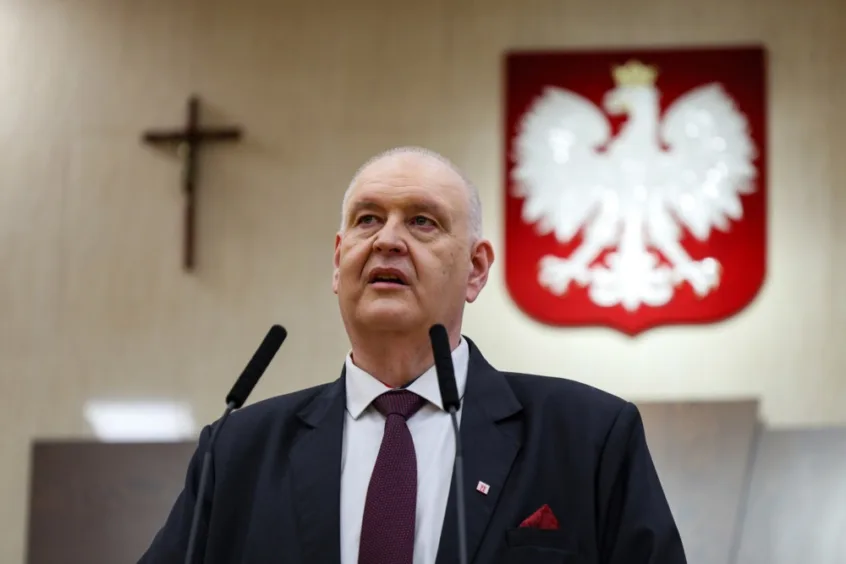
Justice Minister and Prosecutor-General Waldemar Żurek announced on August 19 that authorities would investigate whether Bogdan Święczkowski, who now serves as president of Poland’s Constitutional Tribunal, authorized intelligence gathering operations against the Strasbourg-based court during his tenure as head of the Internal Security Agency (ABW) from 2006 to 2007, according to Brussels Signal.

The probe comes after Święczkowski told conservative broadcaster TV Republika in mid-August that the Internal Security Agency had possessed various types of intelligence originating from within the European Court of Human Rights. He raised the matter while questioning whether the court could be considered genuinely independent, given that its judges are elected by the Parliamentary Assembly of the Council of Europe from candidates nominated by member state governments.

Święczkowski’s career in Polish public service has spanned multiple administrations. Under the Law and Justice (PiS) party’s minority government from 2005 to 2006 and subsequent coalition until 2007, he led the security agency. When PiS returned to power with a majority in 2015, he served as deputy justice minister before becoming national prosecutor in 2016, a role he held until his election as a constitutional court judge in 2022. President Andrzej Duda, a PiS ally, appointed him president of the tribunal in December 2024.

The Tusk administration refuses to recognize Święczkowski as the legitimate head of the Constitutional Tribunal. Since seizing power in 2023, Tusk’s centre-left coalition—comprising his Civic Coalition (KO), Poland 2050, the Polish People’s Party (PSL), and the Left—has maintained that the court’s composition is illegitimate due to appointments made during PiS’s 2015-2023 tenure.

Żurek pledged on X that authorities would examine every aspect of the alleged surveillance Święczkowski described. He warned that if the former ABW chief committed crimes, he will have to bear the consequences. Any prosecution would require the Constitutional Tribunal, in a new composition, to lift Święczkowski’s immunity.

Tusk himself weighed in the same day when questioned by news website Wirtualna Polska, making unsubstantiated personal accusations against Święczkowski. The prime minister claimed without evidence that he and his family had been victims of surveillance, suggesting Święczkowski had a pattern of involvement in questionable wiretapping operations.

The Tusk government has repeatedly alleged that PiS ordered illegal wiretaps against liberal opposition figures during its time in power. However, all such surveillance was judicially authorized and concerned suspected criminal rather than political activities. None of these cases have yet proceeded to trial.

The European Court of Human Rights adjudicates cases involving alleged violations of the European Convention on Human Rights by Council of Europe members, including Poland. While technically separate from European Union institutions, its recent rulings have aligned closely with the EU’s European Court of Justice in characterizing Polish judicial reforms under PiS as threats to judicial independence and rule of law.

Tusk has vowed to use what he calls lawful measures to restructure Poland’s justice system, criticizing Święczkowski’s appointment as evidence of institutional degradation under the previous government.

With information from Brussels Signal

Share:
Dimitris Papafotis
Dimitris Papafotis

Dimitris Papafotis is the editor-in-chief of NewsFire.GR. He was born and raised in Athens. He studied at the Journalism Workshop (1991-1993). He currently lives in Pyrgos, Ilia, where he has been active in radio and various newspapers, while also maintaining his personal blog, Papafotis.gr.

Justice Minister and Prosecutor-General Waldemar Żurek announced on August 19 that authorities would investigate whether Bogdan Święczkowski, who now serves as president of Poland’s Constitutional Tribunal, authorized intelligence gathering operations against the Strasbourg-based court during his tenure as head of the Internal Security Agency (ABW) from 2006 to 2007, according to Brussels Signal.

The probe comes after Święczkowski told conservative broadcaster TV Republika in mid-August that the Internal Security Agency had possessed various types of intelligence originating from within the European Court of Human Rights. He raised the matter while questioning whether the court could be considered genuinely independent, given that its judges are elected by the Parliamentary Assembly of the Council of Europe from candidates nominated by member state governments.

Święczkowski’s career in Polish public service has spanned multiple administrations. Under the Law and Justice (PiS) party’s minority government from 2005 to 2006 and subsequent coalition until 2007, he led the security agency. When PiS returned to power with a majority in 2015, he served as deputy justice minister before becoming national prosecutor in 2016, a role he held until his election as a constitutional court judge in 2022. President Andrzej Duda, a PiS ally, appointed him president of the tribunal in December 2024.

The Tusk administration refuses to recognize Święczkowski as the legitimate head of the Constitutional Tribunal. Since seizing power in 2023, Tusk’s centre-left coalition—comprising his Civic Coalition (KO), Poland 2050, the Polish People’s Party (PSL), and the Left—has maintained that the court’s composition is illegitimate due to appointments made during PiS’s 2015-2023 tenure.

Żurek pledged on X that authorities would examine every aspect of the alleged surveillance Święczkowski described. He warned that if the former ABW chief committed crimes, he will have to bear the consequences. Any prosecution would require the Constitutional Tribunal, in a new composition, to lift Święczkowski’s immunity.

Tusk himself weighed in the same day when questioned by news website Wirtualna Polska, making unsubstantiated personal accusations against Święczkowski. The prime minister claimed without evidence that he and his family had been victims of surveillance, suggesting Święczkowski had a pattern of involvement in questionable wiretapping operations.

The Tusk government has repeatedly alleged that PiS ordered illegal wiretaps against liberal opposition figures during its time in power. However, all such surveillance was judicially authorized and concerned suspected criminal rather than political activities. None of these cases have yet proceeded to trial.

The European Court of Human Rights adjudicates cases involving alleged violations of the European Convention on Human Rights by Council of Europe members, including Poland. While technically separate from European Union institutions, its recent rulings have aligned closely with the EU’s European Court of Justice in characterizing Polish judicial reforms under PiS as threats to judicial independence and rule of law.

Tusk has vowed to use what he calls lawful measures to restructure Poland’s justice system, criticizing Święczkowski’s appointment as evidence of institutional degradation under the previous government.

With information from Brussels Signal