Poland Seeks US Extradition of Ex-Justice Minister Ziobro
Polish authorities have requested the U.S. extradite former justice minister Zbigniew Ziobro, who faces 26 criminal charges for allegedly misusing crime victim funds and purchasing Pegasus spyware.
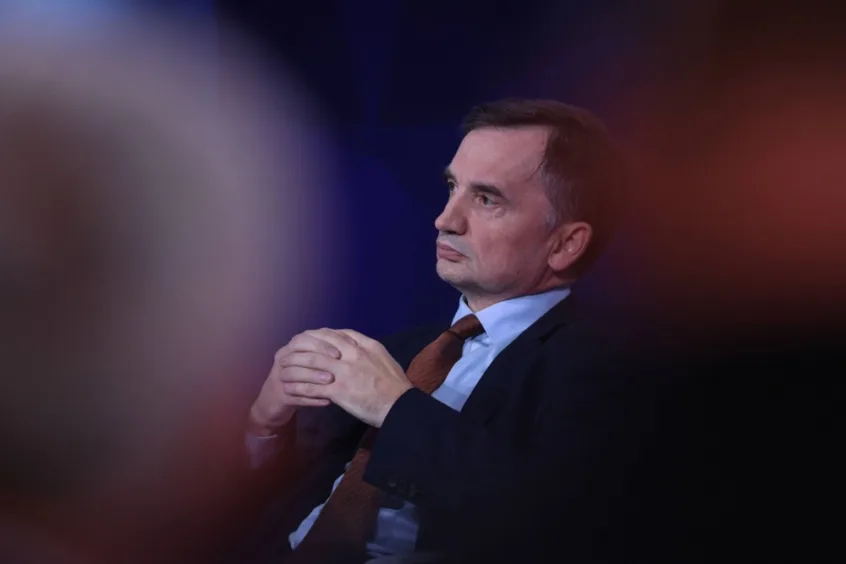

According to Brussels Signal, the prosecution service confirmed on July 27 that the extradition application had been transmitted through diplomatic channels to the relevant American authorities. Government spokesman Adam Szlapka publicly announced the move via social media the same day.
Ziobro, who held the positions of justice minister and prosecutor general throughout the conservative Law and Justice Party (PiS) government from 2015 to 2023, remains a sitting member of parliament. Prosecutors have accused him of forming and directing an organized criminal group operating within his own ministry and exploiting his official powers for political purposes.
The charges revolve around the Justice Fund, state money designated for assisting crime victims and funding crime prevention initiatives. Prosecutors claim approximately 150 million zloty—roughly €35 million—was illegally redirected, with 25 million zloty allegedly spent on purchasing Israeli-manufactured Pegasus surveillance spyware that was subsequently used against political opponents of the government then in power.
The extradition filing addresses 19 of the 26 alleged offenses. Prosecutors explained that the reduced scope reflects decisions by Warsaw courts, which determined that evidence concerning seven of the acts did not demonstrate a sufficiently high probability that they had occurred. The domestic investigation, however, continues to cover all 26 charges. The request is grounded in a 1996 extradition treaty between Poland and the United States.
The documentation will now undergo review by the US Department of Justice before any potential referral to a federal judge, who would determine whether extradition is legally justified. Prosecution spokeswoman Anna Adamiak noted that similar cases have historically taken anywhere from several months to multiple years to resolve.
Ziobro departed Poland for Hungary in late 2025 and received political asylum from Viktor Orbán‘s government, which had already provided sanctuary to his former deputy Marcin Romanowski. He traveled to the United States in May following the inauguration of Orbán’s successor Péter Magyar, who had promised to revoke such protections.
He currently possesses no valid travel documents after Warsaw canceled his passports and Budapest withdrew his refugee status. A Warsaw court authorized his pre-trial detention in February, and his appeal was denied earlier this month.
When asked about the timing of a potential extradition, Prime Minister Donald Tusk remarked that the answer lay with “the other Donald.” He stated that Warsaw was awaiting positive indications from Washington but could not confirm whether they would be forthcoming.
Reuters reported in May that US deputy secretary of state Christopher Landau had personally directed officials to facilitate a visa for Ziobro, a move Tusk publicly condemned at the time.
Ziobro, whose judicial reforms sparked a sustained rule-of-law confrontation with the European Union, denies all accusations and characterizes the prosecution as political retribution. He told broadcaster TV Republika that he welcomed the prospect of having the case heard by an American court.
With information from Brussels Signal