Necessary Cookies

Required for the site to function. Cannot be disabled.

Analytics Cookies

Help us understand how visitors interact with our site (Google Analytics via GTM).

Marketing Cookies

Used to track visitors and deliver personalised advertisements.

We use cookies to enhance your browsing experience and analyse site traffic. By clicking Accept All, you consent to our use of cookies. Privacy Policy
NewsFire Global
Home News Europe World Christianity Culture Wars Opinion Video
Information
About Us Authors Advertising Terms & Conditions Privacy Policy Contact
R2B Media
R2B NEWSFIRE.GR PAPAFOTIS.GR THRACTION HELLENIC CONSERVATIVES RIGHT2THEBONE YT
News World

Next China Shock Is Coming

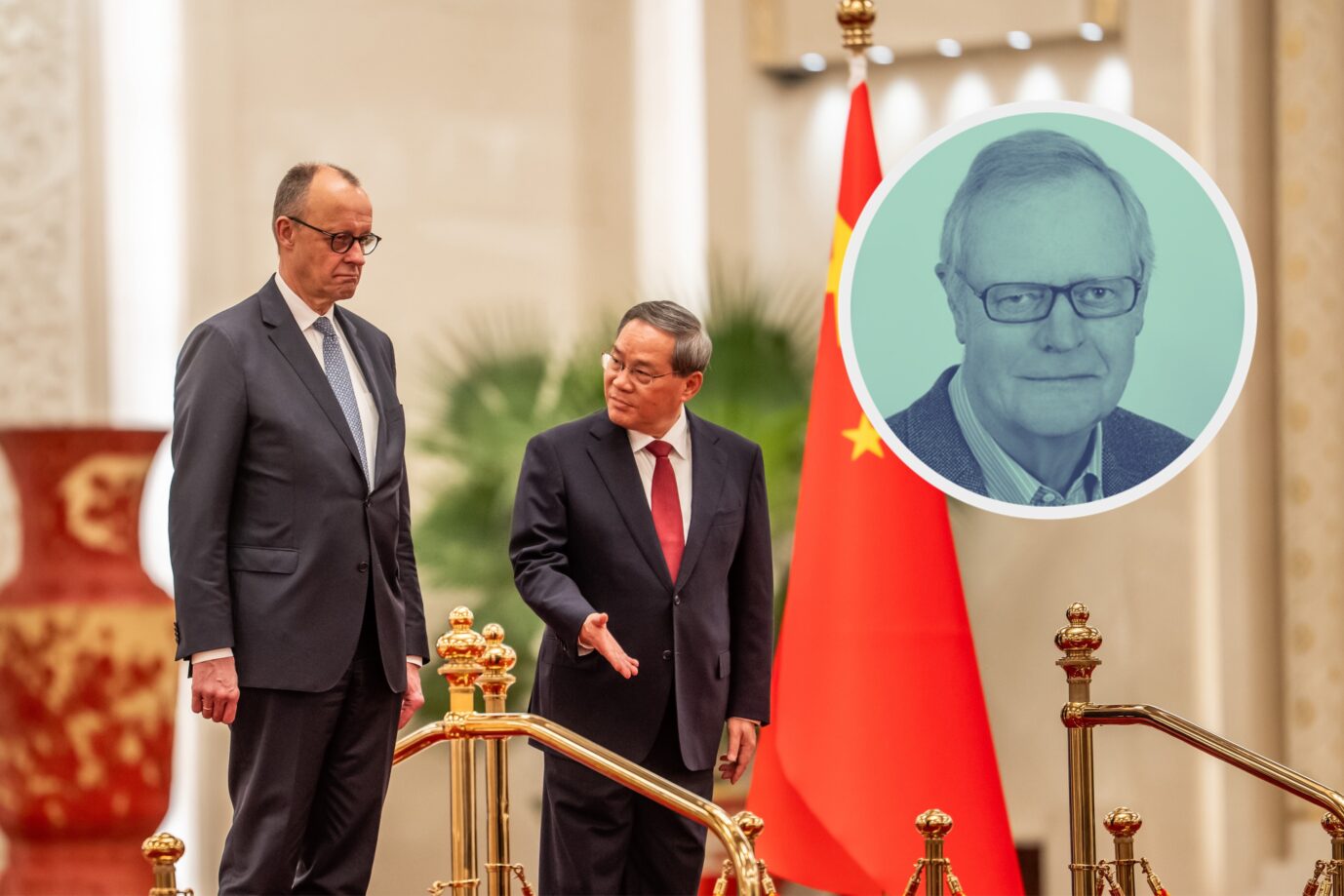
Germany confronts a strategic dilemma as China challenges U.S.-led global governance while pursuing industrial policies that threaten German manufacturing competitiveness.

Newsroom
Newsroom Staff Writer
JUNE 27, 2026 AT 7:56 PM

In mid-June, the Chinese State Council published a white paper titled “More Just and Impartial Global Governance: China’s Principles, Proposals and Actions,” as Junge Freiheit reports. The document received no response from Berlin, despite carrying profound implications for Germany’s economic future.

The white paper amounts to a direct challenge to American hegemony established after the Second World War. Beijing condemns trade wars and technology conflicts initiated by “some countries” and criticizes what it calls double standards in international relations. Without naming names, the target is unmistakable: the United States.

China Positions Itself as Champion of the Global South

China advocates strengthening multilateral organizations, particularly the United Nations, and positions itself as defender of the Global South. The document calls for concrete reforms to institutions like the International Monetary Fund and World Bank, where voting power and influence remain weighted toward Western nations.

The economic reality supports Beijing’s argument. China now ranks as the world’s second-largest economy in nominal terms and the largest when adjusted for purchasing power. As an industrial power, China stands unchallenged, accounting for 30 percent of global industrial production.

The UN Security Council composition still reflects 1945 victory alignments, with Germany and Japan excluded from permanent membership. India, Latin America, and Africa lack representation entirely. Berlin might find opportunity to pursue long-overdue UN reform with Chinese support, according to Junge Freiheit.

Five-Year Plan Signals Export Offensive

More threatening for Germany are the economic strategies emerging from China’s Five-Year Plan for 2026 to 2030. The plan emphasizes state industrial strategy, technological independence from foreign suppliers, national security priorities, and continued expansion of industrial production.

By prioritizing exports over stimulating weak domestic demand, Beijing puts Germany on a collision course. With industry accounting for one-fifth of German economic output, the consequences could prove severe.

Competing with Chinese products that nearly match German quality while selling for a third less grows increasingly difficult. Germany’s current account surplus has fallen from nine percent of GDP in 2016 to 4.5 percent most recently. Even former German strongholds in mechanical engineering, chemicals, and automotive manufacturing show signs of erosion.

The Second China Shock

The American experience provides a cautionary tale. After China joined the World Trade Organization in 2001, the United States lost a quarter of its industrial base during the first China shock. German exporters benefited then, as Chinese products remained cheap but technologically inferior.

The current second China shock will not hit the now-protectionist United States but will strike Germany with full force. Last November, the Federation of German Industries issued warnings about a complete transformation underway.

A Bloomberg analysis attributed 40 percent of German growth weakness to lost exports, 40 percent to high energy prices, and 20 percent to other factors including bureaucracy and weak domestic demand. This suggests 60 percent of the problem lies within government policy control, while only 40 percent relates to export challenges.

Berlin Lacks Coherent Response

Germany confronts a policy dilemma with no easy solutions. The European Union could respond to Chinese subsidies and unfair trade practices with tariffs and import quotas, but such measures would trigger a trade war with no winners. Germany has prospered on free trade principles since the Kaiserreich economic miracle.

Yet the federal government cannot indefinitely avoid addressing the challenge. As a first step, Berlin could pressure Beijing to permit the overdue appreciation of the yuan in currency markets, which would significantly brake China’s export offensive.

Germany must develop its own China policy combining hard-nosed defense of national interests with willingness to cooperate, according to Junge Freiheit. The country currently lacks political leadership despite remaining the world’s third-largest economy, hampered by an industrial sector that has been shrinking for seven years.

The multilateral world China demands has already become reality. American geopolitics under Donald Trump increasingly resembles a fighting retreat. Whether Germany can navigate between free trade principles and protecting its industrial base remains an open question that Berlin can no longer postpone answering.

With information from Junge Freiheit

Share:
Newsroom
Newsroom

NewsFire.GR is a website created with the hope that the media will rediscover their true identity, which is none other than informing the public about the real stakes of our times. Journalism and political analysis must hold power accountable, not serve it.

In mid-June, the Chinese State Council published a white paper titled “More Just and Impartial Global Governance: China’s Principles, Proposals and Actions,” as Junge Freiheit reports. The document received no response from Berlin, despite carrying profound implications for Germany’s economic future.

The white paper amounts to a direct challenge to American hegemony established after the Second World War. Beijing condemns trade wars and technology conflicts initiated by “some countries” and criticizes what it calls double standards in international relations. Without naming names, the target is unmistakable: the United States.

China Positions Itself as Champion of the Global South

China advocates strengthening multilateral organizations, particularly the United Nations, and positions itself as defender of the Global South. The document calls for concrete reforms to institutions like the International Monetary Fund and World Bank, where voting power and influence remain weighted toward Western nations.

The economic reality supports Beijing’s argument. China now ranks as the world’s second-largest economy in nominal terms and the largest when adjusted for purchasing power. As an industrial power, China stands unchallenged, accounting for 30 percent of global industrial production.

The UN Security Council composition still reflects 1945 victory alignments, with Germany and Japan excluded from permanent membership. India, Latin America, and Africa lack representation entirely. Berlin might find opportunity to pursue long-overdue UN reform with Chinese support, according to Junge Freiheit.

Five-Year Plan Signals Export Offensive

More threatening for Germany are the economic strategies emerging from China’s Five-Year Plan for 2026 to 2030. The plan emphasizes state industrial strategy, technological independence from foreign suppliers, national security priorities, and continued expansion of industrial production.

By prioritizing exports over stimulating weak domestic demand, Beijing puts Germany on a collision course. With industry accounting for one-fifth of German economic output, the consequences could prove severe.

Competing with Chinese products that nearly match German quality while selling for a third less grows increasingly difficult. Germany’s current account surplus has fallen from nine percent of GDP in 2016 to 4.5 percent most recently. Even former German strongholds in mechanical engineering, chemicals, and automotive manufacturing show signs of erosion.

The Second China Shock

The American experience provides a cautionary tale. After China joined the World Trade Organization in 2001, the United States lost a quarter of its industrial base during the first China shock. German exporters benefited then, as Chinese products remained cheap but technologically inferior.

The current second China shock will not hit the now-protectionist United States but will strike Germany with full force. Last November, the Federation of German Industries issued warnings about a complete transformation underway.

A Bloomberg analysis attributed 40 percent of German growth weakness to lost exports, 40 percent to high energy prices, and 20 percent to other factors including bureaucracy and weak domestic demand. This suggests 60 percent of the problem lies within government policy control, while only 40 percent relates to export challenges.

Berlin Lacks Coherent Response

Germany confronts a policy dilemma with no easy solutions. The European Union could respond to Chinese subsidies and unfair trade practices with tariffs and import quotas, but such measures would trigger a trade war with no winners. Germany has prospered on free trade principles since the Kaiserreich economic miracle.

Yet the federal government cannot indefinitely avoid addressing the challenge. As a first step, Berlin could pressure Beijing to permit the overdue appreciation of the yuan in currency markets, which would significantly brake China’s export offensive.

Germany must develop its own China policy combining hard-nosed defense of national interests with willingness to cooperate, according to Junge Freiheit. The country currently lacks political leadership despite remaining the world’s third-largest economy, hampered by an industrial sector that has been shrinking for seven years.

The multilateral world China demands has already become reality. American geopolitics under Donald Trump increasingly resembles a fighting retreat. Whether Germany can navigate between free trade principles and protecting its industrial base remains an open question that Berlin can no longer postpone answering.

With information from Junge Freiheit

