Necessary Cookies

Required for the site to function. Cannot be disabled.

Analytics Cookies

Help us understand how visitors interact with our site (Google Analytics via GTM).

Marketing Cookies

Used to track visitors and deliver personalised advertisements.

We use cookies to enhance your browsing experience and analyse site traffic. By clicking Accept All, you consent to our use of cookies. Privacy Policy
NewsFire Global
Home News Europe World Christianity Culture Wars Opinion Video
Information
About Us Authors Advertising Terms & Conditions Privacy Policy Contact
R2B Media
R2B NEWSFIRE.GR PAPAFOTIS.GR THRACTION HELLENIC CONSERVATIVES RIGHT2THEBONE YT
News World

M&M’s Drops Two Iconic Colors in Major Brand Overhaul

Mars is launching natural-ingredient M&M's in August but may eliminate blue and brown colors because spirulina creates manufacturing problems requiring equipment overhauls.
Stefanos Banos
Stefanos Banos Staff Writer
JUNE 20, 2026 AT 1:05 PM

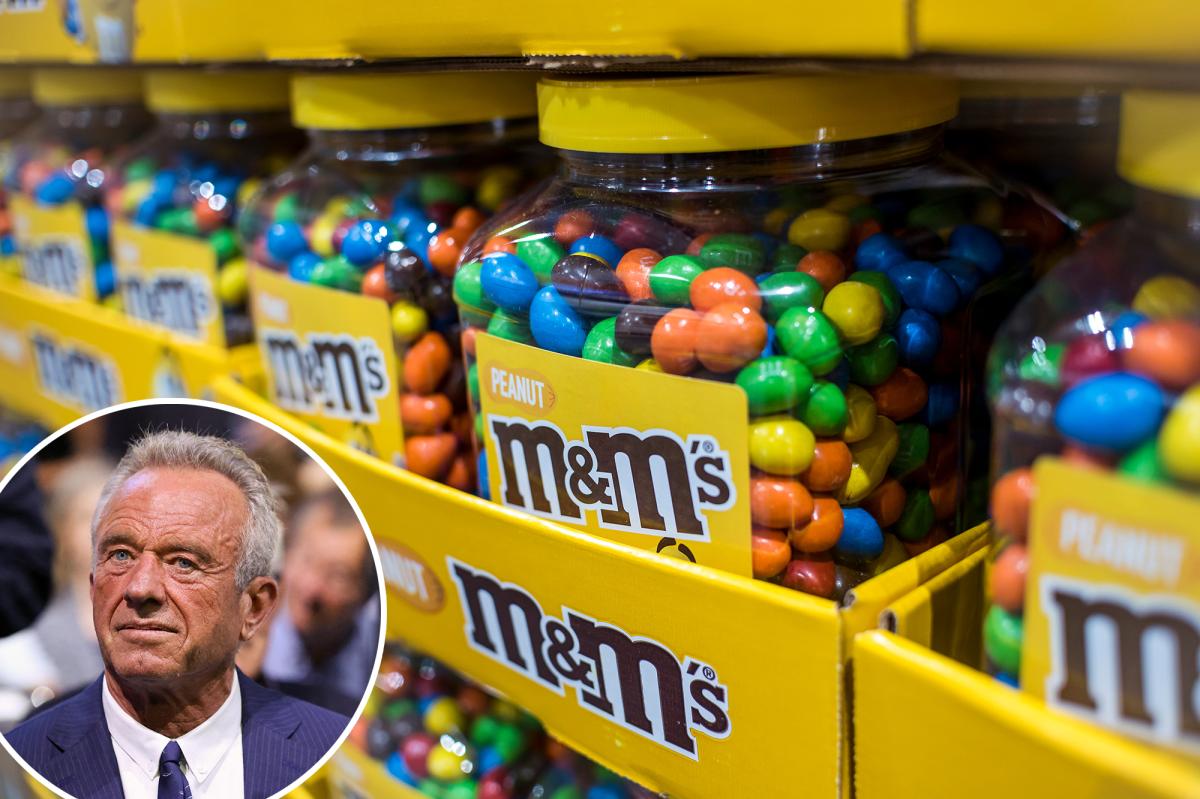
As the beloved candy celebrates its 85th anniversary this summer, Mars has committed to offering consumers a naturally colored alternative in response to mounting pressure from Health Secretary Robert F. Kennedy Jr.‘s Make America Healthy Again movement, according to New York Post.

While the company has successfully figured out how to produce red, orange, and yellow M&M’s using natural ingredients, the bright blue shell that has been part of the candy’s rainbow since 1995 has proven to be a major headache.

Superfood Ingredient Creates Manufacturing Nightmare

The culprit behind the blue problem is spirulina, the algae-based ingredient often marketed as a superfood. Mars selected spirulina as the best natural substitute for artificial dye Blue 1, but the ingredient is literally gumming up the works at facilities that produce 600 million M&M’s every single day.

As New York Post reports, the algae-based pigment requires roughly seven times as much material to achieve the signature cerulean hue, creating a thick, foamy mixture that leaves unwanted plaque throughout production equipment.

The coated remnants cause dangerous buildup in pipes and eventually lead to mold formation, posing serious food-safety hazards. Brown M&M’s face elimination as well, since that color relies heavily on blue coloring to achieve its distinctive look.

Multimillion-Dollar Equipment Overhaul Required

Claire Hewitt, the Mars executive overseeing the initiative who describes herself as the company’s “chief color officer,” acknowledged the unprecedented challenge. It’s the hardest thing I’ve had to do in my career, Hewitt told the Wall Street Journal.

More than 100 employees have worked on the project across Mars facilities, but solving the coloring code comes with a hefty price tag. The company must upgrade more than 300 machines across its M&M’s plants to handle spirulina, including installing new mixing tanks, paddles, and motors.

The new cleaning equipment would also require hotter water, more force, and significantly more time to maintain food safety standards.

MAHA Pressure Reshapes Industry Approach

The expensive makeover reflects the growing influence of the MAHA movement, which has pushed food manufacturers to phase out synthetic dyes that Kennedy has linked to various health concerns, particularly in children.

Food companies have largely defended these additives as safe and approved by regulators, but mounting pressure and restrictions have forced many brands to explore natural alternatives.

Mars actually pledged in 2016 to remove artificial colors from its food products, but walked back those plans for candy at the time, claiming shoppers weren’t particularly concerned about dyes in occasional treats. The company has now reversed course again.

Limited Launch While Traditional Version Remains

Mars experimented with other options, including purple and pink candies, but executives ultimately decided neither looked right. The company even considered releasing a three-color mix before settling on a four-color lineup for the August debut.

The naturally colored M&M’s will initially be sold exclusively through Amazon, while the traditional artificially colored version isn’t going anywhere for now.

Mars has set an ambitious ultimate goal of recreating all six classic M&M colors using natural ingredients by 2028, though the blue and brown challenges suggest that timeline may face obstacles.

With information from New York Post

Share:
Stefanos Banos
Stefanos Banos

Stefanos Banos was born in Piraeus and is an editor at NewsFire.GR, specializing in political analysis and international relations. He graduated from the Department of Communication and Media at the University of Bremen in Germany, where he also completed his Master of Arts in Communication and Media Studies. Married to Zoi, he is a proud father of three boys.

As the beloved candy celebrates its 85th anniversary this summer, Mars has committed to offering consumers a naturally colored alternative in response to mounting pressure from Health Secretary Robert F. Kennedy Jr.‘s Make America Healthy Again movement, according to New York Post.

While the company has successfully figured out how to produce red, orange, and yellow M&M’s using natural ingredients, the bright blue shell that has been part of the candy’s rainbow since 1995 has proven to be a major headache.

Superfood Ingredient Creates Manufacturing Nightmare

The culprit behind the blue problem is spirulina, the algae-based ingredient often marketed as a superfood. Mars selected spirulina as the best natural substitute for artificial dye Blue 1, but the ingredient is literally gumming up the works at facilities that produce 600 million M&M’s every single day.

As New York Post reports, the algae-based pigment requires roughly seven times as much material to achieve the signature cerulean hue, creating a thick, foamy mixture that leaves unwanted plaque throughout production equipment.

The coated remnants cause dangerous buildup in pipes and eventually lead to mold formation, posing serious food-safety hazards. Brown M&M’s face elimination as well, since that color relies heavily on blue coloring to achieve its distinctive look.

Multimillion-Dollar Equipment Overhaul Required

Claire Hewitt, the Mars executive overseeing the initiative who describes herself as the company’s “chief color officer,” acknowledged the unprecedented challenge. It’s the hardest thing I’ve had to do in my career, Hewitt told the Wall Street Journal.

More than 100 employees have worked on the project across Mars facilities, but solving the coloring code comes with a hefty price tag. The company must upgrade more than 300 machines across its M&M’s plants to handle spirulina, including installing new mixing tanks, paddles, and motors.

The new cleaning equipment would also require hotter water, more force, and significantly more time to maintain food safety standards.

MAHA Pressure Reshapes Industry Approach

The expensive makeover reflects the growing influence of the MAHA movement, which has pushed food manufacturers to phase out synthetic dyes that Kennedy has linked to various health concerns, particularly in children.

Food companies have largely defended these additives as safe and approved by regulators, but mounting pressure and restrictions have forced many brands to explore natural alternatives.

Mars actually pledged in 2016 to remove artificial colors from its food products, but walked back those plans for candy at the time, claiming shoppers weren’t particularly concerned about dyes in occasional treats. The company has now reversed course again.

Limited Launch While Traditional Version Remains

Mars experimented with other options, including purple and pink candies, but executives ultimately decided neither looked right. The company even considered releasing a three-color mix before settling on a four-color lineup for the August debut.

The naturally colored M&M’s will initially be sold exclusively through Amazon, while the traditional artificially colored version isn’t going anywhere for now.

Mars has set an ambitious ultimate goal of recreating all six classic M&M colors using natural ingredients by 2028, though the blue and brown challenges suggest that timeline may face obstacles.

With information from New York Post

