Meloni Blocks Draghi as EU Ukraine Mediator Pick
Italian Prime Minister Giorgia Meloni blocked former PM Mario Draghi from serving as EU mediator for Russia-Ukraine talks, arguing the role should go to someone from a medium-sized European nation.
The debate over appointing a dedicated EU envoy to engage in potential talks with Moscow has been circulating in Brussels for months, according to Brussels Signal, amid growing uncertainty over the trajectory of the conflict and questions about Europe’s diplomatic coordination with American efforts.
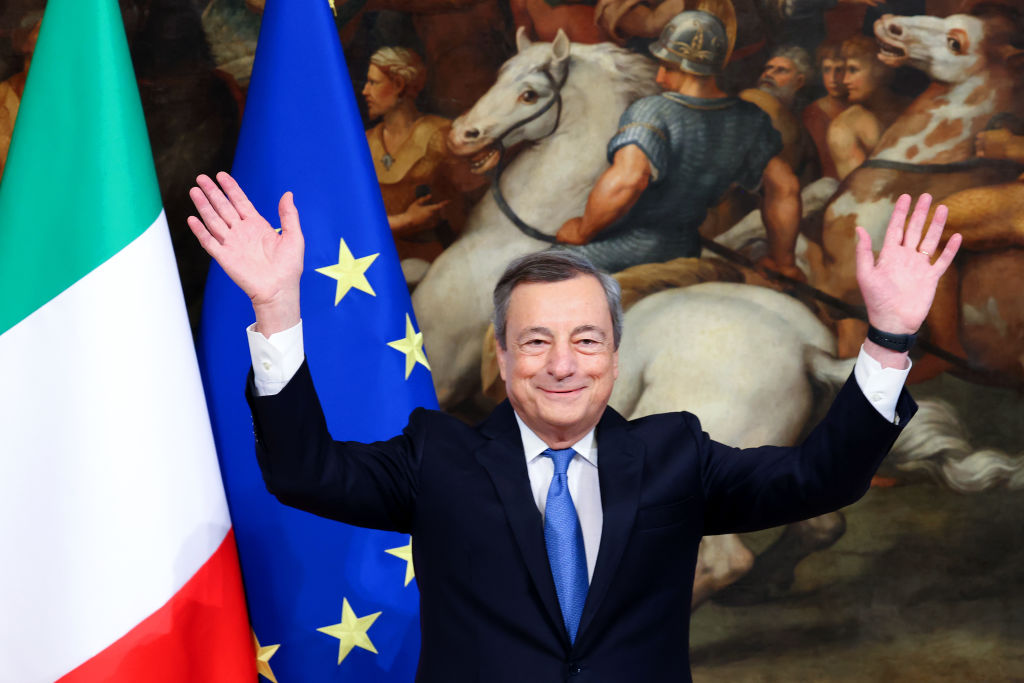
Mario Draghi, the former Italian prime minister and ex-president of the European Central Bank, had been mentioned in several internal discussions and media reports as a possible mediator. His international financial credentials and his role leading Italy at the outbreak of the war in Ukraine had positioned him as a credible candidate in some circles.
However, Giorgia Meloni moved decisively to shut down that possibility. Speaking at the G7 summit in Évian on June 17, she stated that it would be very difficult to propose a person coming from one of the big European countries, and said she would instead look to medium-sized EU member states for suitable candidates. The remarks were reported by the Italian daily Il Foglio.
Meloni’s intervention was widely interpreted as a direct rejection of Draghi, given his status as a former leader of one of the EU’s founding large economies. She argued that the legitimacy of any mediator would hinge on perceived neutrality within the EU’s internal balance of power, a criterion that would appear to disqualify figures from major capitals.
The Italian Prime Minister has also emphasized that any potential mediator must be a figure of authority, vested with the trust and mandate of all member states, a formulation she has used in earlier parliamentary discussions on the need for a unified European interlocutor with Moscow.
Strategic Realignment in Rome
Meloni’s position reflects a broader strategic approach by her government, which combines strong political support for Ukraine with caution over concentrating diplomatic authority in high-profile technocratic figures associated with previous EU crisis-management frameworks. Rome appears to favor a more distributed diplomatic model, aligned with smaller or medium-sized EU member states.
The debate also raises institutional sensitivities in Brussels, where the EU already has a High Representative for Foreign Affairs tasked with coordinating external policy. The creation of a separate envoy for Ukraine risks raising questions over duplication and internal coherence within the bloc’s diplomatic architecture.
Names such as Draghi and former German Chancellor Angela Merkel have been floated in various discussions, though neither has been formally proposed. Despite Meloni’s intervention, the question of who could credibly represent the EU in potential negotiations remains unresolved.
Draghi’s Diminished Prospects
While Draghi’s name continues to carry weight in international economic and diplomatic circles, his political viability as a mediator now appears significantly reduced. His exclusion from consideration marks a notable shift in the conversation around Europe’s diplomatic strategy toward the conflict.
As the war continues with no clear diplomatic breakthrough in sight, the debate over Europe’s future negotiator remains open but increasingly shaped by Meloni’s push to redefine what kind of political authority the role should embody.
With information from Brussels Signal