Necessary Cookies

Required for the site to function. Cannot be disabled.

Analytics Cookies

Help us understand how visitors interact with our site (Google Analytics via GTM).

Marketing Cookies

Used to track visitors and deliver personalised advertisements.

We use cookies to enhance your browsing experience and analyse site traffic. By clicking Accept All, you consent to our use of cookies. Privacy Policy
NewsFire Global
Home News Europe World Christianity Culture Wars Opinion Video
Information
About Us Authors Advertising Terms & Conditions Privacy Policy Contact
R2B Media
R2B NEWSFIRE.GR PAPAFOTIS.GR THRACTION HELLENIC CONSERVATIVES RIGHT2THEBONE YT
News Europe

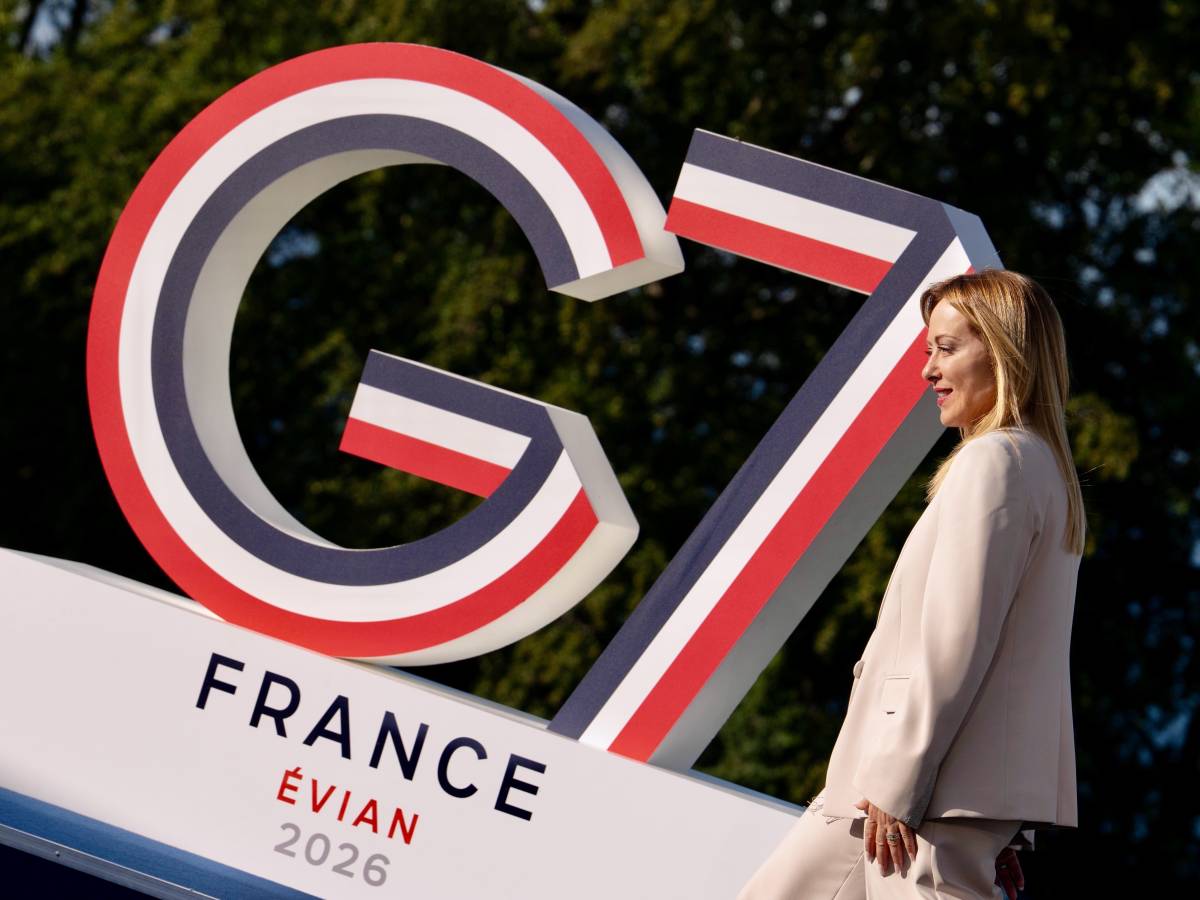
Meloni at G7 in Évian: Ready to do our part on Hormuz, thaw with Trump

The G7 summit in Évian focused on implementing a U.S.-Iran peace deal and reopening the Strait of Hormuz, with European nations offering naval support for demining operations.

Dimitris Papafotis
Dimitris Papafotis Editor in Chief
JUNE 17, 2026 AT 2:05 AM

According to Il Giornale, the seven major powers—Canada, France, Italy, Germany, Japan, the United Kingdom, and the United States—welcomed the accord overnight Sunday into Monday. A joint statement from the so-called E4 format, comprising Berlin, Paris, London, and Rome, greeted the agreement with great favor and called for rapid implementation of the memorandum’s provisions.

The Middle East crisis naturally topped the opening session at the Royal Hotel in Évian, where French President Emmanuel Macron received each of the seven leaders individually for dinner. Macron indicated that demining operations in the Strait of Hormuz would be a central topic of discussion. Trump announced the critical waterway would be fully reopened by Friday.
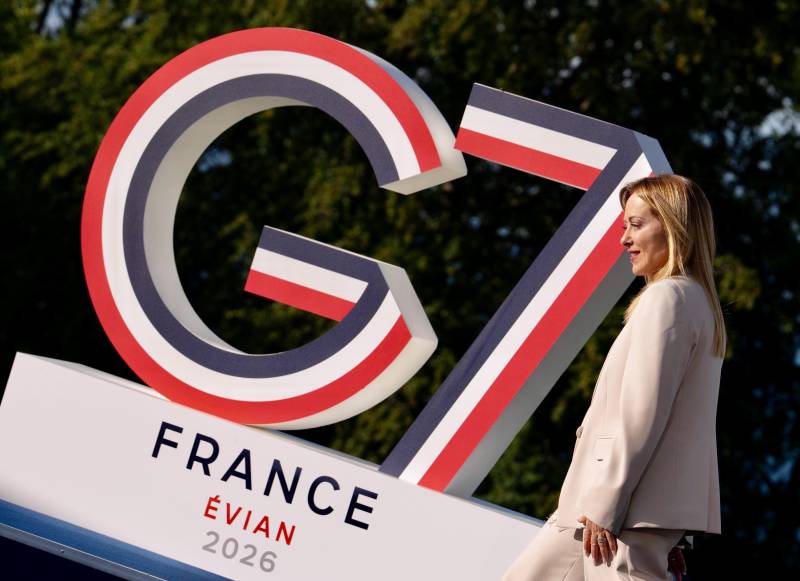
Meloni al G7 di Évian. "Su Hormuz pronti a far la nostra parte". Il disgelo con Donald Trump
Photo: ilgiornale.it

The working dinner focused on the consequences of the US-Iran agreement, including implications for Tehran’s nuclear capabilities, and the long-term reopening of Hormuz. Unlike Ukraine, where European capitals remain divided, the Strait of Hormuz issue has generated convergent positions among the major European chancelleries.

Macron revealed that both France and Britain stand ready to lead a mission in the Strait, with support from the Netherlands and Italy, to facilitate the reopening of this vital maritime route once the US-Iran agreement is fully implemented. Trump responded with measured caution to the offer of European assistance, telling journalists in Macron’s presence that he did not believe much help would be needed.

Italian Prime Minister Giorgia Meloni, who arrived in Haute-Savoie yesterday afternoon, has shown no hesitation on the matter. She committed Italian support for guaranteeing navigation through Hormuz some time ago, and Italian naval forces are already present in the area. Before departing for Évian, Meloni met with Japanese Prime Minister Sanae Takaichi in Rome, where she expressed satisfaction with the US-Iran memorandum and called for a swift agreement ensuring free and safe navigation of Hormuz.

Foreign Minister Antonio Tajani confirmed Italy’s operational readiness on this front. Italy has already deployed two minesweepers effectively attached to the Aspides mission. The Italian government is now awaiting clarity on when and how these vessels can be transferred to Hormuz. Tajani emphasized that Italy is prepared to do its part.

However, Meloni indicated that parliamentary approval would be necessary before participating in demining operations. A simple briefing will not suffice. The government has already mapped out a procedure requiring a formal communication, potentially delivered by the prime minister herself, followed by votes on resolutions.

Yesterday marked the first personal encounter between Meloni and Trump in over eight months. Their last handshake occurred at the peace summit for Gaza held in Sharm el-Sheikh on October 13. Subsequently, contact between the two leaders was limited to video calls and phone conversations, which became increasingly sporadic due to the fluctuating relationship between Rome and Washington. In recent months, no direct contact reportedly took place.
È arrivato il genio
Photo: ilgiornale.it

The two leaders finally shook hands again yesterday, exchanging brief remarks on the sidelines of their arrival before participating in the leaders’ dinner. Although they were not seated next to each other at the circular table hosting the seven, they exchanged numerous comments throughout the evening. Italian diplomatic sources, while noting that the relationship between the two has always been frank, now speak of a genuine thaw. Whether the two will find time and space for a more substantive discussion today remains to be seen.

With information from Il Giornale

Share:
Dimitris Papafotis
Dimitris Papafotis

Dimitris Papafotis is the editor-in-chief of NewsFire.GR. He was born and raised in Athens. He studied at the Journalism Workshop (1991-1993). He currently lives in Pyrgos, Ilia, where he has been active in radio and various newspapers, while also maintaining his personal blog, Papafotis.gr.

According to Il Giornale, the seven major powers—Canada, France, Italy, Germany, Japan, the United Kingdom, and the United States—welcomed the accord overnight Sunday into Monday. A joint statement from the so-called E4 format, comprising Berlin, Paris, London, and Rome, greeted the agreement with great favor and called for rapid implementation of the memorandum’s provisions.

The Middle East crisis naturally topped the opening session at the Royal Hotel in Évian, where French President Emmanuel Macron received each of the seven leaders individually for dinner. Macron indicated that demining operations in the Strait of Hormuz would be a central topic of discussion. Trump announced the critical waterway would be fully reopened by Friday.

Meloni al G7 di Évian. "Su Hormuz pronti a far la nostra parte". Il disgelo con Donald Trump
Photo: ilgiornale.it

The working dinner focused on the consequences of the US-Iran agreement, including implications for Tehran’s nuclear capabilities, and the long-term reopening of Hormuz. Unlike Ukraine, where European capitals remain divided, the Strait of Hormuz issue has generated convergent positions among the major European chancelleries.

Macron revealed that both France and Britain stand ready to lead a mission in the Strait, with support from the Netherlands and Italy, to facilitate the reopening of this vital maritime route once the US-Iran agreement is fully implemented. Trump responded with measured caution to the offer of European assistance, telling journalists in Macron’s presence that he did not believe much help would be needed.

Italian Prime Minister Giorgia Meloni, who arrived in Haute-Savoie yesterday afternoon, has shown no hesitation on the matter. She committed Italian support for guaranteeing navigation through Hormuz some time ago, and Italian naval forces are already present in the area. Before departing for Évian, Meloni met with Japanese Prime Minister Sanae Takaichi in Rome, where she expressed satisfaction with the US-Iran memorandum and called for a swift agreement ensuring free and safe navigation of Hormuz.

Foreign Minister Antonio Tajani confirmed Italy’s operational readiness on this front. Italy has already deployed two minesweepers effectively attached to the Aspides mission. The Italian government is now awaiting clarity on when and how these vessels can be transferred to Hormuz. Tajani emphasized that Italy is prepared to do its part.

However, Meloni indicated that parliamentary approval would be necessary before participating in demining operations. A simple briefing will not suffice. The government has already mapped out a procedure requiring a formal communication, potentially delivered by the prime minister herself, followed by votes on resolutions.

Yesterday marked the first personal encounter between Meloni and Trump in over eight months. Their last handshake occurred at the peace summit for Gaza held in Sharm el-Sheikh on October 13. Subsequently, contact between the two leaders was limited to video calls and phone conversations, which became increasingly sporadic due to the fluctuating relationship between Rome and Washington. In recent months, no direct contact reportedly took place.

È arrivato il genio
Photo: ilgiornale.it

The two leaders finally shook hands again yesterday, exchanging brief remarks on the sidelines of their arrival before participating in the leaders’ dinner. Although they were not seated next to each other at the circular table hosting the seven, they exchanged numerous comments throughout the evening. Italian diplomatic sources, while noting that the relationship between the two has always been frank, now speak of a genuine thaw. Whether the two will find time and space for a more substantive discussion today remains to be seen.

With information from Il Giornale

