
Maréchal: “Europe Faces Its Moment of Destiny”
French politician Marion Maréchal warns that mass immigration threatens France's European identity, citing data showing over 20% of newborn boys have Arab-Muslim names and 80% of citizens oppose current policies.
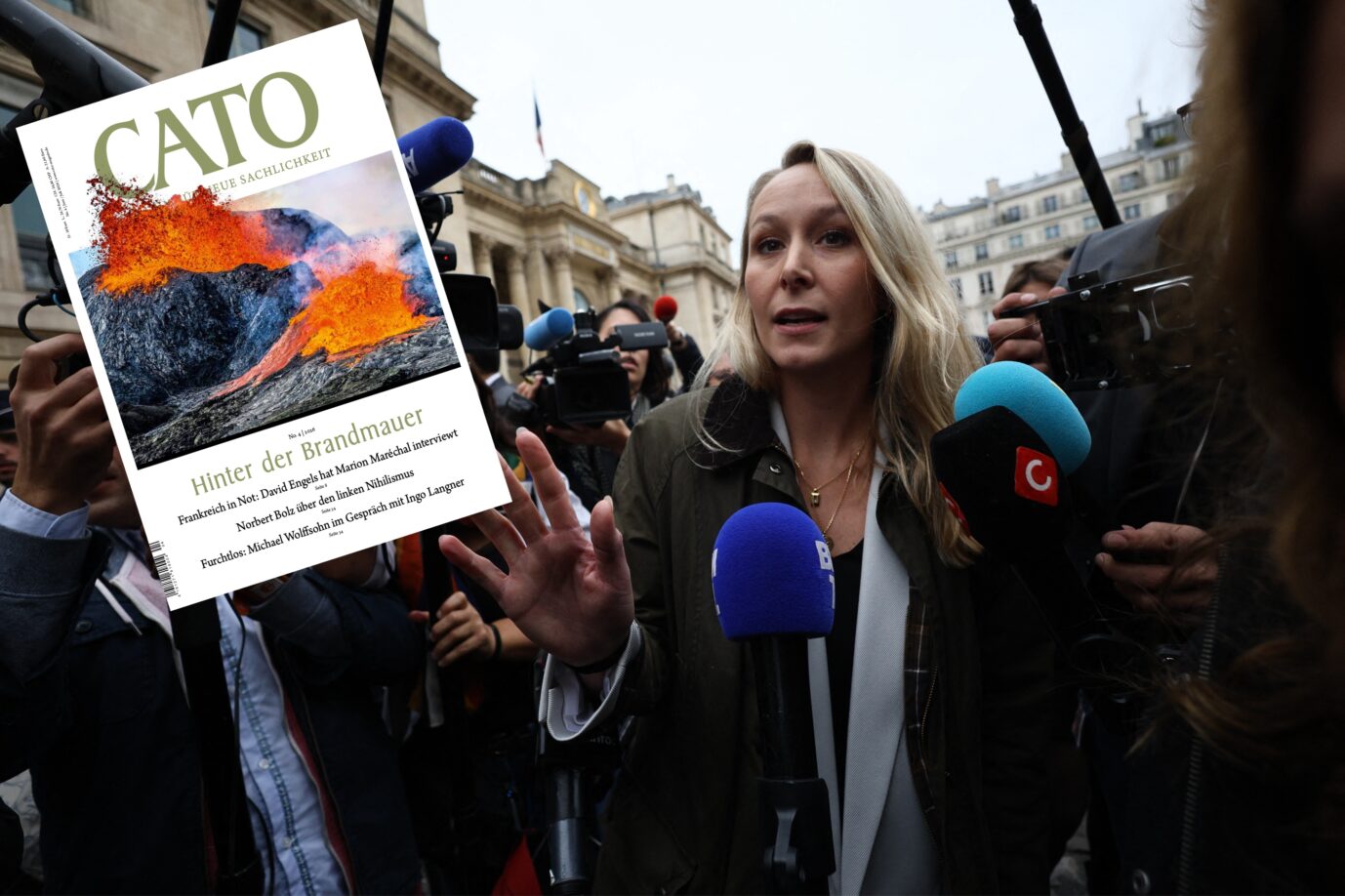

France faces a civilizational crisis driven by mass immigration and demographic transformation, with European and Christian culture becoming a minority in numerous territories, according to prominent French politician Marion Maréchal.
In an extensive interview with Junge Freiheit, Marion Maréchal, granddaughter of Jean-Marie Le Pen and founder of the party “Identité Libertés”, outlined what she describes as an accelerated population replacement threatening the historic character of France. She pointed to stark demographic data showing the extent of the transformation.
France prohibits the collection of ethnic statistics, but available figures paint a clear picture. The Observatory on Immigration and Demography published data in March 2023 revealing that more than one in five newborn boys in 2021 carried a first name of Arab-Muslim origin. This proportion stood at nearly zero percent until the 1960s. Furthermore, in 2023, more than thirty percent of births in France for the first time involved one or both parents born outside the European Union.
Maréchal emphasized that the French people never approved this immigration policy, a point her grandfather prophetically repeated as early as the 1970s. Today, nearly eighty percent of citizens believe there is too much immigration, according to polling data.
The politician warned that the far left under Jean-Luc Mélenchon is calling for a takeover by what they term the “New France” – in other words, the France of immigrants. She accused this extreme left of deliberately exploiting postcolonial resentments, economic frustration, anti-French hatred, racism against whites, and antisemitism as electoral fuel, all while maintaining connections with Islamism.
According to Maréchal, the French have understood that this political project is neither peaceful nor benevolent. Its first victims would be ethnic French citizens, non-believers, and assimilated immigrants. She framed her political struggle as fighting for the one human right not enshrined in charters and constitutions: the right to historical continuity.
Following in Her Grandfather’s Footsteps
In 2012, Maréchal became one of only two National Front deputies elected since 1986 and the youngest deputy the country had ever seen. She explained that her entry into politics came in response to a letter from her grandfather challenging her to engage more deeply in political life, which concluded with the provocative phrase asking whether she felt herself to be a Le Pen.
For Jean-Marie Le Pen, being a Le Pen meant more than family membership. It required rejecting political correctness, taking the long view, showing no fear of verbal hostility or physical intimidation, learning from history, and always keeping the welfare of France and the French as one’s compass. Maréchal said she grew up with this notion of duty to country.
The politician cited her two young daughters, Olympe and Clotilde, as motivation. She refuses to allow them to fight tomorrow the battles for which her generation lacks courage today, and she does not want them growing up as strangers in their own country.
A New Version of Le Penism
Describing her relationship to her grandfather’s political legacy, Maréchal said she tries to be fair. Jean-Marie Le Pen was a man of his time, his history, and his trials. She does not belong to his generation and inevitably adopts and reinterprets the political heritage he left behind in her own way.
However, she does not forget that he had the right perspective long before others, not only regarding immigration and Islamization, but also on the myth of happy globalization, the peace dividends that led to demilitarization, the false doctrine of industry without factories that saw nothing wrong with offshoring and a service economy, and the anti-national development of the European Union.
Maréchal acknowledged that like all great men, her grandfather had great virtues but also significant flaws, not least his provocative temperament. She had several disagreements with him and did not hesitate to express them publicly while he was still alive and able to respond. As the third generation of Le Pens engaged in politics, she brings her own version of Le Penism to the movement.
Founding Her Own Party
After her election as a Member of the European Parliament in 2024, Maréchal founded her own party, “Identité Libertés”. In her recent book “Si tu te sens Le Pen” (If You Feel Yourself to Be a Le Pen), she defines herself as standing at the intersection of Legitimism, Orleanism, and Bonapartism, while describing a nuanced relationship to Gaullism, which has become something of a meaningless catch-all term in contemporary France.
With information from Junge Freiheit





