Malcolm Muggeridge’s ‘Jesus, the Man Who Lives’ Revisited
A 1975 work by Malcolm Muggeridge affirms Christ's resurrection as central to civilization but undermines itself with contradictory views on Scripture's reliability, according to a new review.
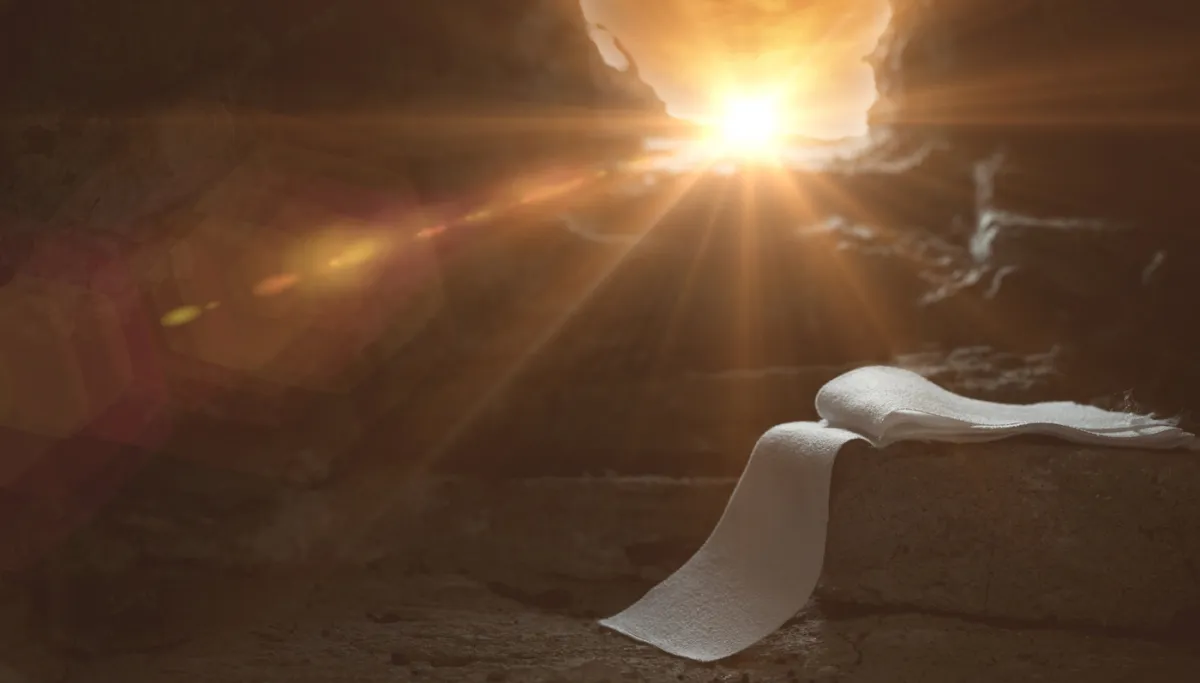

In an analysis published by Washington Examiner, Peter Cordi examines Jesus, the Man Who Lives, arguing that while the late broadcaster and author correctly identified the resurrection as Christianity’s foundation, his treatment of Scripture and salvation raises troubling questions about theological consistency.



Malcolm Muggeridge (1903–1990), whose work has been republished this year by Creed & Culture with an introduction by journalist Peter Hitchens, presents a paradoxical case. His central thesis remains sound: without the resurrection, two millennia of Christian witness would be meaningless and the modern world unrecognisable.
Yet the book’s internal contradictions undermine its apologetic force, Cordi notes. Muggeridge alternately describes the Gospel accounts as “four shaky Gospels” riddled with contradictions and imperfections, only to later characterise them as “Holy Words” attributable to God Himself. Since Scripture affirms God cannot lie, both positions cannot coexist.
Biblical Authority in Question
The reviewer highlights Muggeridge’s struggle between what he terms “historical” and “spiritual” truth. At one juncture, the British author suggests the Gospel story’s truth resides in believers’ hearts rather than in historical fact. Elsewhere, he casts doubt on the Gospels’ reliability by claiming they were written for evangelism rather than documentation.
This misreads the biblical texts themselves. While John’s Gospel explicitly states its evangelical purpose, Luke opens with his intention to provide an eyewitness record. All four accounts stood unrefuted by contemporaries and cannot be divorced from secular history.
The Resurrection Case
To his credit, Muggeridge affirms his conviction that the Gospels are inspired and states on the book’s final page that the resurrection “seems to me indubitably true.” Yet two sentences later, he introduces doubts about nearly every aspect of Christ’s life — an inconsistency that weakens his apologetic.
The historical evidence for the resurrection remains compelling. Scholars across ideological lines accept these facts: Jesus died by crucifixion; His tomb was discovered empty; multiple witnesses reported seeing Him alive afterwards; early Christians believed in His resurrection so firmly they chose torture and execution over recantation.
Paul the Apostle exemplifies this transformation. A Pharisee who murdered Christians, he encountered the risen Christ and became Christianity’s most influential figure. He endured whippings, shipwrecks, beatings, stonings, and social exile before his eventual beheading — hardly the behaviour of a knowing fraud.
The Missing Gospel
Most glaringly, Cordi argues, Muggeridge fails to adequately answer why Christ died and rose. The author suggests Jesus lived to “guide all who came after Him,” but guidance was not His primary mission. Christ came to shed His divine blood as atonement for human sin, offering salvation freely to all who trust in Him alone.
One passage earns the reviewer’s praise: As Man alone, Jesus could not have saved us; as God alone, he would not; Incarnate, he could and did. This formulation captures the necessity of the Incarnation for redemption, echoing the theological argument of Hebrews 9 regarding Christ’s superior sacrifice.
The review underscores a broader concern: eloquent prose and keen observations on human nature cannot substitute for doctrinal clarity. For a work positioning itself as Christian apologetics, confusion about Scripture’s authority and the Gospel’s content represents a fundamental weakness.
Despite its flaws, Muggeridge’s work does correctly identify the existential stakes of Christian faith. If Christ did not rise from the dead, His kingdom is as illusory as any earthly regime. That the early church exploded across the Mediterranean world despite brutal persecution, built on eyewitness testimony of the resurrection, remains among history’s most stubbornly attested facts.
The question remains whether readers seeking clarity on Christianity’s central claims will find it in this particular volume, or whether its internal contradictions will leave them more confused than convinced.
With information from Washington Examiner