Necessary Cookies

Required for the site to function. Cannot be disabled.

Analytics Cookies

Help us understand how visitors interact with our site (Google Analytics via GTM).

Marketing Cookies

Used to track visitors and deliver personalised advertisements.

We use cookies to enhance your browsing experience and analyse site traffic. By clicking Accept All, you consent to our use of cookies. Privacy Policy
NewsFire Global
Home News Europe World Christianity Culture Wars Opinion Video
Information
About Us Authors Advertising Terms & Conditions Privacy Policy Contact
R2B Media
R2B NEWSFIRE.GR PAPAFOTIS.GR THRACTION HELLENIC CONSERVATIVES RIGHT2THEBONE YT
News Europe

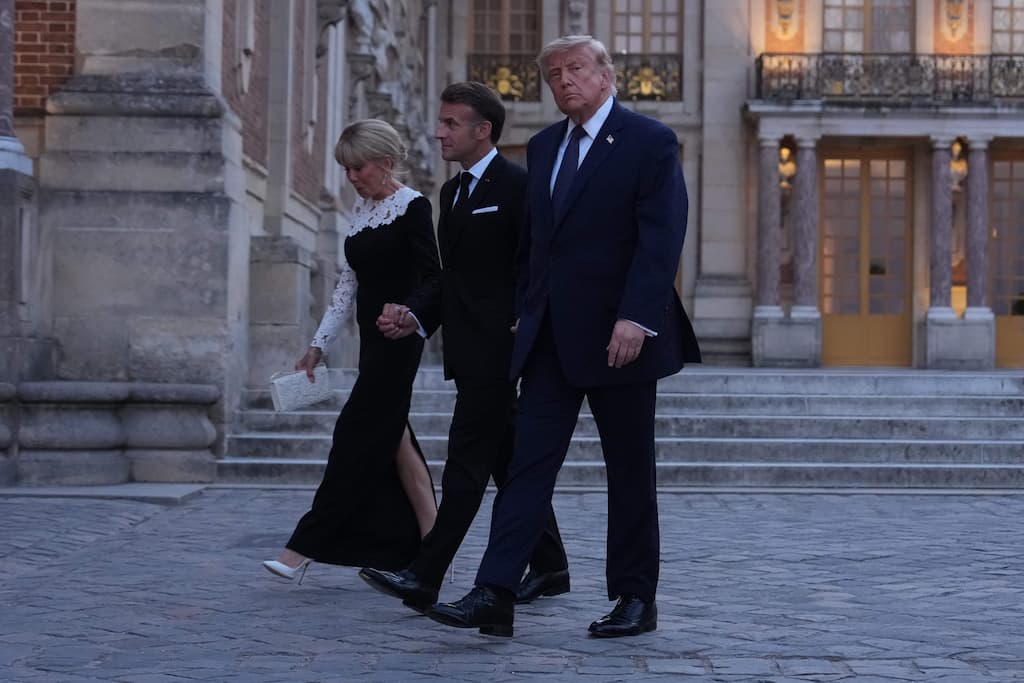
Macron and Trump at Versailles: The Illusion of Franco-American Relations

French President Emmanuel Macron hosted Donald Trump at Versailles to mark 250 years of American independence, but the lavish diplomatic gesture failed to soften Trump's transactional approach.

Dimitris Papafotis
Dimitris Papafotis Editor in Chief
JUNE 21, 2026 AT 7:31 PM

According to Valeurs Actuelles, Emmanuel Macron invited Donald Trump to the Palace of Versailles to celebrate 250 years of American independence, staging the dinner in the Hall of Mirrors where the 1783 treaty recognizing the young American nation was signed. The French president clearly hoped that the prestige of Versailles and the grandeur of French history might serve as instruments of influence.

The two leaders do not share the same perception of such opulence, the French outlet notes. Where Macron sees diplomatic leverage, Trump sees merely a backdrop. His political approach remains unchanged: power dynamics trump symbolism every time. The American president did not modify his view of France or Europe following the Versailles evening.

Historic Alliance Meets Transactional Reality

The Franco-American friendship dates back to the Revolutionary era, forged through the blood of revolution when King Louis XVI sent six thousand soldiers under Rochambeau’s command, then strengthened in the trenches of the twentieth century. Yet this alliance has always been marked by diverging interests.

Charles de Gaulle understood this perfectly when he withdrew France from NATO’s integrated command in 1966, convinced that national independence could not rest solely on the American alliance.

Since Trump’s return to the White House, the relationship has fundamentally changed in nature. Multilateral diplomacy, NATO as the cornerstone of Western security, and respect for commercial balances have given way to purely transactional logic. From threats of tariffs on European products to technological restrictions on artificial intelligence, Washington is delivering a brutal reminder: America no longer has privileged allies, only partners whose utility it constantly evaluates.

France Alone Cannot Match Global Giants

On the global chessboard, France alone now weighs relatively little against the American and Chinese giants, despite its status as the European Union’s leading military power. The illusion of an equal relationship has dissolved amid GDP gaps, GAFAM dominance, and American financial and technological superiority.

The Versailles dinner provides yet another illustration of this reality. Believing that an evening in the Hall of Mirrors, however prestigious, could redirect the strategy of a president guided exclusively by America First represented more of a psychological gamble than geopolitical analysis. With Trump, every international relationship is a permanent negotiation where everything has a price. Seduction is not foreign policy.

Diplomatic Tightrope Walking

Macron likely hoped to preserve some spaces for dialogue before the end of his mandate, as Valeurs Actuelles reports. The objective was less to convince Washington than to obtain some tactical advances on tariffs, digital policy, Ukraine, or investments. This tightrope diplomacy consisted of flattering Trump’s ego to prevent France, and Europe behind it, from becoming a simple adjustment variable in future American compromises with Beijing or Moscow.

Versailles has often been the theater of history’s great treaties. It has also witnessed numerous lost illusions. This dinner likely constitutes another such illustration. The real lesson is not diplomatic but strategic: Europe can no longer believe that its historical prestige will suffice to preserve its interests.

European Sovereignty Now Urgent

The urgent priority is now building genuine European sovereignty, credible and operational, complementary to NATO but capable of existing independently. Defense, artificial intelligence, critical technologies, energy, industry: these are the battlegrounds where tomorrow’s power will be determined.

Facing an America that now reasons almost exclusively in terms of power and force, neither the gilding of Versailles nor memories of Lafayette nor grand declarations of friendship will suffice to modify the trajectory Trump has set. He still has more than two and a half years remaining in the White House, and regardless of his successor, there is strong reason to believe this acceleration of American realism will survive his mandate.

With information from Valeurs Actuelles

Share:
Dimitris Papafotis
Dimitris Papafotis

Dimitris Papafotis is the editor-in-chief of NewsFire.GR. He was born and raised in Athens. He studied at the Journalism Workshop (1991-1993). He currently lives in Pyrgos, Ilia, where he has been active in radio and various newspapers, while also maintaining his personal blog, Papafotis.gr.

According to Valeurs Actuelles, Emmanuel Macron invited Donald Trump to the Palace of Versailles to celebrate 250 years of American independence, staging the dinner in the Hall of Mirrors where the 1783 treaty recognizing the young American nation was signed. The French president clearly hoped that the prestige of Versailles and the grandeur of French history might serve as instruments of influence.

The two leaders do not share the same perception of such opulence, the French outlet notes. Where Macron sees diplomatic leverage, Trump sees merely a backdrop. His political approach remains unchanged: power dynamics trump symbolism every time. The American president did not modify his view of France or Europe following the Versailles evening.

Historic Alliance Meets Transactional Reality

The Franco-American friendship dates back to the Revolutionary era, forged through the blood of revolution when King Louis XVI sent six thousand soldiers under Rochambeau’s command, then strengthened in the trenches of the twentieth century. Yet this alliance has always been marked by diverging interests.

Charles de Gaulle understood this perfectly when he withdrew France from NATO’s integrated command in 1966, convinced that national independence could not rest solely on the American alliance.

Since Trump’s return to the White House, the relationship has fundamentally changed in nature. Multilateral diplomacy, NATO as the cornerstone of Western security, and respect for commercial balances have given way to purely transactional logic. From threats of tariffs on European products to technological restrictions on artificial intelligence, Washington is delivering a brutal reminder: America no longer has privileged allies, only partners whose utility it constantly evaluates.

France Alone Cannot Match Global Giants

On the global chessboard, France alone now weighs relatively little against the American and Chinese giants, despite its status as the European Union’s leading military power. The illusion of an equal relationship has dissolved amid GDP gaps, GAFAM dominance, and American financial and technological superiority.

The Versailles dinner provides yet another illustration of this reality. Believing that an evening in the Hall of Mirrors, however prestigious, could redirect the strategy of a president guided exclusively by America First represented more of a psychological gamble than geopolitical analysis. With Trump, every international relationship is a permanent negotiation where everything has a price. Seduction is not foreign policy.

Diplomatic Tightrope Walking

Macron likely hoped to preserve some spaces for dialogue before the end of his mandate, as Valeurs Actuelles reports. The objective was less to convince Washington than to obtain some tactical advances on tariffs, digital policy, Ukraine, or investments. This tightrope diplomacy consisted of flattering Trump’s ego to prevent France, and Europe behind it, from becoming a simple adjustment variable in future American compromises with Beijing or Moscow.

Versailles has often been the theater of history’s great treaties. It has also witnessed numerous lost illusions. This dinner likely constitutes another such illustration. The real lesson is not diplomatic but strategic: Europe can no longer believe that its historical prestige will suffice to preserve its interests.

European Sovereignty Now Urgent

The urgent priority is now building genuine European sovereignty, credible and operational, complementary to NATO but capable of existing independently. Defense, artificial intelligence, critical technologies, energy, industry: these are the battlegrounds where tomorrow’s power will be determined.

Facing an America that now reasons almost exclusively in terms of power and force, neither the gilding of Versailles nor memories of Lafayette nor grand declarations of friendship will suffice to modify the trajectory Trump has set. He still has more than two and a half years remaining in the White House, and regardless of his successor, there is strong reason to believe this acceleration of American realism will survive his mandate.

With information from Valeurs Actuelles

