Necessary Cookies

Required for the site to function. Cannot be disabled.

Analytics Cookies

Help us understand how visitors interact with our site (Google Analytics via GTM).

Marketing Cookies

Used to track visitors and deliver personalised advertisements.

We use cookies to enhance your browsing experience and analyse site traffic. By clicking Accept All, you consent to our use of cookies. Privacy Policy
NewsFire Global
Home News Europe World Christianity Culture Wars Opinion Video
Information
About Us Authors Advertising Terms & Conditions Privacy Policy Contact
R2B Media
R2B NEWSFIRE.GR PAPAFOTIS.GR THRACTION HELLENIC CONSERVATIVES RIGHT2THEBONE YT
News Culture Wars

Lawns Aren’t Useless If You Have Kids To Raise Right

A Virginia homeowner's installation of 3,300 square feet of sod coincided with the Washington region's driest spring since 2010, forcing constant irrigation during severe drought conditions.
Stefanos Banos
Stefanos Banos Staff Writer
JUNE 21, 2026 AT 4:19 PM

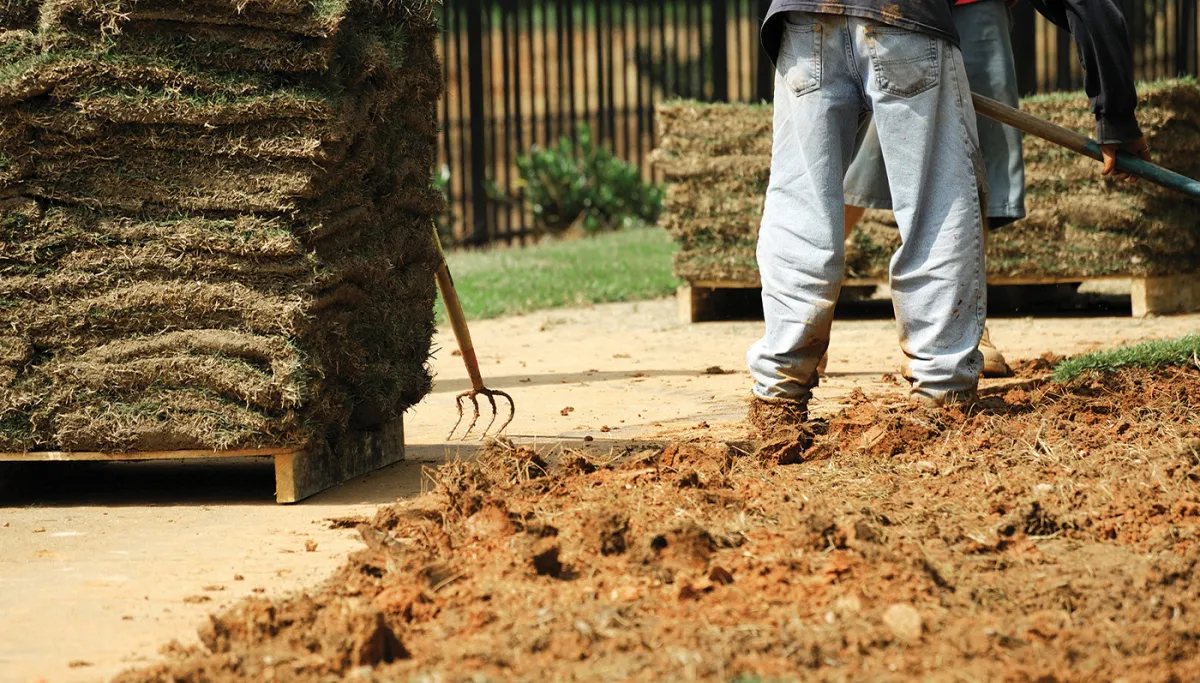
According to Washington Examiner, senior political columnist Timothy P. Carney discovered an uncomfortable truth about timing when he laid approximately 3,300 square feet of sod in his Northern Virginia backyard this spring, just as the heavens decided to shut off.

The capital region experienced its driest April and May since 2010. Northern Virginia officially entered moderate drought status on April 7. By April 14, conditions had deteriorated to severe drought. The timing proved especially cruel for anyone attempting to establish new grass, which requires heavy and immediate watering to allow roots to penetrate the soil.

Washington typically receives 3.21 inches of rainfall during April. This year brought just 1.55 inches, with most precipitation falling in the first week before the sod installation. The drought persisted into May, making it the driest such month in a decade for the District of Columbia area.


The meteorological misfortune appeared remarkably localized. The Washington Post’s Capital Weather Gang documented that the D.C. area received less rain than virtually anywhere else east of the Mississippi River, describing the phenomenon as a “DC rainhole.” The drought became so precisely targeted that a baseball game half a mile away was rained out while heavy downpours occurred elsewhere in the region, yet not a single drop fell on the afflicted property.

Thunderstorms would arrive and rumble overhead but refused to release their moisture. Rain clouds drifted over the house as if deliberately withholding relief. The frustrated homeowner was forced to purchase sprinklers and rotate them constantly throughout the day, running water so continuously that household water pressure dropped to levels insufficient for showers.

Cultural Value Versus Progressive Criticism

The ordeal arrived amid ongoing cultural warfare over suburban lawns. Progressive media outlets have increasingly targeted grass lawns as environmental villains and symbols of outdated social structures.

A 2022 New York Times video characterized lawns as damaging to the planet, harmful to health, and wasteful of time. The presentation traced lawn cultivation to the manicured grounds of European aristocracy before being adopted by the white middle class in suburban America, framing the practice with the dismissive language typically reserved for cultural practices deemed problematic by contemporary progressive standards.

These critiques emphasize water consumption and chemical fertilizer use while advocating for native plants and wildflowers instead. However, as Washington Examiner reports, such arguments consistently omit mention of children and families.

A 2008 New Yorker essay titled “Turf War” by Elizabeth Kolbert represented a rare exception by acknowledging that lawns provide children with places to play. Yet even that piece insisted lawns have no productive value and serve only cultural purposes, as if cultural and family benefits were somehow insufficient justification.

Children prefer playing on grass rather than navigating through waist-high native grasses populated by ticks and mosquitoes, a reality apparently lost on commentators without children or familiarity with family life.

Divine Relief

The drought broke in June following the arrival of a statue of St. Jude ordered during the original sod installation. After positioning the statue in the front yard, thunder clapped and the clouds finally released their moisture.

The celebration proved short-lived. Upon closer inspection of the newly watered grass, grubs had arrived.

With information from Washington Examiner

Share:
Stefanos Banos
Stefanos Banos

Stefanos Banos was born in Piraeus and is an editor at NewsFire.GR, specializing in political analysis and international relations. He graduated from the Department of Communication and Media at the University of Bremen in Germany, where he also completed his Master of Arts in Communication and Media Studies. Married to Zoi, he is a proud father of three boys.

Recent News

According to Washington Examiner, senior political columnist Timothy P. Carney discovered an uncomfortable truth about timing when he laid approximately 3,300 square feet of sod in his Northern Virginia backyard this spring, just as the heavens decided to shut off.

The capital region experienced its driest April and May since 2010. Northern Virginia officially entered moderate drought status on April 7. By April 14, conditions had deteriorated to severe drought. The timing proved especially cruel for anyone attempting to establish new grass, which requires heavy and immediate watering to allow roots to penetrate the soil.

Washington typically receives 3.21 inches of rainfall during April. This year brought just 1.55 inches, with most precipitation falling in the first week before the sod installation. The drought persisted into May, making it the driest such month in a decade for the District of Columbia area.

The meteorological misfortune appeared remarkably localized. The Washington Post’s Capital Weather Gang documented that the D.C. area received less rain than virtually anywhere else east of the Mississippi River, describing the phenomenon as a “DC rainhole.” The drought became so precisely targeted that a baseball game half a mile away was rained out while heavy downpours occurred elsewhere in the region, yet not a single drop fell on the afflicted property.

Thunderstorms would arrive and rumble overhead but refused to release their moisture. Rain clouds drifted over the house as if deliberately withholding relief. The frustrated homeowner was forced to purchase sprinklers and rotate them constantly throughout the day, running water so continuously that household water pressure dropped to levels insufficient for showers.

Cultural Value Versus Progressive Criticism

The ordeal arrived amid ongoing cultural warfare over suburban lawns. Progressive media outlets have increasingly targeted grass lawns as environmental villains and symbols of outdated social structures.

A 2022 New York Times video characterized lawns as damaging to the planet, harmful to health, and wasteful of time. The presentation traced lawn cultivation to the manicured grounds of European aristocracy before being adopted by the white middle class in suburban America, framing the practice with the dismissive language typically reserved for cultural practices deemed problematic by contemporary progressive standards.

These critiques emphasize water consumption and chemical fertilizer use while advocating for native plants and wildflowers instead. However, as Washington Examiner reports, such arguments consistently omit mention of children and families.

A 2008 New Yorker essay titled “Turf War” by Elizabeth Kolbert represented a rare exception by acknowledging that lawns provide children with places to play. Yet even that piece insisted lawns have no productive value and serve only cultural purposes, as if cultural and family benefits were somehow insufficient justification.

Children prefer playing on grass rather than navigating through waist-high native grasses populated by ticks and mosquitoes, a reality apparently lost on commentators without children or familiarity with family life.

Divine Relief

The drought broke in June following the arrival of a statue of St. Jude ordered during the original sod installation. After positioning the statue in the front yard, thunder clapped and the clouds finally released their moisture.

The celebration proved short-lived. Upon closer inspection of the newly watered grass, grubs had arrived.

With information from Washington Examiner