Necessary Cookies

Required for the site to function. Cannot be disabled.

Analytics Cookies

Help us understand how visitors interact with our site (Google Analytics via GTM).

Marketing Cookies

Used to track visitors and deliver personalised advertisements.

We use cookies to enhance your browsing experience and analyse site traffic. By clicking Accept All, you consent to our use of cookies. Privacy Policy
NewsFire Global
Home News Europe World Christianity Culture Wars Opinion Video
Information
About Us Authors Advertising Terms & Conditions Privacy Policy Contact
R2B Media
R2B NEWSFIRE.GR PAPAFOTIS.GR THRACTION HELLENIC CONSERVATIVES RIGHT2THEBONE YT
News Europe

Romania Nuclear Plant Shuttered as Danube Levels Drop

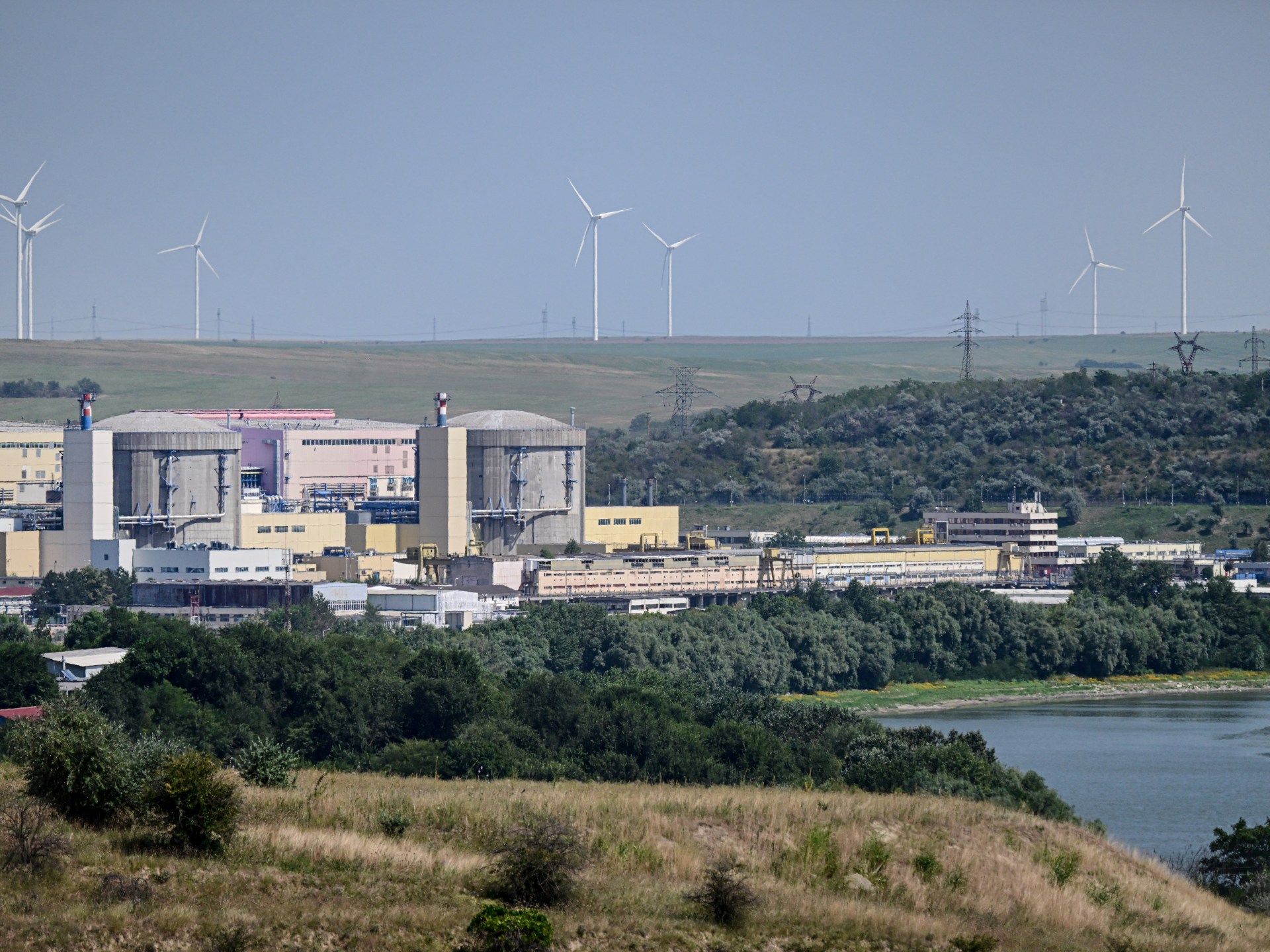
Romania has shut down its only nuclear power plant at Cernavoda due to unprecedented Danube River water level drops caused by severe drought affecting reactor cooling operations.

Dimitris Papafotis
Dimitris Papafotis Editor in Chief
AUGUST 13, 2026 AT 9:56 PM

The state-owned nuclear energy firm Nuclearelectrica announced Thursday it would initiate a controlled shutdown of the second reactor at the Cernavoda nuclear plant, according to Al Jazeera English. The facility’s first reactor was already taken offline last month.

The closure reflects the severity of drought conditions across much of Europe, where flow rates along nearly two-thirds of the Danube have fallen to their lowest levels in more than thirty years, based on data from the European climate change observatory Copernicus.

Romeo Urjan, director of the Cernavoda plant, told the AFP news agency he does not anticipate the facility resuming operations within the next ten days.

The Cernavoda plant typically supplies one-fifth of Romania’s total electricity generation. Romanian authorities had invested over 2 million euros, approximately 2.3 million dollars, in emergency measures attempting to prevent a full shutdown. These efforts included diverting Danube flow to sustain reactor cooling, demolishing a large rock formation that obstructed water flow, and submerging four barges loaded with rocks into the river.

Alternative Energy Sources Mobilized

Romania’s Ministry of Energy stated Wednesday that alternative power sources, including wind energy and imported electricity, are projected to maintain adequate power supplies. However, the government renewed its call for responsible consumption among citizens and businesses.

Officials have cautioned that if conditions deteriorate further, large industrial electricity users may face mandatory consumption restrictions during evening peak hours as a last-resort conservation measure.

Hungary’s Nuclear Plant Also Affected

Neighboring Hungary has managed so far to avoid completely shutting down its sole nuclear facility at Paks, whose four reactors also depend on Danube water for cooling.

With river depth forecast to decline further, Hungarian Prime Minister Peter Magyar announced Wednesday his government has ordered construction of a submerged wall, or weir, designed to control water flows near the plant. Two 80-metre barges are additionally being positioned at Paks that could be sunk if necessary to raise water levels.

The Paks facility, which normally accounts for approximately one-third of Hungary’s electricity requirements, has operated at partial capacity since late last month.

The diminished water levels in the Danube, Europe’s second-longest river, have also caused substantial disruption to commercial shipping along its 2,850-kilometer route, which extends from western Germany to the Black Sea.

With information from Al Jazeera English

Share:
Dimitris Papafotis
Dimitris Papafotis

Dimitris Papafotis is the editor-in-chief of NewsFire.GR. He was born and raised in Athens. He studied at the Journalism Workshop (1991-1993). He currently lives in Pyrgos, Ilia, where he has been active in radio and various newspapers, while also maintaining his personal blog, Papafotis.gr.

The state-owned nuclear energy firm Nuclearelectrica announced Thursday it would initiate a controlled shutdown of the second reactor at the Cernavoda nuclear plant, according to Al Jazeera English. The facility’s first reactor was already taken offline last month.

The closure reflects the severity of drought conditions across much of Europe, where flow rates along nearly two-thirds of the Danube have fallen to their lowest levels in more than thirty years, based on data from the European climate change observatory Copernicus.

Romeo Urjan, director of the Cernavoda plant, told the AFP news agency he does not anticipate the facility resuming operations within the next ten days.

The Cernavoda plant typically supplies one-fifth of Romania’s total electricity generation. Romanian authorities had invested over 2 million euros, approximately 2.3 million dollars, in emergency measures attempting to prevent a full shutdown. These efforts included diverting Danube flow to sustain reactor cooling, demolishing a large rock formation that obstructed water flow, and submerging four barges loaded with rocks into the river.

Alternative Energy Sources Mobilized

Romania’s Ministry of Energy stated Wednesday that alternative power sources, including wind energy and imported electricity, are projected to maintain adequate power supplies. However, the government renewed its call for responsible consumption among citizens and businesses.

Officials have cautioned that if conditions deteriorate further, large industrial electricity users may face mandatory consumption restrictions during evening peak hours as a last-resort conservation measure.

Hungary’s Nuclear Plant Also Affected

Neighboring Hungary has managed so far to avoid completely shutting down its sole nuclear facility at Paks, whose four reactors also depend on Danube water for cooling.

With river depth forecast to decline further, Hungarian Prime Minister Peter Magyar announced Wednesday his government has ordered construction of a submerged wall, or weir, designed to control water flows near the plant. Two 80-metre barges are additionally being positioned at Paks that could be sunk if necessary to raise water levels.

The Paks facility, which normally accounts for approximately one-third of Hungary’s electricity requirements, has operated at partial capacity since late last month.

The diminished water levels in the Danube, Europe’s second-longest river, have also caused substantial disruption to commercial shipping along its 2,850-kilometer route, which extends from western Germany to the Black Sea.

With information from Al Jazeera English